


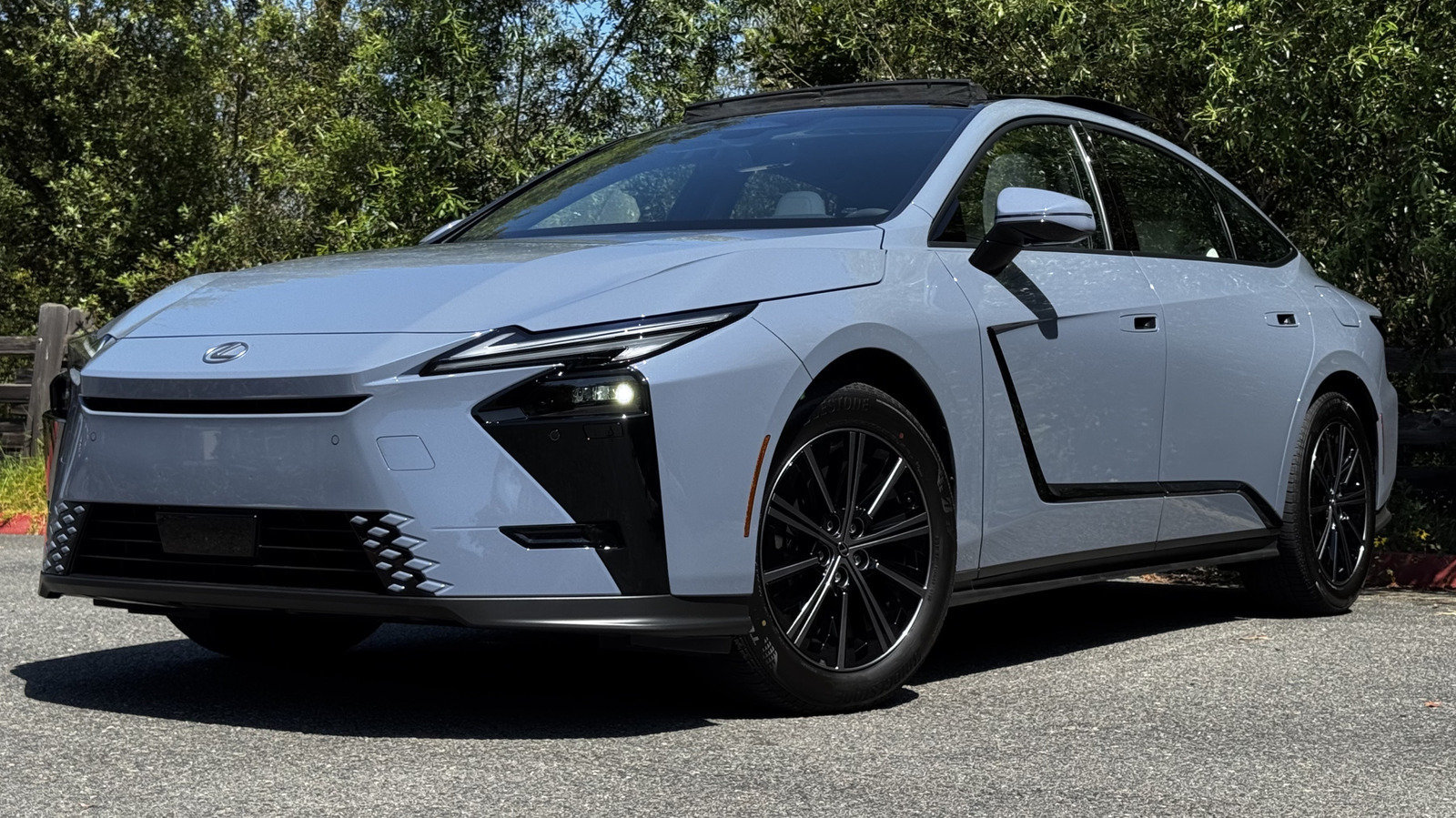
The new ES is bigger in pretty much every exterior dimension, with the most noticeable gains being a 4.5-inch height increase compared to the outgoing car, and a huge 6.5-inch gain in overall length to a total of 202.4 inches. That makes the new ES just 3.7 inches shorter than the 2026 Lexus LS 500. It seems like Lexus is trying to inch the ES closer to crossover territory, not unlike the also peculiarly proportioned Toyota Crown.
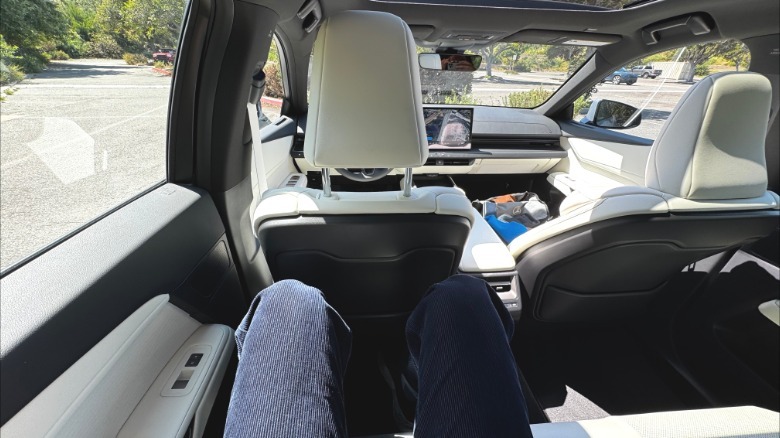
Thanks to that growth the ES has a huge interior, particularly in the rear cabin where all 6-foot-8-inches of my leggy body were able to sit comfortably behind my all-the-way-back driving position, and I can’t believe I’m saying this, but I still had legroom to spare. You can take the rear seats to a whole new level with the Executive package on certain trims, which even adds a powered ottoman. Considering the demise of its S-Class fighter, the LS, Toyota’s luxury arm can now afford to bestow such size and niceties upon the lowly ES.
 Logan K. Carter/ Jalopnik
The sole gas-powered model is the hybrid ES 350h. Its 2.5-liter inline-4 engine is combined with Lexus’ sixth-generation hybrid system, sending 244 horsepower through a CVT to either the front wheels or all four wheels. Front-wheel-drive ES 350h models are EPA rated at an excellent 48 mpg in the city, 44 mpg on the highway, and 46 mpg combined, while all-wheel drive drops each figure by one or two mpg in each scenario, which is still commendably efficient, and slightly better than the front-wheel-drive-only 2025 Lexus ES 300h, which was EPA rated for 43 mpg city, 44 mpg highway and combined.
New for the ES nameplate are two fully electric powertrains. There’s the ES 350e, which is front-wheel drive only, or the ES 500e that has dual motors and standard all-wheel drive. The ES 350e is powered by a single front-mounted motor that produces 221 horsepower, while the ES 500e uses the same motor up front and gains a rear-axle motor that together bump the power output up to 338 horsepower. Both EVs use the same 74.7-kWh lithium-ion battery pack; the base ES 350e returns the best maximum range number with an EPA-estimated 307-miles, while the ES 500e is rated to travel 276 miles on a charge. As for charge speeds, electric ESes are saddled with a 74.7-kWh battery that’s capable of being charged at a maximum of 150 kW, which can get the battery from 10% to 80% in a middling 30 minutes when DC fast-charging.
 Logan K. Carter/ Jalopnik
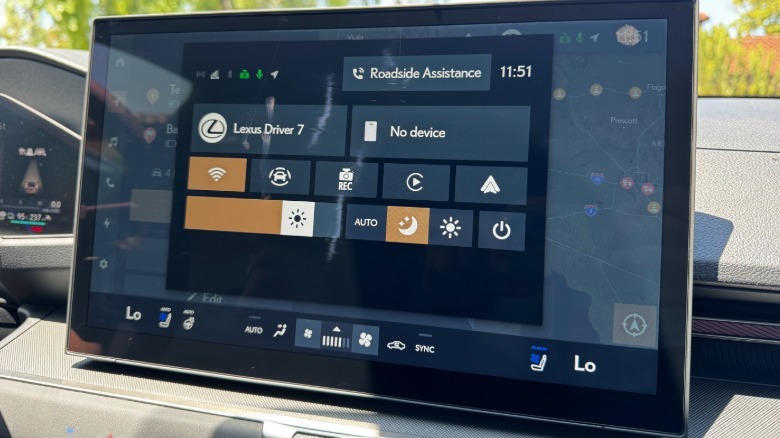
Lexus is also debuting its newest Lexus Interface infotainment system on the ES, which lives in the standard 14-inch central touchscreen and 12.3-inch digital driver’s display. It’s packed full of useful EV-centric features that were notably lacking on Lexus’s first EV, the RZ, including a range blob that clearly shows how far in any direction you can go at your current state of charge, and exceptional route planning that can be customized to meet your wildest charging desires.
Now to address the elephant in the room: the styling. Looks are subjective, and I’m not here to tell you how to feel, but I think it’s fair to say the new ES is a bold-looking thing. I like the way Lexus still incorporated its spindle grille design into both the hybrid and the EV, and I don’t actually mind the way the car looks up until you reach the C-pillar. The rear three-quarters is awkwardly proportioned, with a big rear overhang that makes the back-end of the car look bulky and ungainly to my eyes. The primary stylistic difference between the hybrid and EV is the little grille slot you see on the hybrid, which naturally the EV lacks. It’s all just a bit… funky looking, but I can’t argue with the acres of interior room that the awkward shape facilitates.

