


In the rice-growing heartland of eastern Madagascar, Razafindrainy Ernest was facing a crisis.
Despite years of back-breaking work, his harvests were failing. He was struggling to meet the basic needs of his family.
“I did everything I could, but I could never harvest more than 10 bags of rice each season,” he said. “It was discouraging, especially when you have a family to feed.”
In Madagascar, where rice is eaten three times a day and makes up more than half of most families’ calories, 10 bags a season could leave a family hungry for most of the year. The country is one of the world’s most climate vulnerable. The United Nations has warned it could be the site of the planet’s first climate change-cased famine. Devastating droughts, punctuated cycle: Climate change threatens their crops and livelihoods, prompting them to expand their farms by cutting down trees. But as more ancient, old growth rainforest is felled, the effect of droughts, flooding and soil erosion only intensify.
Over the past seven years, a Conservation International initiative funded by the United Nation’s Green Climate Fund tested an approach to stop the destruction: saving these biodiverse forests actually rested on helping farmers grow more food.
“These are some of the last remaining large humid forested areas in Eastern Madagascar, but poverty and food insecurity have driven deforestation as many smallholder farmers resort to clearing forests in search of new land and better soil to cultivate,” said Daniela Raik, president and Chief Conservation Officer at Conservation International. “Agricultural abundance and forest protection don’t need to be at odds with each other.”
For Ernest, the project was transformational. He was able to access seed varieties better suited to his land and receive hands-on training on sustainable farming techniques, like water and soil management. In just one growing season, he tripled his rice production.
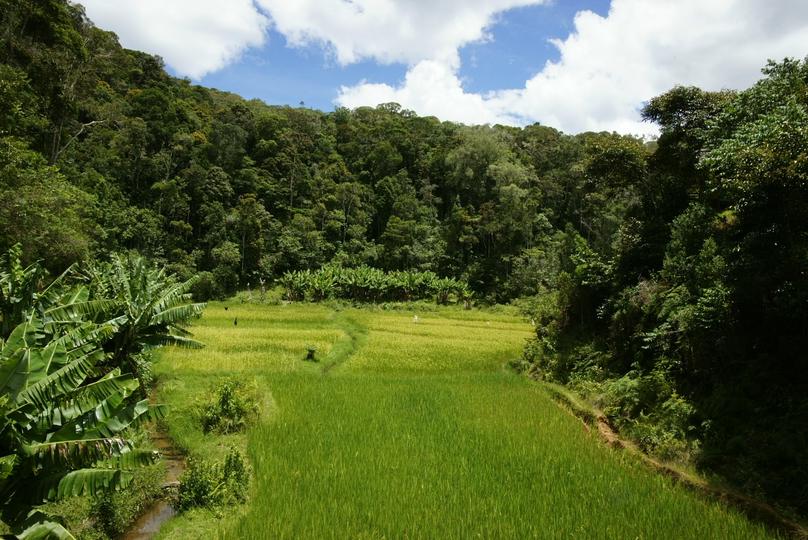
In total, nearly 25,000 smallholder farming households participated in the project, which wrapped up in 2025. Their farms are scattered amid the ancient rainforest corridors of Ankeniheny-Zahamena and Ambositra-Vondrozo, which have been evolving in near isolation since Madagascar split from the Indian subcontinent roughly 88 million years ago. The corridors shelter 15 species of lemur, thousands of plant species and more than 40 rivers that flow outward to irrigate rice fields below.
The change looked different for every household.
In a village on the doorstop of the Ankeniheny-Zahamena corridor, Fanjanirina Marie Lucie had planted the same crops in the same plot, season after season. In the worn-out soil, Her yields shrank a little more each year. Conservation International gave her the tools to break that cycle. She learned to rotate her crops and interplant different varieties — planting beans, which draw nitrogen from the air and fertilize the soil for other crops, alongside other vegetables. Her first harvest returned eleven times what she’d planted.
“It is a great source of pride for me,” she said, “and real security for my family.”
Elsewhere in eastern Madagascar, farmers who have long planted their crops on nature’s schedule, have found themselves in a cycle of uncertainty led by droughts and increasingly erratic weather. “Before, we depended on rain, and our harvests were uncertain,” said Madame Dalia, a local farmer.
Through the project, Dalia received a small parcel of seeds and training in how to plant them. By her second season, she had earned enough to buy a motor pump, which allows her to irrigate her fields on her own schedule, planting and harvesting when her crops need it rather than when weather allows.
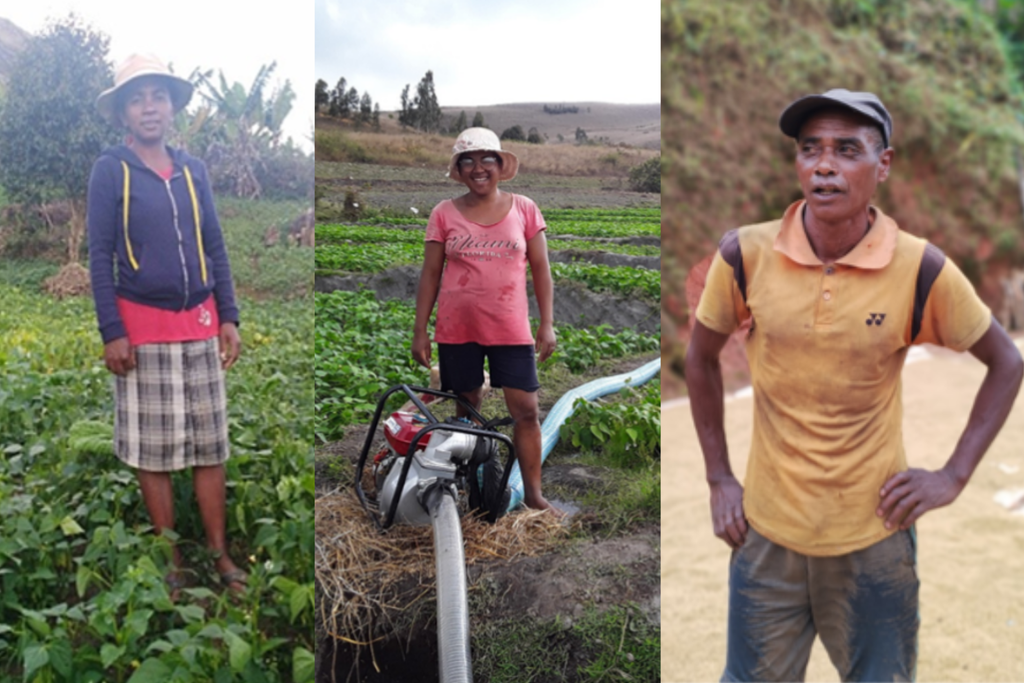
By the end of the project, participating farmers were producing one and a half times the volume of crops and earning higher incomes compared to a control group. Deforestation rates in project areas dropped from 3.2 percent down to less than 1 percent. The project’s final report also found a 30 percent increase in food consumed from farmers’ own production and greater crop diversity — both signs of improved food security.
“The data is showing us something really encouraging: When you help farmers adapt to climate change, it’s better for the land and the people working it,” said Giacomo Fedele, Conservation International’s climate change adaptation lead. “And when farmers see real, tangible results, they start to trust that sustainable agriculture can work for them.”
The results of the report underscore the importance of continued support for the farmers, Fedele said. Sustaining progress after a project ends is one of the hardest challenges of conservation work.
“This isn’t a quick fix,” he said. “We’re asking farmers to completely upend how they’ve always done things, and that takes time to adapt. We keep seeing how resourceful and creative these farmers are — we must keep showing up for them as the planet continues to warm.”
For Ernest, the program didn’t just change what he grows — it changed how he sees his future.
“Now I know I can feed my family and even consider buying more land,” Ernest said. “This project not only gave me more seeds, it also gave me a new way of looking at my work.”
Further reading: ‘Climate-smart’ farming boosts forests, food security in Madagascar

