


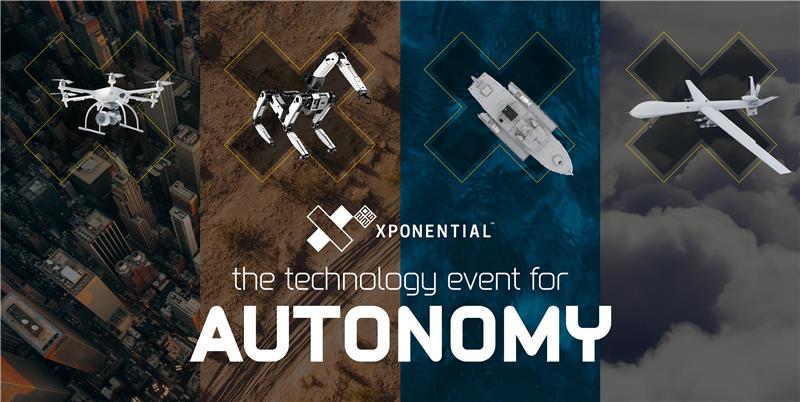
AUVSI’s XPONENTIAL 2026 Message: The Drone Industry Moves From Innovation to Integration
At XPONENTIAL 2026 in Detroit this week, President Michael Robbins delivered a keynote that reflected a broader shift taking place across the drone and autonomy industry. Rather than focusing primarily on emerging technology and experimentation, Robbins emphasized manufacturing, operational deployment, supply chain resilience, and integration into critical systems.
One line from the address captured the theme clearly:
“The center of gravity is shifting – from invention alone to integration, manufacturing, trust, and execution.”
For the commercial drone industry, that statement reflects a significant transition. For years, much of the sector focused on proving that drones could safely perform tasks such as inspection, mapping, delivery, emergency response, and infrastructure monitoring. Robbins suggested that the industry now sees many of those questions as largely answered. The challenge ahead is scaling operations and integrating autonomous systems into everyday economic and public safety functions.
The speech repeatedly emphasized that autonomy is increasingly being viewed as strategic infrastructure rather than a niche technology sector. Robbins connected drones, robotics, AI, and autonomous systems to broader discussions around industrial competitiveness, manufacturing capacity, national defense, and supply chain security.
Detroit served as a symbolic backdrop for that message. Robbins referenced the city’s history as the “Arsenal of Democracy” during World War II and compared today’s autonomy sector to earlier moments when industrial scale and production capacity became national priorities.
The address also highlighted recent policy developments that AUVSI views as critical to the next stage of growth. Robbins pointed to the FAA’s proposed BVLOS rule as a major step toward enabling routine commercial drone operations at scale. He also discussed federal initiatives tied to domestic manufacturing, trusted supply chains, and the expansion of programs such as Green UAS.
At the same time, the speech reflected how closely the drone industry has become tied to geopolitical and economic policy debates. Robbins discussed concerns about supply chain dependence on China, manufacturing resilience, and the need for coordination among allied nations.
Another notable theme was the broadening scope of AUVSI itself. While drones remained central to the discussion, Robbins repeatedly grouped together drones, robotics, AI, and autonomous systems. The organization increasingly appears to be positioning itself as an advocate for the wider autonomy ecosystem rather than unmanned aviation alone.
Overall, the keynote suggested an industry entering a more mature phase, where success may depend less on demonstrating what the technology can do and more on proving it can be manufactured, trusted, integrated, and deployed at scale.
Read more:

Miriam McNabb is the Editor-in-Chief of DRONELIFE and CEO of JobForDrones, a professional drone services marketplace, and a fascinated observer of the emerging drone industry and the regulatory environment for drones. Miriam has penned over 3,000 articles focused on the commercial drone space and is an international speaker and recognized figure in the industry. Miriam has a degree from the University of Chicago and over 20 years of experience in high tech sales and marketing for new technologies.
For drone industry consulting or writing, Email Miriam.
TWITTER:@spaldingbarker
Subscribe to DroneLife here.

