


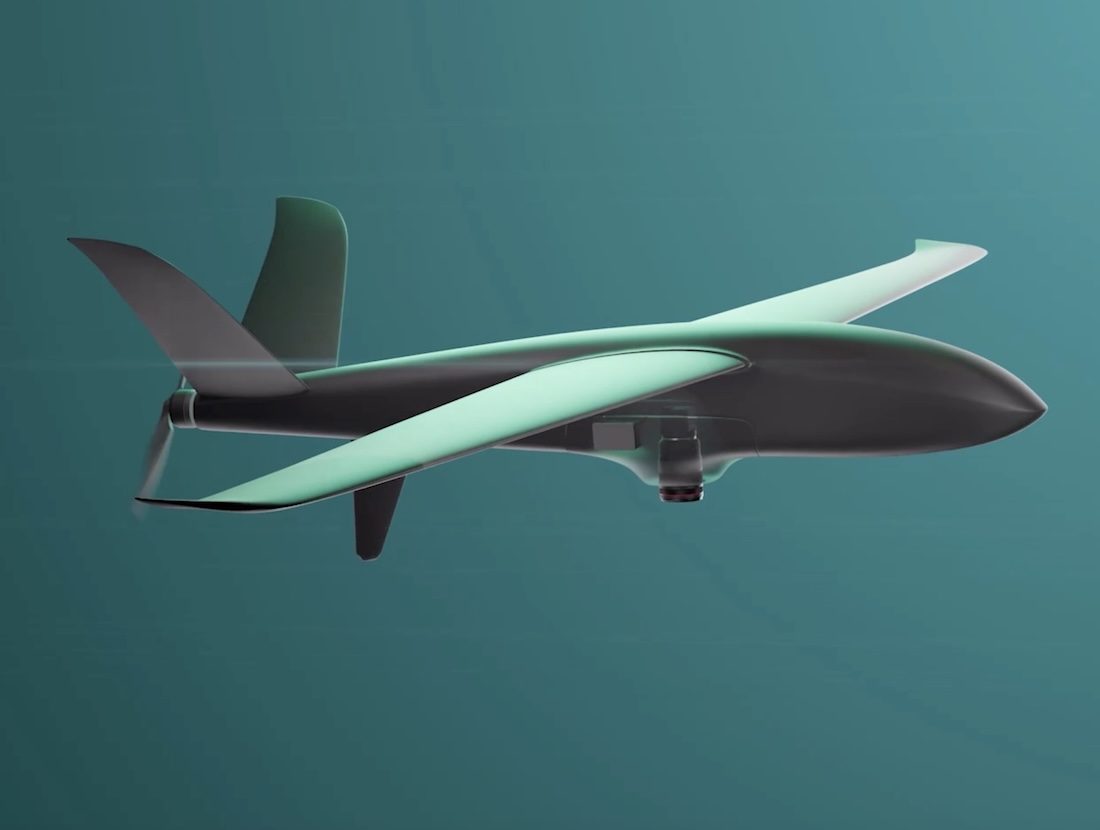
Danish start-up promotes innovative sensor system
By DRONELIFE Features Editor Jim Magill
Marine rescue teams using drones to search for capsized boats or people clinging to wreckage have a big job. They have to use images sent back from the drone to search wide expanses of water to find the few pixels that capture the vital evidence of what they’re looking for – and they have to do it in as short a time period as possible.
A startup Danish high-tech company, which combines advanced imaging sensors with artificial intelligence employed at the edge, has launched a new product designed to meet the demanding needs of rescue crews and other first responders, as well as soldiers in the field.
In a press statement, Sapient Perceptions announced its new product, ECHO, “the world’s first dedicated 10K sensor purpose-built for unmanned aerial vehicles (UAVs).” The sensor, which is designed for autonomous applications in defense, security, and emergency response, “enables operators to monitor up to 100 times more area than conventional sensors at the same detailed resolution in a single frame.”
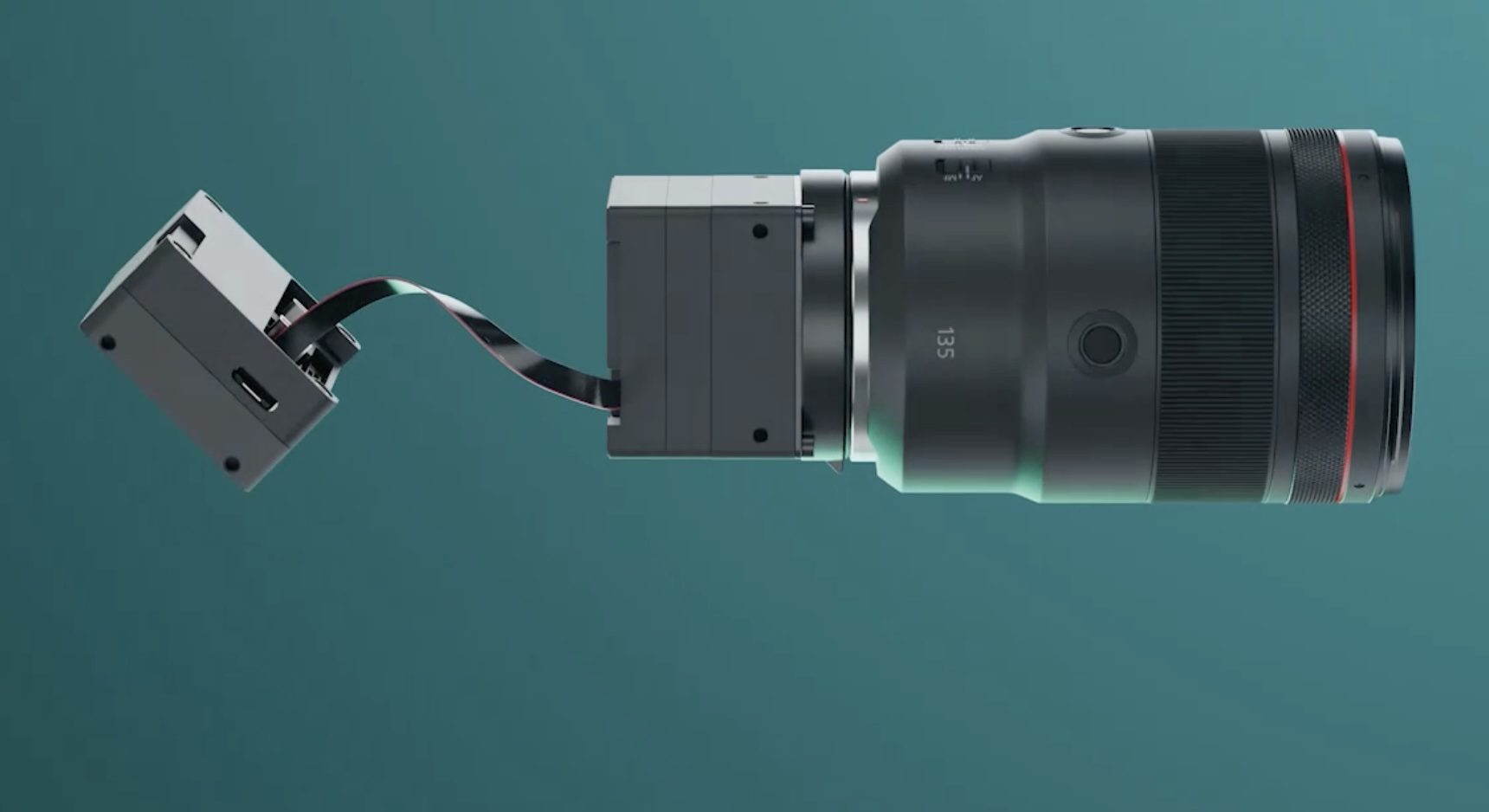
In an interview, Anthony Garetto, Sapient’s CEO and co-founder, said the ECHO sensors capture much more data-rich images, than most “normal” drone-borne sensors — 100 million pixels compared with 2 million pixels.
“Since we still have the detail, but we cover that large area, we’re able to see very small things over very large areas. We can identify and track multiple objects on there,” he said.
Garetto said the main benefit of the ECHO system is that it allows users to observe a wide area of space while also being able to concentrate on one detail in the image without having to zoom in and out, as would be the case with a lower-resolution system.
“When I’m zooming in, if I see something then I have to zoom back out, but then I don’t have the detail,” he said. “If I zoom in again, I lose my situational awareness.”
With the ECHO system, a mission operator is able to maintain the large area overview while the AI platform aboard the drone persistently monitors in the background and looks for those specific pieces of data that the operator needs to help him make rapid decisions in real time.
Garetto and two cofounders, Lau Nørgaard, and Michael Messerschmidt, launched Copenhagen-based Sapient last year, with a mission “to transform visual intelligence by developing physical AI technologies, empowering mission-critical decision-making and autonomy.” Last month, the start-up, which is focusing on developing defense products for European nations, has raised €2 million in pre-seed funding to date from investors including Balnord and FORWARD.one.
In its first partnership, the company has teamed with Dropla Tech, a Danish-Ukrainian defense startup to assist the Ukrainian armed forces. Under the partnership, Sapient will integrate its advanced UAV-borne 10K wide-area sensors aboard a drone with Dropla’s proprietary AI model, Blue Eyes, to develop UAV-based systems to detect landmines and conduct enhancing surveillance in contested environments.
“Besides this being exciting for us to have a customer, it’s also very exciting to support their mission which is de-mining, not only behind enemy lines, but actually at the front lines,” Messerschmidt, who serves as the company’s chief business officer, said. “Dropla Tech is a really good partner for us because they focus a lot on the AI model.”
One of the challenges for conducting demining operations in Ukraine is the scale of the problem. According to a 2024 report by the Center for European Policy Analysis millions of landmines have been planted across a wide area, affecting about 40% of Ukrainian territory.
Dropla’s edge-AI platform Blue Eyes, is trained on what could be the largest dataset on landmines in the world, Messerschmidt said. The Ukrainian Ministry of Defence is currently using the technology to scan for landmines, unexploded ordnance, IEDs and ambush drones, in roadways where the Ukranians plan to run supply convoys.
With their small size and widespread dispersal across the country mine detection is a particularly difficult and dangerous military maneuver. Sapient officials hope that their technology, combined with the onboard computing power of Dropla’s system, will provide the data needed to find and clear mines quickly and safely.
“The ground resolution has to be two millimeters but they also have to cover a fairly wide swath, otherwise you cannot really send vehicles through,” Messerschmidt. The partnership works because each company sticks to what it does best. Sapient concentrates on image technology and Dropla on the operation of its AI model. “They don’t want to deal with image pipelines, they don’t want to build what we call plumbing. So, it’s basically all the plumbing around the AI model,” he said.
Messerschmidt added that the company is working hard to make all the preparations and get the approvals needed to operate in Ukraine as soon as possible.
“As soon as we can get flying, they’re basically waiting for it. So, we are yelling at our suppliers to get it done faster because this is real,” he said.
While Sapient officials are currently focusing on finding opportunities to deploy their technologies in defense markets, Garetto said that there are also a number of parallel use cases in civilian security and commercial drone markets. “We look at all kinds of security applications. This could be border patrol. This could be kind of maritime search and rescue. This can be police crowd control, different types of things like this.”
He cited an example of emergency disaster response from his personal experience of where the Sapient technology potentially could have made a big difference.
“I live in Asheville, North Carolina so as a prime example, we had Hurricane Helene that hit us at the end of 2024. Just in the small community that I’m in, over a hundred people died.” Had Sapient’s technology been in operation at the time, emergency personnel would have been “able — more rapidly and in real time — to see and locate people after the disaster, to assess damage and to give the first responders more rapid information,” he said.
Future in supply chains
Messerschmidt said with the rapid evolution of drone markets across Europe and North America, companies such as Sapient, which focus on producing drone components rather than the UAVs themselves are becoming an ever-more vital link in global supply chains.
“If you look at drones in general, there’s a lot of focus around building more drone platforms. But probably what is more crucial, both in US and in Europe, is the supply chain of the critical components or the building blocks of the drone” he said.
“A lot of drone manufacturers, they basically just integrate various components, but it’s very difficult to source it from what we call trusted and allied partners,” Messerschmidt said. “We are fully committed to allied supply chains — in the US they call it NDAA-compliant. We would call it something else in Europe, but it basically means there’s no Chinese components.”
Read more:
 Jim Magill is a Houston-based writer with almost a quarter-century of experience covering technical and economic developments in the oil and gas industry. After retiring in December 2019 as a senior editor with S&P Global Platts, Jim began writing about emerging technologies, such as artificial intelligence, robots and drones, and the ways in which they’re contributing to our society. In addition to DroneLife, Jim is a contributor to Forbes.com and his work has appeared in the Houston Chronicle, U.S. News & World Report, and Unmanned Systems, a publication of the Association for Unmanned Vehicle Systems International.

Miriam McNabb is the Editor-in-Chief of DRONELIFE and CEO of JobForDrones, a professional drone services marketplace, and a fascinated observer of the emerging drone industry and the regulatory environment for drones. Miriam has penned over 3,000 articles focused on the commercial drone space and is an international speaker and recognized figure in the industry. Miriam has a degree from the University of Chicago and over 20 years of experience in high tech sales and marketing for new technologies.
For drone industry consulting or writing, Email Miriam.
TWITTER:@spaldingbarker
Subscribe to DroneLife here.

