



This year, two standards will be released to help govern corporate climate action. Both must address an issue that has become more divisive than the science warrants: what kinds of carbon removal should count towards corporations offsetting their carbon emissions. The first is the International Organization for Standardization’s first net-zero standard (ISO 14060), and the second is the final version of the Science Based Targets Initiative’s corporate rules on net zero.

Carbon credits are failing to help with climate change — here’s why
This debate has spurred on a contest between ‘nature based’ approaches, such as storing carbon in soils and planting forests, and engineered technologies, which capture carbon dioxide directly from the air and store it safely and permanently, for example underground.
This contest is intuitively appealing, but it is scientifically misleading and increasingly counterproductive. In my role advising companies on carbon removal, I have seen it muddy decisions at every level. This ranges from firms trying to plan credible routes to net zero — which aims to balance the amount of carbon emitted with the amount removed by 2050 — to governments and standards bodies trying to write the rules amid pressure from lobbyists on both sides of the debate.
Framing carbon removal as a choice between nature and technology obscures what actually matters: how various methods perform, when they can be scaled up and which specific climate problem they are meant to address. Timing is an important consideration for all of these issues.
Carbon offsets aren’t helping the planet — four ways to fix them
First, carbon removals could help to speed up global emissions reductions over the next two decades, when cumulative emissions will have the greatest influence on global warming. Removing carbon as soon as possible will deliver more climate benefits than will doing so later, even if the storage method is not permanent. This is where short-lived carbon removal — typically delivered through fast-scaling methods, such as combining trees and hedges on farms and extensive reforestation — can make a meaningful contribution.
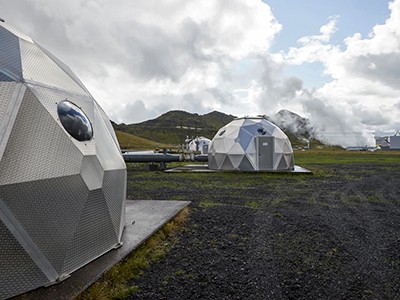
Second, in the medium term, carbon removal will be needed to counterbalance the residual emissions from hard-to-abate industries, such as aviation, cement and steel, even once net zero has been achieved. At this stage, durability becomes crucial: some CO2 persists in the atmosphere for thousands of years and must be neutralized with equally long-lived storage. For instance, CO2 captured from the air can be stored for centuries in geological formations, turned into minerals on land or stored as dissolved carbon compounds in the ocean.
Third, removal methods will be needed to bring atmospheric concentrations of CO2 down to safe levels over millennia. This Herculean task will need to utilize every carbon-removal method.

Net zero needs AI — five actions to realize its promise
These problems overlap, but they are not interchangeable. Bundling them into a single issue produces policies that are either inconsistent or operationally unrealistic. This confusion is now shaping real-world investment and technology-procurement decisions.

