


Good morning! It’s Thursday, April 16, 2026, and this is The Morning Shift, your daily roundup of the top automotive headlines from around the world, in one place. This is where you’ll find the most important stories that are shaping the way Americans drive and get around.
In this morning’s edition, the Pentagon turns to automakers as it looks for more weapons manufacturing, BYD is being accused of labor violations at its newest plant, Stellantis’ global shipments are up double-digits in the first quarter and car companies and suppliers can get up to $20 billion in tariff refunds.
1st Gear: Pentagon wants American automakers, other manufactures to build weapons
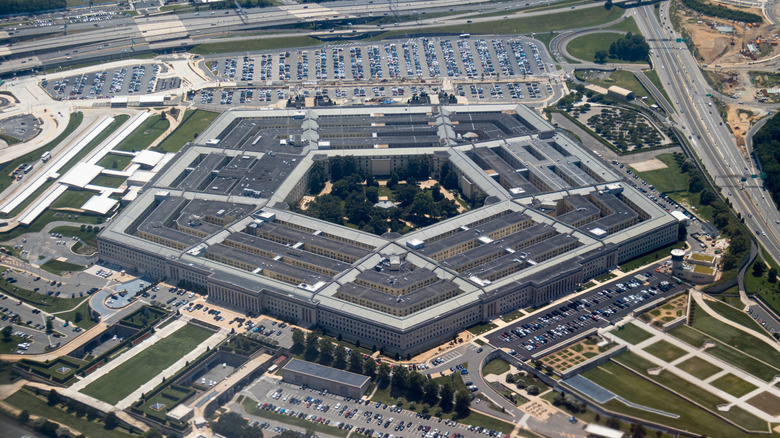
The Trump administration has touted a massive stockpile of weapons and ammunition during its involvement in its war with Iran, but now it’s looking to American automakers and other manufacturers to play a larger role in weapons production, which is reminiscent of practices used during World War II. Apparently, senior Trump administration and Pentagon officials have held talks about producing weapons and other military supplies automaker executives like General Motor CEO Mary Barra and Ford CEO Jim Farley.
It would seem that the wars in Ukraine and Iran have depleted munitions and other equipment stocks at rates the Pentagon wasn’t initially expecting, though these conversations reportedly started before the U.S. and Israel’s war with Iran. Sources who spoke on the condition of anonymity say the preliminary talks were wide-ranging and that American manufacturers may need to backstop traditional defense companies. These automakers were even asked if they could “rapidly” shift to defense work. From The Wall Street Journal:
GE Aerospace and the vehicle and machinery maker Oshkosh were among the companies involved in the talks with defense officials.
The Defense Department “is committed to rapidly expanding the defense industrial base by leveraging all available commercial solutions and technologies to ensure our warfighters maintain a decisive advantage,” a Pentagon official said.
The discussions are the latest by the administration to put military manufacturing on what Defense Secretary Pete Hegseth has called a “wartime footing.”
[…]
The conflict’s strain on U.S. munitions stockpiles is further indication that the military needs more commercial partners to scale up supplies of munitions and tactical hardware, such as missiles and counterdrone technology, quickly.
During the talks with U.S. manufacturing executives, defense officials framed bolstering weapons production as a matter of national security.
The officials asked whether companies could help as the Pentagon seeks to shore up domestic manufacturing capacity, the people said. The officials also asked executives to identify barriers to taking on additional defense work, from contracting requirements to hurdles in the bidding process.
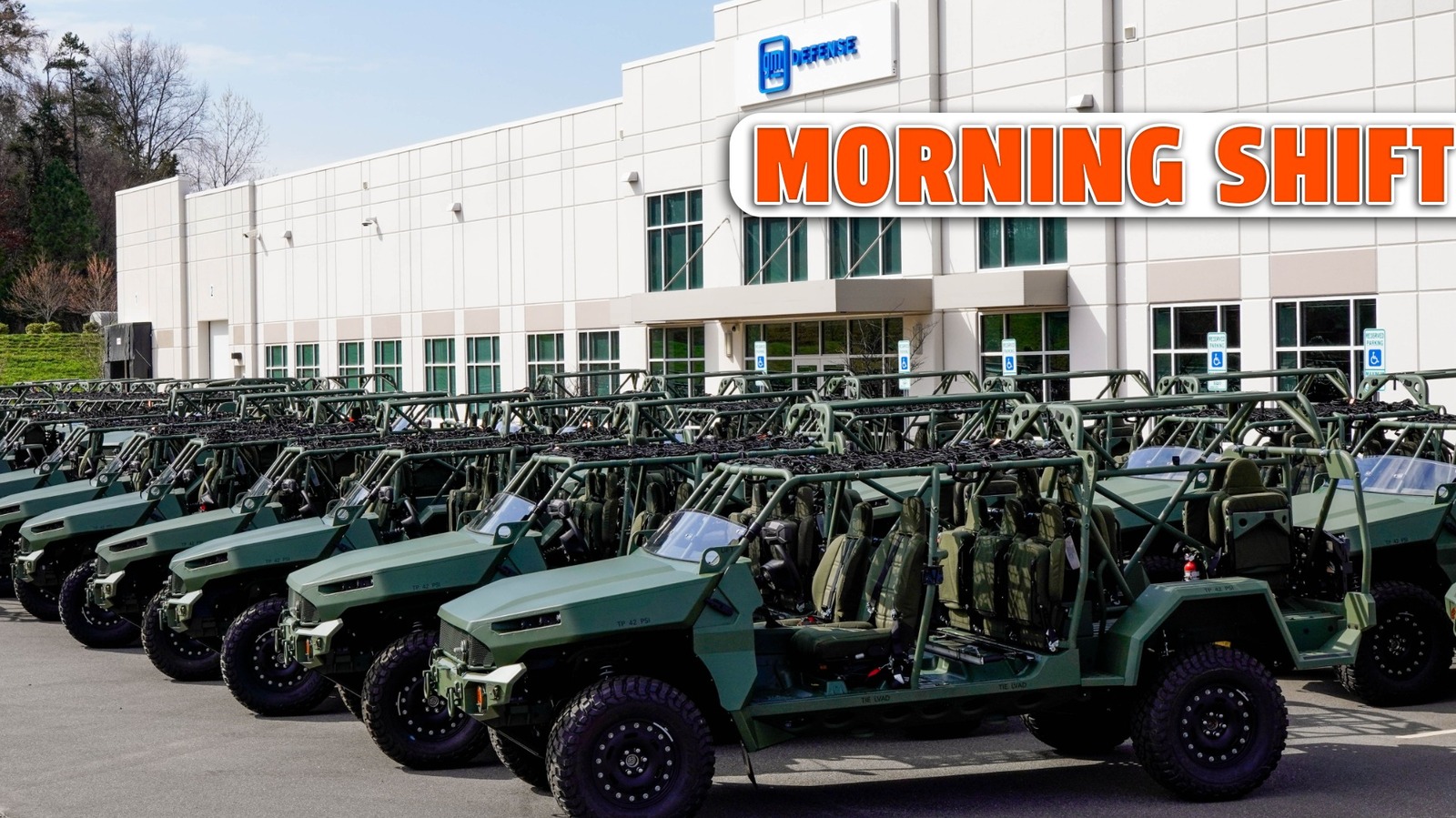
Of course, automakers have transitioned to defense production in the past, most notably 80 years ago during WWII. Today, for the most part, military production is done by a limited number of contractors. However, GM does have a defense subsidiary that builds a lightweight infantry squad vehicle based on the Chevy Colorado. It is expected to be the leading contender to build a larger infantry squad vehicle for the U.S. Army that’ll eventually go on to replace the Humvee.
This also wouldn’t be the first time automakers have worked with the Trump administration on something other than cars. During the peak of Covid, Ford and GM teamed up with medical device makers to build tens of thousands of ventilators. This, sadly, will be a far less noble endeavor.
2nd Gear: BYD accused of violating labor rights at new plant
China Labor Watch, a New York-based workers rights group, said it found evidence of labor violations at BYD’s new plant in Hungary, where the Chinese electric vehicle manufacturer is planning to start mass producing its cars this quarter.
If the report is accurate, there are some incredibly disturbing practices taking place here, like debt bondage, illegal vis use and grueling working hours that are impacting some Chinese migrant workers hired by subcontractors and recruiters. From Bloomberg:
BYD said in a statement that it prioritizes worker rights, and that the company and its vendors — including contractors and labor providers — strictly comply with requirements. The carmaker is committed to making sure its activities in Hungary are done so “responsibly, transparently, and in alignment with our global principles,” it said.
[…]
China Labor Watch said it conducted field investigations, engaging with 50 workers, in October and November after receiving a complaint from a whistleblower at BYD’s Hungarian plant.
In Szeged, China Labor Watch said it found evidence of employment in a multi-layered system of intermediaries that shifts financial risk onto the laborers. Employees also described seven-day working weeks and shifts exceeding legal limits and overtime caps. Workers were reportedly instructed during pre-departure training to lie to inspectors about working hours.
China Labor Watch has been investigating labor conditions for two decades, with a focus on labor rights both within China and at Chinese companies operating overseas, like BYD.
This isn’t the first allegation of issues at a BYD-adjacent facility. In 2024, we told you about alleged “slavery-like” conditions at a BYD contracted plant in Brazil that the subcontractor brushed off as a translation error.
3rd Gear: The streets are saying Stellantis is back
I’ve got huge news for all the Stellantis-pilled people out there. Its global vehicle shipments rose by 12% in the first quarter of this year, meaning it was the only Big Three automaker to actually post a gain during the period. Globally, it shipped 1.4 million cars between January and March — about 140,000 more than it moved during the same time last year. From the Detroit Free Press:
The release of the figures, which the company said are currently unaudited and subject to change, comes about two weeks after another report of growth for Stellantis, the parent company of brands such as Chrysler, Dodge, Jeep, Ram, Fiat and Alfa Romeo.
On April 1, the company said it achieved a 4% sales increase in North America in the first quarter, bucking an industry-wide trend of sales losses.
Success in North America drove the growth in shipments, with the company reporting an increase of 54,000 shipments in the region alone. Stellantis said the HEMI-powered Ram 1500s, and two Jeep models — the Grand Wagoneer and the Cherokee — led the growth in the region.
The Jeep Compass, however, offset some of that increase. The automaker said the Compass, which is produced at the same plant in Mexico where the new Cherokee is being built, has been slow to get out of the plant.
Stellantis has said the Compass will soon be built in the United States at the long-idled Belvidere Assembly Plant in Illinois after previously promising to build the car in Brampton, Ontario, Canada.
Despite the growth, Stellantis did note that the ongoing war in Iran affected some of its business in the Middle East. Shipments to the Gulf Cooperation Council — an economic union of Bahrain, Kuwait, Oman, Qatar, Saudi Arabia and the United Arab Emirates — were cut in half, to around 3,000 vehicles.
A great deal of this turnaround can be attributed to CEO Antonio Filosa, who has been at the head of the company since June of last year. He’s been aggressive in pushing for the automaker’s rebound after years of losses in the market. Whatever he’s doing, it seems to be working.
4th Gear: Automaker suppliers can get tariff refunds, you can’t
This month, automakers and suppliers are going to be able to start seeking refunds on an estimated $20 billion in tariff payments that the Supreme Court deemed unconstitutional. Starting on April 20, the Trump administration will accept refund applications, though most of the duties the industry pays will remain in place.
While these refunds are admittedly fairly limited in scope, they can still make a big difference to automakers and suppliers whose profits have been rocked to hell by ballooning trade costs. Unfortunately, there’s nothing you or I can do to get relief from tariffs, but at least someone thought of the poor, poor multinational corporations. From Automotive News:
The refunds apply only to tariffs that were ruled illegal in February’s Supreme Court decision. The court’s 6-3 majority said President Donald Trump overstepped his authority in using the International Emergency Economic Powers Act of 1977 to implement new duties.
The refunds apply only to tariffs that were ruled illegal in February’s Supreme Court decision. The court’s 6-3 majority said President Donald Trump overstepped his authority in using the International Emergency Economic Powers Act of 1977 to implement new duties.
Those include the “reciprocal” tariffs, or nation-level duties, Trump imposed on trading partners ranging from 10 percent to 50 percent. Import taxes Trump said he placed on Canadian, Mexican and Chinese goods in response to fentanyl trafficking also are included.
The federal government collected about $170 billion in tariffs under the emergency powers law.
Companies will not receive refunds on other tariffs paid, including on imported vehicles, auto parts, steel and aluminum. Those tariffs, which account for the large majority of duties the auto industry has paid since Trump took office, remain in place.
If this works the way it’s supposed to, the automotive industry stands to gain back a hell of a lot of money — $19.9 billion to be exact.
While vehicles and many parts subject to the auto tariff were exempt from reciprocal duties, automakers and suppliers still imported many covered products. Those included robotics and other industrial goods, as well as parts such as braking systems that were not on the list of vehicle components subject to the auto duty.
Companies that produce industrial and manufacturing products also could receive significant deposits, to the tune of $39.7 billion, PwC said.
Yet the refund process could be tricky for both automotive companies and industrial products makers, PwC said in its report.
“Supplier-OEM arrangements, cost-sharing structures and transfer pricing policies could influence how refund benefits are allocated across entities,” PwC wrote.
Importers and customs brokers can apply for a refund online through U.S. Customs and Border Protection‘s new Consolidated Administration and Processing of Entries tool. Companies will be entitled to refunds of what they paid, plus interest. Not a bad deal.
Reverse: A ruined Ridgeline
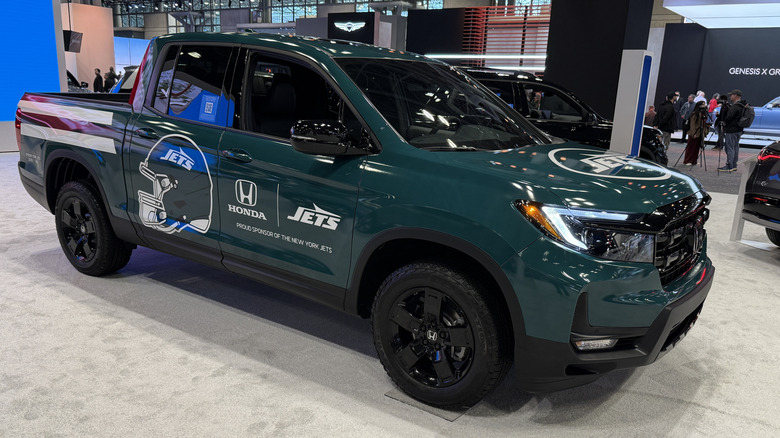
On this day last year, I found what has to be the most sorry Honda Ridgeline ever while walking around at the New York International Auto Show. Everyone who knows about football and knows what a good truck is knows the Honda Ridgeline doesn’t deserve to be sullied by something as godawful as the Jets, and I’m saying that as a lifelong fan.
I was so inspired by this poor truck that I even wrote about it. I hope it’s living a better life now, or that it was put out of its misery, Kristi Noem dog-style.
The Fuel Up
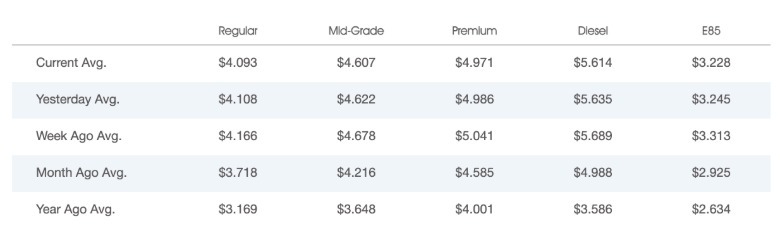
The situation in the Middle East continues to be ever-so-slightly less contentious, and that means gas prices have continued with their slow descent back toward normalcy. Oil futures still remain elevated, with WTI Crude Oil futures and Brent Crude are still in the low-to-mid-$90 range.
All of this is to say that the average price of a gallon of gas decreased by two cents overnight to $4.09, according to AAA. It means that, overall, the price has dropped 8 cents from its most recent peak on April 9.
Still, it’s hard to ignore how elevated these prices are. The last time gas was at or over $4.09 per gallon — historically speaking — was back in August of 2022, according to data from the Energy Information Administration. The average price of a gallon of gas is still up $1.11 — or about 37.2% — since the war first broke out on February 28, when it was $2.98.
Here’s where national average prices stand right now, according to AAA:
 AAA
AAA
On the radio: Robyn – ‘Dancing On My Own’
Yesterday was the 14-year anniversary of “Girl”s — one of my favorite shows of all time — premiering on HBO. What better way to celebrate that than by listening to one of the most iconic songs to play during the series, which just so happened to be in the very first episode?
I’ll never get why people have such a visceral hatred for Lena Dunham, but all I can say is they’re missing out on something truly wonderful with this show. Nothing is a better time capsule of the early-to-mid-2010s while also being a harsh critic of it. Just genius stuff, I’m telling ya.

