


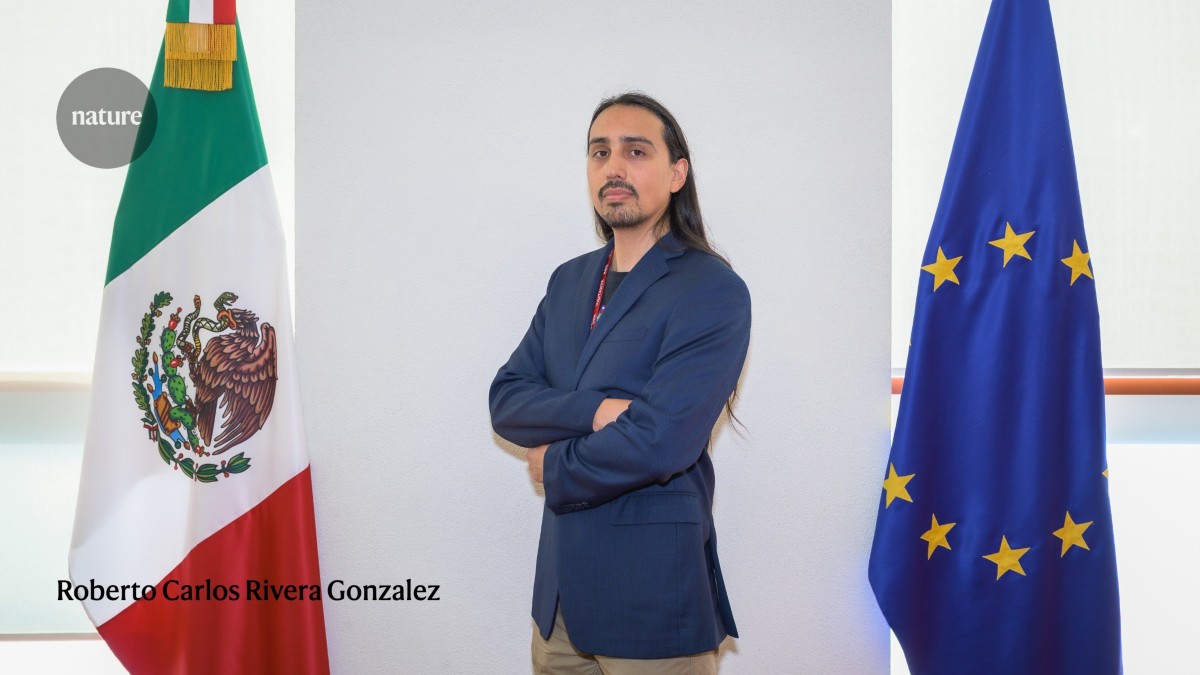
As a child, growing up in Tijuana, Mexico, I remember watching a segment of a television show about how scientists make plastics by encouraging small molecules to stick together. I imagined people with tiny tweezers, carefully joining atoms one by one. From that moment, I knew I wanted to be a scientist. What I didn’t know was how many hurdles lay ahead.
After completing undergraduate studies and a PhD in chemistry at the Center for Research and Advanced Studies of the National Polytechnic Institute (Cinvestav) in Mexico City, at which I worked on materials for energy production, I moved through a series of postdoctoral positions that focused mostly on the development of scientific software. Along the way, the naive image I had of a scientific career was shattered by the reality of the academic environment: becoming a scientist often meant learning to navigate toxic spaces, unhealthy working conditions, and, sometimes, unethical practices.
For many scientists in Mexico, this challenge begins right after postgraduate education. Thousands of PhD graduates enter the Mexican job market each year, but there are far too few positions for them to stay in academia. Graduate programmes focus almost exclusively on preparing students for academic careers. As a result, students who might wish to transition into other sectors often lack career guidance, professional networks or time to develop transferable skills beyond their specialized research training. This can narrow their perceived options and increase dependence on their supervisors. Through colleagues and close acquaintances, I have seen how this leaves students vulnerable. Continuing to work after their scholarships end is, unfortunately, not uncommon. Supervisors sometimes push students to delay their graduation so that they can pursue work that might result in a more high-profile paper, even when the work already meets degree requirements. Sometimes they do this without even providing a stipend.
Delays are justified with phrases such as ‘it is not ready yet’ or ‘we should add more data’. This practice, far from improving science, often keeps early-career researchers, including PhD students, in a system in which supervisors have control over a student’s future. No matter how skilled, passionate or dedicated you are, progress can depend less on merit and more on the luck of joining a laboratory group with a healthy work ethic.
How a mathematician is cracking open Mexico’s powerful drug cartels
For those who decide to stay in academia and compete for scarce positions, the challenges don’t get easier. In my experience, which is shared by many of my colleagues, hiring decisions in Mexican academia often depend on opaque committee preferences and undisclosed requirements. Although these dynamics are not unique to Mexico, I think that the hierarchical nature of academia, and the reliance on senior scientists’ ‘expert’ opinions, creates conditions that enable and normalize these practices. For candidates without inside connections, it’s nearly impossible to know what people are looking for in hiring calls presented as ‘open and competitive’. Metrics dominate assessment discussions — in hiring committees, promotion reviews and research evaluations. The number of publications you have, and in which journals, seem to matter more than the content. And completing a postdoc abroad carries a disproportionate amount of weight, giving an unfair advantage that is based more on prestige and less on the quality of the research proposals.
Science snapshot
Despite these challenges, Mexico has long shown commitment to supporting science. The ministry for science, SECIHTI, funds graduate studies and runs the National System of Researchers, known as the SNII, a registry that ranks researchers and provides them with additional stipends. To be a ‘successful scientist’, membership in this registry is essential. I have been part of the SNII since 2023. The extra income has allowed me to bridge periods between contracts and to find ways to participate in academic events.
However, the registry’s requirements emphasize that scientists must demonstrate consistency, relevance and impact through metrics that are constantly raised. The requirements to remain competitive and advance through the rankings often feel unattainable for early-career researchers, especially while moving between short-term and precarious contracts. Because SNII membership requires researchers to be affiliated with a public institution and to have teaching experience, many early-career researchers, myself included, take poorly paid entry-level teaching positions or unpaid visiting professor roles to secure it. Entry-level academic jobs often pay less than the stipend provided for PhD students, and come with the promise of better salaries once a permanent position is secured. This, however, usually takes several years.
What an academic misconduct accusation taught me about sharing research
These challenges are even more evident for postdoctoral researchers. With no formal definition of the role, expectations vary wildly between supervisors. What all postdoc researchers do have in common, however, is that they are paid through scholarships — this means that they have no labour rights and are completely dependent on whether supervisors decide to renew funding. Access to consistent and reliable public health care can also be hindered by administrative burdens. These unstable conditions can lead to harmful practices such as excessive working hours, pressure to prioritize research over health and family, and harsh criticism disguised as maintaining high standards. Meanwhile, science policy is mainly shaped by senior researchers, who are far removed from the realities of life as an early-career researcher.

