




DSM-5, released in 2013, will be superceded by a new guide to diagnose, classify, and treat mental health conditionsCredit: Olga Pankova/Getty
Mental illness affects one in four adults, which should make The Diagnostic and Statistical Manual of Mental Disorders (DSM) one of the most well-thumbed medical texts in the world. The handbook, produced by the American Psychiatric Association (APA), lists symptoms for all known conditions and aims to steer psychiatrists, doctors and others towards a correct diagnosis.
But in a field that struggles to connect people’s inner experiences to measurable changes in their brains and bodies, the DSM is a lightning rod for criticism. It does not delve into the possible causes of mental illness, for example, or acknowledge that sociocultural and environmental factors could be important.
Last week, the APA responded to that criticism by publishing a series of articles in The American Journal of Psychiatry, describing the strategy for the future of the DSM. It remains unclear when a new version will supersede the current DSM-5, released in 2013.
“We want to know how to continue to raise the bar for diagnoses for mental health and substance-use disorder, and, of course, we do that really staying very grounded to the science,” Marketa Wills, chief executive and medical director of the APA, based in Washington DC, told a press conference.
“You probably are aware that there are many critiques out there,” added Maria Aquendo, head of APA’s Future DSM Strategic Committee and a psychiatrist at the University of Pennsylvania in Philadelphia. “The ultimate goal, however, is to make sure that we have a clinically pragmatic, yet scientifically rigorous, manual that has inclusivity and is adaptable.”
Science not statistics
One focus of the APA’s roadmap is dimensionality: the idea that the diagnosis of psychiatric conditions should not be fixed in discrete categories, but instead operate along scales of shared symptoms. The concept was played down in the DSM-5 but is highlighted now as a “possible new direction” for its successor.
Other ideas include a greater focus on the possible causes of mental illness — from cultural and environmental to biological — and the research that can identify them. The new version could also emphasize how a patient feels their quality of life is affected.
One fix does seem to have been agreed. The APA is changing the name to the Diagnostic and Scientific Manual. That reflects a shift in emphasis. Those working on the new version say it’s intended to reach an audience beyond mental-health professionals; they want it to educate people, and to serve as a resource in lobbying for attention and funds.
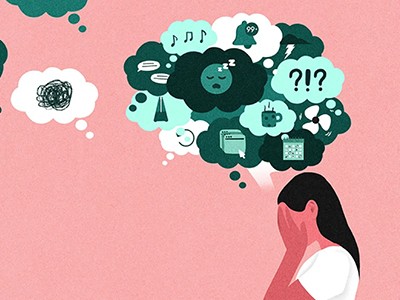
ADHD is on the rise, but why?
Future unknown
The work is at an early stage, and it is not known exactly what the next DSM will say. It will probably be years before anything is finalized and, even then, much of the content is likely to point out what can’t be done.
Take biomarkers. Infamously, no mental condition can currently be objectively diagnosed on the basis of brain scans, blood samples, genetic sequences or any other reliable test grounded in a person’s biology. And that’s unlikely to change by the time the next DSM is published.
“It will actually probably not include any biomarkers initially,” admits Anissa Abi-Dargham, a member of the DSM subcommittee on biomarkers and biological factors and a psychiatrist at Stony Brook Medicine, New York. “But we want to just initiate the process and have a roadmap for how to include biomarkers when they will become available.”
It could also encourage future research, she adds. “It’s almost to kind of shine the light on their importance.”
There are already promising avenues of research towards usable biomarkers. One is using scans from functional magnetic resonance imaging to find increased connectivity between the striatum and other brain regions in people with schizophrenia2. Another is genetic signatures for autism3. “And in depression, there’s a lot of excitement about inflammatory markers,” Abi-Dargham says.
Mental health: On the spectrum

