


Spend any time in the car enthusiast corner of the internet, and you’ll quickly learn that nothing could possibly be worse than a continuously variable transmission. They’re all terrible, any automaker that puts them in its cars is a giant, dumb idiot, and only a moron would actually buy one of those cars. But if it’s so obvious that CVTs are literally the worst, why do automakers continue to use them? Do they just hate their customers or something?
Well, if you ask Jason Fenske from Engineering Explained, the reason is that CVTs aren’t actually bad, and in reality, they’re pretty great. At least if we’re talking about the modern eCVTs that so many automakers have moved to. Were the early CVTs that we saw in cars, especially in Nissans in the early 2000s, unreliable and weird to drive? Sure. But the eCVTs you see today don’t use the belts and pulleys that earned Nissan’s early CVTs their terrible reputations.
Instead, these new transmissions use a single planetary gearset paired with two electric motors, completely eliminating the need for belts and pulleys. So, while an old CVT and a new eCVT share the fact that they’re both continuously variable, the ways they make that happen are about as different as can be. The analogy isn’t perfect, but in some ways, it’s a lot like projecting your complaints about old four-speed automatics onto a modern dual-clutch transmission. After all, neither one requires you to operate a clutch pedal to shift, right?
Let an engineer explain
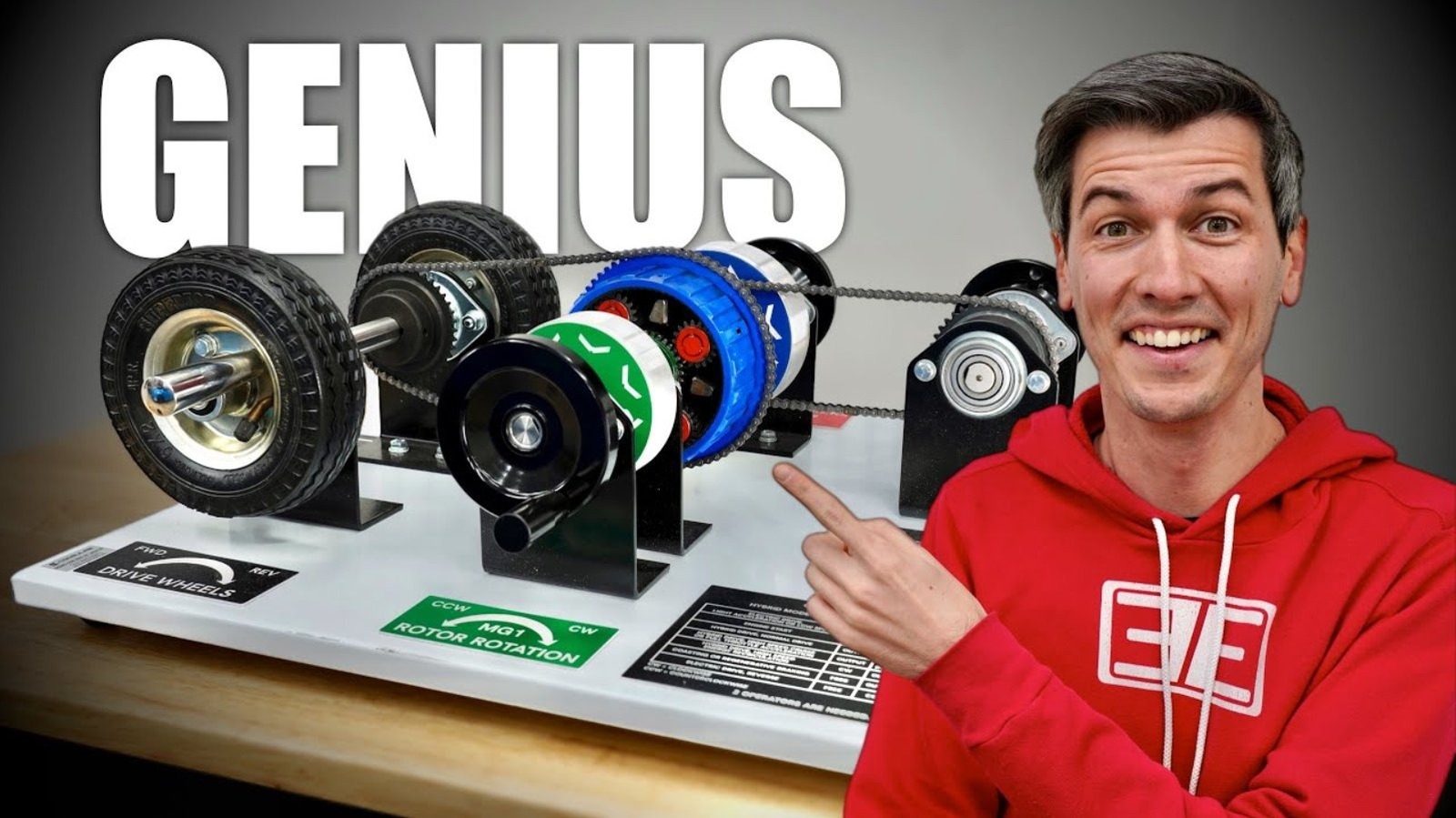
Sadly, our favorite engineer (go Pack!) doesn’t break out the whiteboard for this particular video, which is a shame. Who doesn’t love learning from a good, old-fashioned whiteboard? But I guess we can all probably forgive Jason for that one, since he instead borrowed an eCVT trainer unit so you can actually see how a modern eCVT works in action, instead of having to imagine it yourself based on some whiteboard drawings.
Apparently, the company that sent it isn’t a sponsor and just wanted to do its part to silence the haters educate the masses. Thanks to the demonstration unit, it’s actually pretty easy to wrap your mind around how an eCVT actually works, which really is pretty cool. Maybe a whiteboard really isn’t the answer to everything.
That said, the much-hated “rubberband” effect you experienced in Nissan’s early CVTs isn’t necessarily the result of its choice to use belts and pulleys. Instead, that’s because there’s no direct link between engine RPM and wheelspeed. Making a car equipped with an eCVT feel more natural to drive then becomes a matter of tuning more than an issue inherent to continuously variable transmissions.
Did Nissan’s unreliable transmissions have plenty of problems that hurt the CVT’s reputation? Sure. Are you going to automatically love every single new car with an eCVT? Probably not. But it’s still important to remember we’re dealing with completely different technology here, and whatever issues you had with that old Murano probably aren’t relevant when we’re discussing modern cars with modern eCVTs.

