


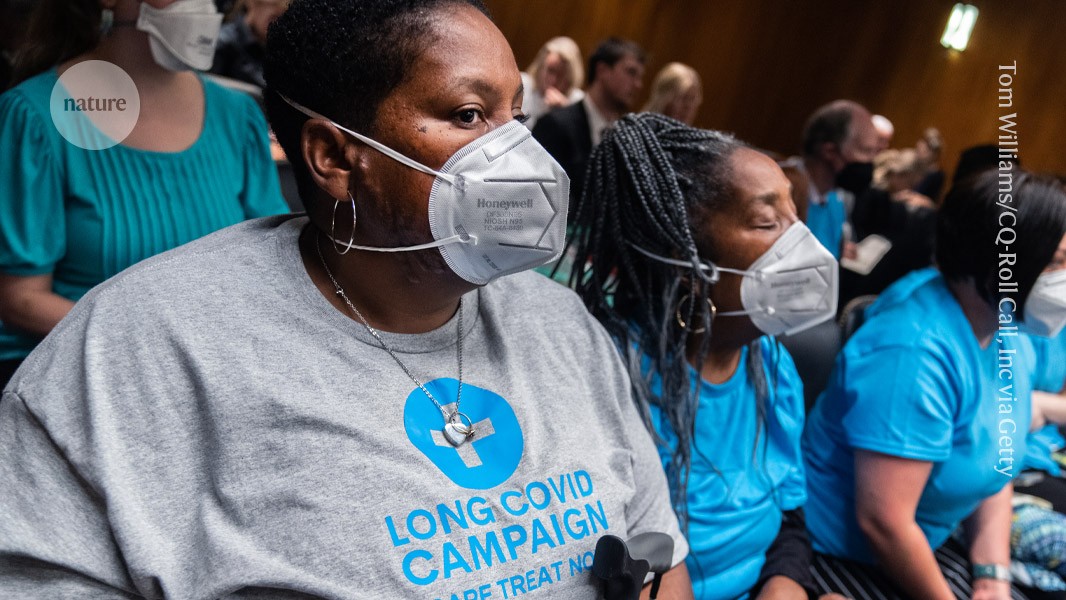

Global estimates indicate that 6 in 100 people who get COVID-19 develop post-COVID-19 condition, also known as long COVID.Credit: Tom Williams/CQ-Roll Call, Inc via Getty
In a major boost to research on long COVID and chronic fatigue syndrome (CFS), also known as myalgic encephalomyelitis (ME), the German government has announced that it will provide €500 million (US$582 million) in research funding to support a National Decade Against Post-Infectious Diseases from 2026 to 2036.
Germany is one of many countries facing an unprecedented health burden owing to long COVID and other post-infection syndromes since the COVID-19 pandemic. Almost one in five people in a German cohort had long COVID in 20221, and around one in seven people in the United States were affected by long COVID by late 20232. This translates to a significant burden on healthcare and the economy — the syndrome is estimated to cost the world economy US$1 trillion every year3.
“From many conversations, I know what a great burden these illnesses represent for those affected and their families,” said Dorothee Bär, the German Federal Research Minister, in a press release announcing the funding. “There are still no simple solutions or therapies for ME/CFS and post-viral autoimmune diseases, and previous scientific studies demonstrate the complexity of the disease mechanisms.”
“This is really major funding,” says Rafael Mikolajczyk, an epidemiologist at Martin Luther University Halle-Wittenberg in Germany. Ziyad Al-Aly, a clinical epidemiologist at Washington University in St. Louis, agrees, saying it’s “a great step in the right direction”. Long COVID has become politicized and “less of a priority for governments around the world,” he adds.
What research is the money expected to support?
The German government aims to fund research into a wide variety of post-infectious diseases, including Long COVID and ME/CFS. It also aims to cover a range of topics, including the pathophysiology and immunology of the conditions, diagnostics and biomarkers, mental health and neurology, and long-term consequences on health.
The language is deliberately broad, says Al-Aly, who under the Biden administration co-chaired the committee that created the US’s National Research Action Plan for Long COVID. “You don’t want to shackle your scientists with a very narrow scope,” he says. He applauds the funding for including all post-infectious conditions, which share many commonalities, and for embracing a variety of disciplines.
Because the German funding is not yet allocated, the next step is for scientists and patients to be brought in to shape exactly how the money will be spent, says Ulrike Protzer, a virologist at the Technical University of Munich in Germany.

Long COVID activists fought Trump team’s research cuts and won ― for now
One fundamental challenge for managing conditions like long COVID is to identify the mechanisms operating in each long COVID patient, says Akiko Iwasaki, an immunologist at Yale School of Medicine, Connecticut. Only then can they be recruited into clinical trials of medications that will treat these root causes. That means link biomarker studies to clinical trials, says Al-Aly – like giving antivirals primarily to people with persistent viral infections
Nisreen Alwan, a public health specialist at the University of Southampton, UK, also wants to see more research characterising the public health burden of post-infection conditions. “How do we quantify the burden of acute infections in terms of chronic disease? What are the pathways to prevention? How can we address the risk factors?” She compares viral infections to outdoor air pollution, the impacts of which on cardiovascular health have now been quantified — spurring efforts to cut pollution levels. “that’s where we should be heading for acute viral infections,” she says.

Long-COVID advocates and researchers in the United States managed to revive some of the research grants cancelled by the administration of President Donald Trump. Credit: Joe Klamar/AFP via Getty

