


You have full access to this article via your institution.

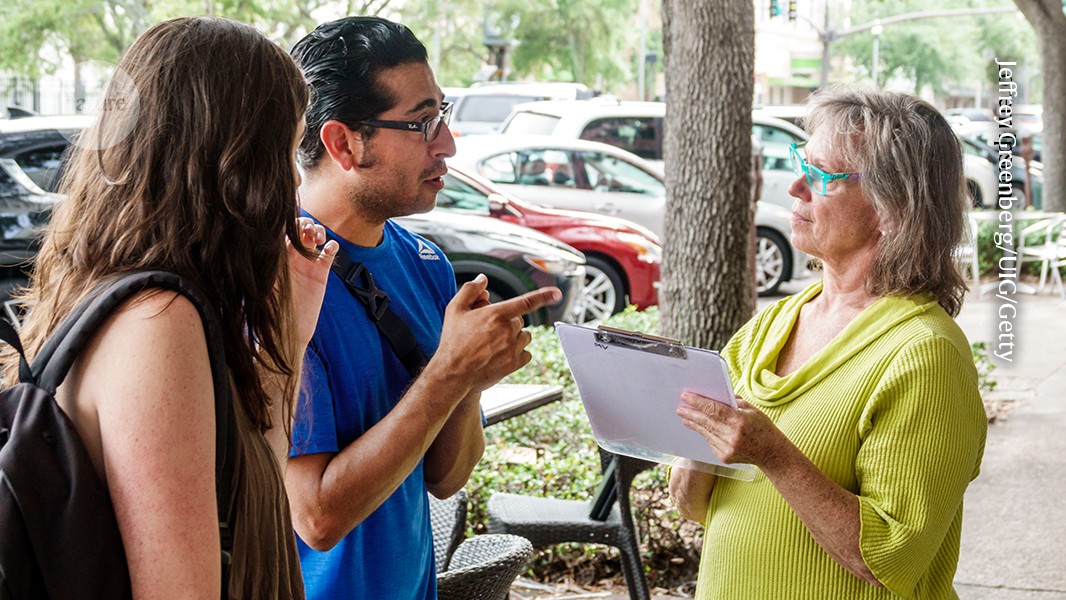
Face-to-face surveys still have an important role in official statistics.Credit: Jeffrey Greenberg/Universal Images Group/Getty
The term ‘official statistics’ is not usually a headline-grabber. But, around a year ago, when Nature’s news team began exploring reports of problems with the data that governments routinely collect, another word started to crop up in connection with it: crisis.
Statistics reach a ‘crisis point’: nations struggle with a critical lack of data
Our reporters spoke to more than 20 researchers and staff members at national statistics agencies around the world. The team built up a picture of a crisis affecting official statistics that has been triggered by three main factors: inadequate funding, political overreach and plummeting response rates to household and business surveys.
Official statistics are collected, managed and published by governments. They need to be reliable and robust to guide decisions such as how to reduce school drop-out rates or when to reduce interest rates. They are also used to assess progress towards policy outcomes such as meeting the United Nations Sustainable Development Goals (SDGs). The consensus among the people we spoke to was that many statistics agencies are facing challenges that have rarely been as bad as they are now. The good news is that the problems can be fixed — if there is a will to do so.
Fix surveys
First, take the growing practical problems around gathering reliable data. Surveys — which collect information by asking a group of people questions in a standardized way — are the foundation of official statistics. Digital technologies are becoming better at recording and analysing information such as household spending through credit and debit card data. But, in some cases, they can also pose a threat to the accuracy of the data, for example if people use artificial-intelligence tools to answer questions in online settings. It means there is still an important role for surveys. To find out the nutritional content of the food that young children are eating or determine the specific needs of under-represented communities, you still need enumerators to knock on people’s doors and conduct interviews by phone or video calls.

Do you really know the way the world is heading? Take this quiz on plans to save humanity.
In high-income countries especially, people are declining requests to participate in surveys. There are overlapping reasons for this: in some cases, it’s because of mistrust of government and concern about how the data will be used. Those who collect data in many low- and middle-income countries (LMICs), however, say that people are more likely to take part in surveys if they can be shown the benefits of participation — to themselves, their families or to society.
Researchers have been tracking these trends for some time and are studying ways to address the issues. In the United Kingdom, the Survey Futures programme, a research consortium including UK universities and the country’s Office for National Statistics, is testing various approaches to building trust with survey respondents and also experimenting with different data-collection methods.
Improve funding
Official statistics benefit everyone, but national statistics agencies are often under-resourced. All those who use such statistics should be contributing funding, too — including businesses and philanthropic organizations, providing they do not put onerous conditions on their grants.
Here, things are currently going in the wrong direction. Although overall funding for official data and statistics in LMICs, for example, is now back to the same level as it was before the COVID-19 pandemic, philanthropic funders such as the Gates Foundation in Seattle, Washington, and Wellcome in London are providing less support. In 2023, they gave US$151 million to LMICs, compared with more than $200 million in the previous year. Resources for AI-related projects are increasing steadily, but funding for some core areas, such as gender and health-care data, has been falling, according to the most recent data, which are from 2023 (see go.nature.com/4sprxcj).
Will Gates and other funders save massive public health database at risk from Trump cuts?
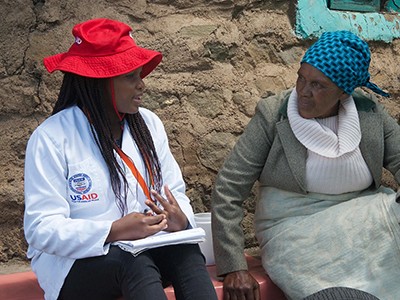
Researchers are particularly alarmed at the continued uncertainty over the Demographic and Health Survey Program, one of the world’s most comprehensive programmes that collects data on a wide range of topics from education to children’s health and HIV/AIDS to gender-based violence. The future of its data sets, which cover more than 90 countries and have been used for some 9,000 studies, hangs by a thread because the project was almost completely funded by the US Agency for International Development (USAID), which ended its support last year after the agency was shut down. In 2023, the US provided some $45 million of the project’s $50 million budget. In 2024, ICF International, a private consulting company in Reston, Virginia, was given a $236-million contract to manage the surveys for five years.
The Gates Foundation will cover some of the costs for three years starting from July last year, which will allow the database to remain accessible and enable some of the surveys to continue. However, in an article published last month, a team of researchers led by Jasmin Abdel Ghany at the University of Oxford, UK, argues that individual countries need to step up and take ownership (J. Abdel Ghany et al. Proc. Natl Acad. Sci. USA 123, e2513242123; 2026). Such an important data set, one that is necessary for national policymaking, should never have been so reliant on just one donor. Some 39 indicators that monitor progress towards the SDGs rely on this data set, according to the UN.
Navigate the politics
This raises the third problem: the researchers and practitioners we spoke to in many parts of the world said that, when you have a government that is determined to interfere in official statistics (for good or bad reasons), it is often hard to stop it from doing so. Researchers and members of statistics agencies must continue to remind governments that poor-quality data benefit no one. They can do this through their typical channels of communication with their government, and through media advocacy.
Assessments of international agencies also carry weight. The International Monetary Fund, for example, monitors the health of global and national economic statistics and when it notices that a country’s data collection is not up to scratch, it usually makes its assessment public, which kicks off a programme of improvements (see Nature 651, 298–300; 2026). There are few, if any, governments, regardless of their political leanings, that will want to risk their data being publicly identified as falling short of the highest data-quality standards.
The World Health Organization should be mandated to play a similar part when the collection of health statistics needs improving, and the UN science and cultural organization UNESCO could do this for education data.
Decisions based on incomplete or incorrect knowledge are invariably bad, even harmful. That is why the statistics that governments collect need to be as accurate and as verifiable as possible. Change can happen and it can start today.

