


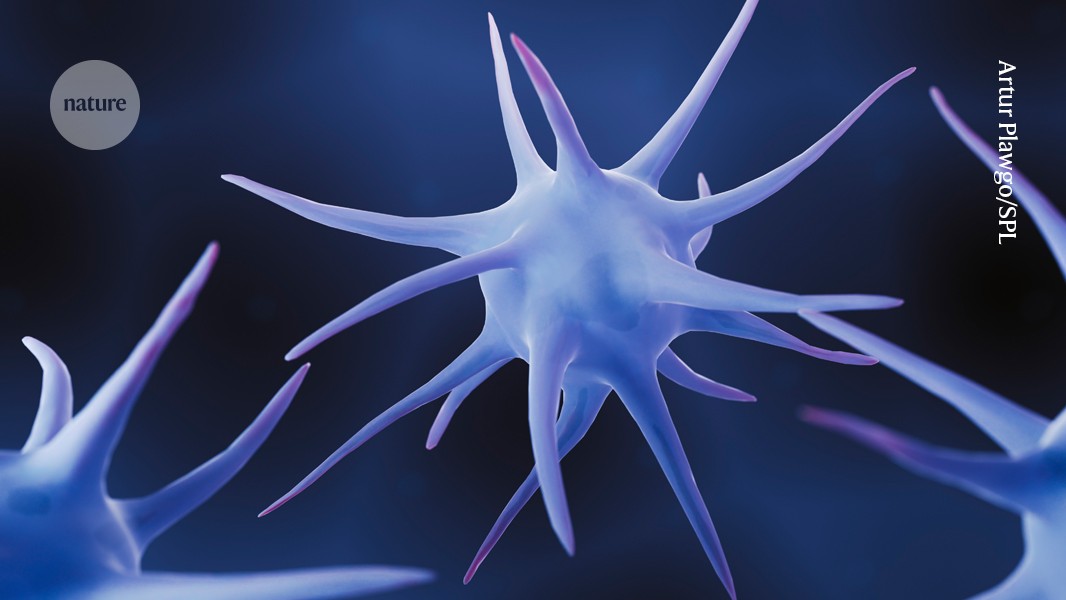

Dendritic cells (artist’s impression) use their tentacle-like projections to display protein fragments, triggering other immune cells to launch an attack on diseased cells.Credit: Artur Plawgo/Science Photo Library
Scientists have identified a reason why certain crucial immune cells lose their vigour inside a tumour: their mitochondria become debilitated, according to a study1 in mice.
These immune cells, called dendritic cells, normally enlist the body’s immune defenses to attack invaders; however, they often fail to do so against many cancers. But, when the scientists injected dendritic cells that contained robust mitochondria into mice with cancer, the growth of the rodents’ tumours slowed drastically.
The results could have implications for cancer therapies that harness the power of the immune system. Such immunotherapies have had notable success against difficult-to-treat tumours, but their benefits are often limited or temporary. Improving the fitness of dendritic cells might boost such therapies’ effectiveness, the study’s authors say.
The paper tells an important lesson, says Derick Okwan-Duodu, an immunologist at Stanford University in California, who was not involved in the research. “The metabolic signature of dendritic cell[s] is critical in shaping the kind of immune response that you’re going to get.”
The findings were published today in Science.
Protein display
Mitochondria produce energy in a form that cells can use. Despite this indispensable role, they have been rarely studied in dendritic cells, says study co-author Zhiyuan You, an immunologist at St. Jude Children’s Research Hospital in Memphis, Tennessee. In fact, previous research2 involving dendritic cells grown in laboratory dishes suggested that mitochondria were not central for dendritic cells’ activation or maturation, says You.
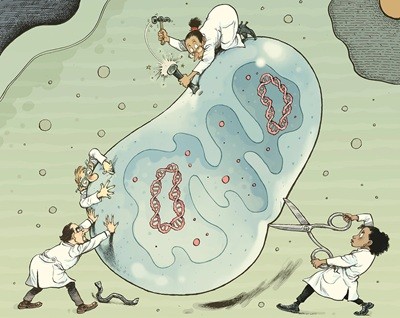
Faulty mitochondria cause deadly diseases: fixing them is about to get a lot easie
For the body to fend off cancer, it’s crucial to have healthy dendritic cells. These cells use their tentacle-like projections to display bits of proteins to immune cells called cytotoxic T cells. The cytotoxic T cells then destroy targets that have those proteins.
In solid tumours, such as breast and colon cancers, dendritic cells are not only rare but also defective. Without functional dendritic cells, the cytotoxic T cells aren’t activated. That, in turn, limits the effectiveness of immunotherapies, which work by preventing cytotoxic T cells from becoming exhausted.
Mighty mitochondria
To find out why dendritic cells become defective inside tumours, You and his colleagues studied mice with melanoma. They found that some dendritic cells in the animals’ tumours had active, healthy mitochondria. But other dendritic cells had degraded mitochondria. As the animals’ tumours grew, their number of dendritic cells with high-performing mitochondria shrank.

