


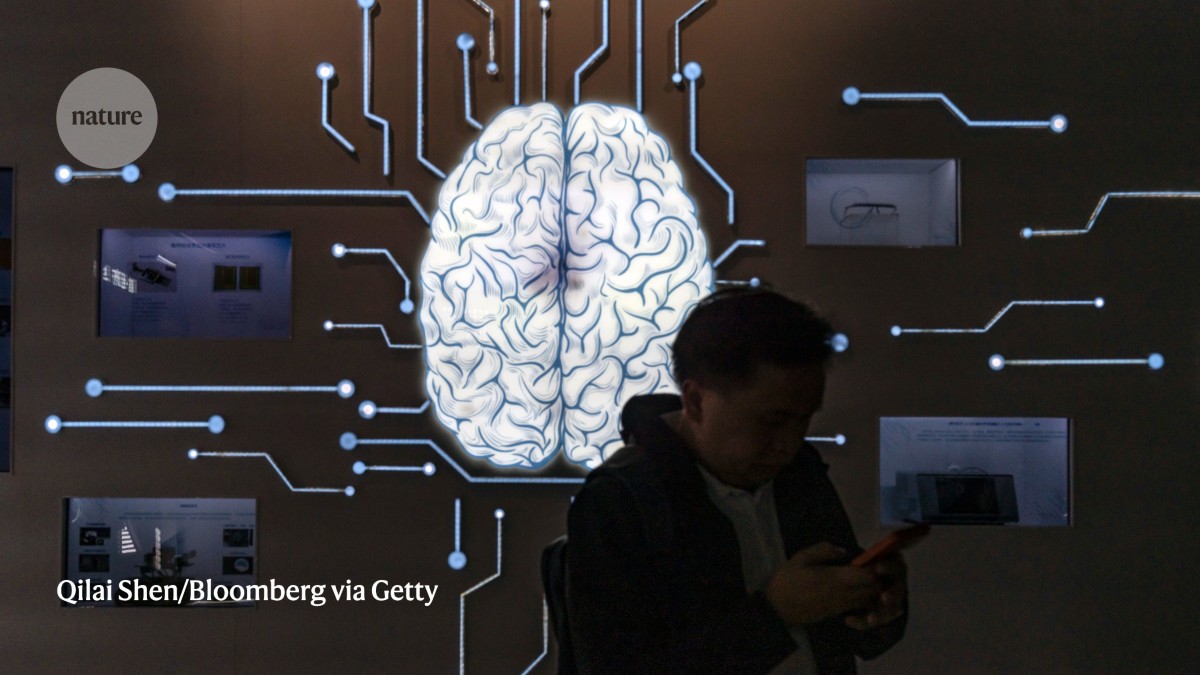
China’s rise to the status of science and technology superpower is in no small part due to the vast amount of public money it has poured into fundamental research. Its growth in spending in this area has outstripped the United States over the past decade as it seeks to drive up its research and innovation capacity further and reduce dependence on the West.
From 2013 to 2023, in nominal terms, combined central and local government spending on fundamental research in China more than tripled to 145 billion yuan (US$21 billion), according to data from the country’s Ministry of Finance. US government spending on fundamental research in 2023 was still much higher, but only increased by just over half to US$59 billion in the same period, according to the most recent data available from the US National Center for Science and Engineering Statistics. The results of China’s rising investment in fundamental research are plain to see: its contribution to articles in Nature Index journals, for example, is on track to be double that of the United States by the end of 2026.
Nature Index 2026 China
But, as China seeks to improve its ability to translate this cutting-edge fundamental research into the technologies of tomorrow — an area in which it has been playing catch up to other innovation-driven economies over the past decade — it is increasingly looking to the private sector to pitch in, both through companies’ own R&D and funding from an emerging breed of Chinese tech philanthropists.
China’s President Xi Jinping has specifically called for organizations outside the government to support fundamental research. Speaking in 2023 to an executive Chinese Communist Party committee on strengthening fundamental research, he said that non-governmental sectors should be encouraged to invest in such science through channels such as scientific funds or donations.
Such calls are being heeded, with the founders of Tencent — the firm behind China’s ubiquitous messaging app WeChat — PDD Holdings, the parent company of shopping site Temu, and phone manufacturer Xiaomi now mirroring the research philanthropy of their US counterparts from companies such as Intel, Microsoft and Hewlett Packard.
What is the motivation of these private science donors? Is this simply a by-product of a maturing innovation system that is becoming like the United States? Or is there more of a nation-building goal of wanting to help take China’s scientific status to the next level? And does a wish to stay onside with the government also play a role in their decision making?
Policy response
According to Yutao Sun, a specialist in innovation policy at the Dalian University of Technology in northeastern China, an increasing number of private firms will invest in public research because “they need to respond to government policy” about the role companies should play in the country’s science system.
One way that China’s emerging philanthropists are doing this is by running scientific prizes and grant programmes that researchers can apply to.
According to Marina Yue Zhang, a social scientist in innovation and entrepreneurship studies at the University of Technology Sydney, Australia, such programmes have the benefit of offering researchers funding that can be free from the strict conditions that are often attached to government grants. This enables some researchers to work in ways that are closer to a pure curiosity-driven model of fundamental research, something that is often seen as a strength of North American and European systems.
Tencent, for example, has since 2018 developed a grant programme for outstanding young scientists called the Xplorer Prize, with an initial investment of 1 billion yuan, and supports theoretical and experimental research through the New Cornerstone Investigator Program, launched in 2022 with a 10-billion-yuan pledge. The Xplorer Prize awards up to 50 winners every year with 3 million yuan each to pursue fundamental-research projects, and the New Cornerstone Investigator Program awards 15 million or 25 million yuan over five years, with awards given every two years.

Tencent, one of China’s largest firms, is funding research through scientific grants and prizes.Credit: Ying Tang/NurPhoto via Getty Images
Zhang says initiatives such as these mean research doesn’t “need to fall into China’s very strict and bureaucratic evaluation system”, adding that this will have a “long-term” and “positive” impact on innovation in the country.
The founder of Xiaomi, Lei Jun, helped to fund the launch of the Xiaomi Foundation in 2019 to support innovation and young scientists. By the end of 2024, the Xiaomi Foundation had donated a total of 650 million yuan, supporting 65 universities, funding more than 12,000 student scholarships and providing grants to around 800 young teachers and researchers. The scholarships are typically awarded through universities and include support for those training to be teachers and technology workers or students who are facing financial hardship.
Public–private partnership
The Xiaomi Foundation has since become an even bigger trailblazer in China’s research funding system, becoming the first private philanthropic organization to give money directly to China’s primary fundamental research funder, the National Natural Science Foundation of China (NSFC). Its 2024 donation of 100 million yuan, for a scheme supporting young researchers, has kickstarted a movement for other companies to support the NSFC, according to the Impact Philanthropy Research Report 2025: Philanthropy Donations to Science Research — a report produced by Beijing-based China Philanthropist magazine’s Impact Philanthropy Research Institute.
“Xiaomi really opened the gate” by putting philanthropic money “into the national mechanism” for research, says Li Jing, lead author of the report, who is now a senior adviser at the Shenzhen-based China Global Philanthropy Institute, a non-profit organization founded by Chinese and US philanthropists — including Bill Gates — that offers training programmes in philanthropy. Tencent was among those following Xiaomi in 2025 by donating 500 million yuan to the NSFC.
It led later in the year to the launch by the NSFC of the Private Enterprise Innovation and Development Joint Fund, which aims to empower companies to officially participate in national fundamental research. According to the NSFC, the fund supports scientists to tackle research questions that have been identified by private enterprises, based on their innovation needs. The four inaugural partners, who will focus on research in their fields, are Hengrui Pharmaceuticals, based in the eastern city of Lianyungang, Shenzhen-based Mindray, Singclean Medical, based in Hangzhou, and Qilu Pharmaceutical, based in Jinan.
Another way that China’s science philanthropists are supporting their country is by spending their money to facilitate international cooperation between scientists. A leading example of this is the World Laureates Forum, an annual Shanghai-based event that attracts scientists from all over the world. The event was created by the World Laureates Association (WLA), a non-governmental organization founded in 2017 to bring together leading Nobel prizewinners and other notable scientists, with Roger Kornberg, winner of the 2006 Nobel Prize in Chemistry, as its founding chairman. The WLA Foundation, which now co-hosts the forum, is funded by Xu Hang, co-founder of medical device firm Mindray, and Neil Shen, founder of the investment firm HongShan.
As countries such as the United States put additional visa restrictions on academics from China, the activities of the WLA help to grow international collaboration with Chinese researchers, according to Li. Such developments point to a research system that is continuing to evolve in similar ways to the United States and other established innovation systems, in which the role of the private sector is central in boosting the impact of research. However, the motivations that China’s titans of industry have for funding research might not always be the same as in other countries.
Zhang says sometimes the aim of private-sector contributions in China is “not just for supporting scientific research” but part of buying a “social licence in the political system” to allow them to operate in the country.
“You keep low key, but you keep doing things that the government wants you to do. Donating to research funding, awarding breakthrough technologies, and those things are welcomed by the government,” she says.
This motivation is often different from the predominant philanthropic culture established over many years in the United States, where the non-profit sector contributes far more to research than in any other industrialized country, according to data from the Organisation for Economic Co-operation and Development. Donors there are mainly motivated by the desire to “give something back”, says Christopher Martin, previously director of physical sciences at the US-based Kavli Foundation, who is now president of the Explorative Science Foundation, a New Zealand-based non-profit organization launched in August 2025 that offers research grants for curiosity-driven fundamental science.
“The philanthropists I’ve met felt that the US gave them opportunities to excel and do wonderful things with whatever business they were doing, and that it is part of being American, to give back as best they can,” he says.
That is not to say that private-sector donations to research in China are always about ensuring good government relations and responding to policy pronouncements. Some individual donations given directly to academic institutions demonstrate that there can often be personal reasons, too.
For example, the Chinese co-founders of US-based investment firm Shanda Group — Tianqiao Chen and his wife, Chrissy Luo — created the Tianqiao and Chrissy Chen Institute (TCCI) in 2016 with a donation of US$1 billion to focus on brain research. Tianqiao Chen has said that their interest in the field followed struggles with his own mental health.
TCCI has invested in a number of brain research institutes around the world, starting with the Tianqiao and Chrissy Chen Institute for Neuroscience at the California Institute of Technology (Caltech) in 2016. The Caltech donation initially came in for some criticism in China, where some observers felt such philanthropy should be directed back to the country. In 2017, it was announced that the couple had also invested in the Tianqiao and Chrissy Chen Institute for Translational Research in Shanghai in partnership with the Shanghai Zhou Liangfu Medical Development Foundation and Fudan University-affiliated Huashan Hospital.

