


How sourcing expectations are changing how drones are engineered
Amprius’ newly announced U.S.-based manufacturing partnership with Nanotech Energy is more than a battery supply-chain milestone. It is another signal that “Made in America” directives are changing not only where drones are built, but how they are designed.
For companies that want to market drone products in the United States, domestic sourcing is increasingly part of the price of entry. Expectations around component origin now shape which platforms are even considered by government customers and regulated commercial operators.
A Battery Partnership That Reflects a Broader Shift
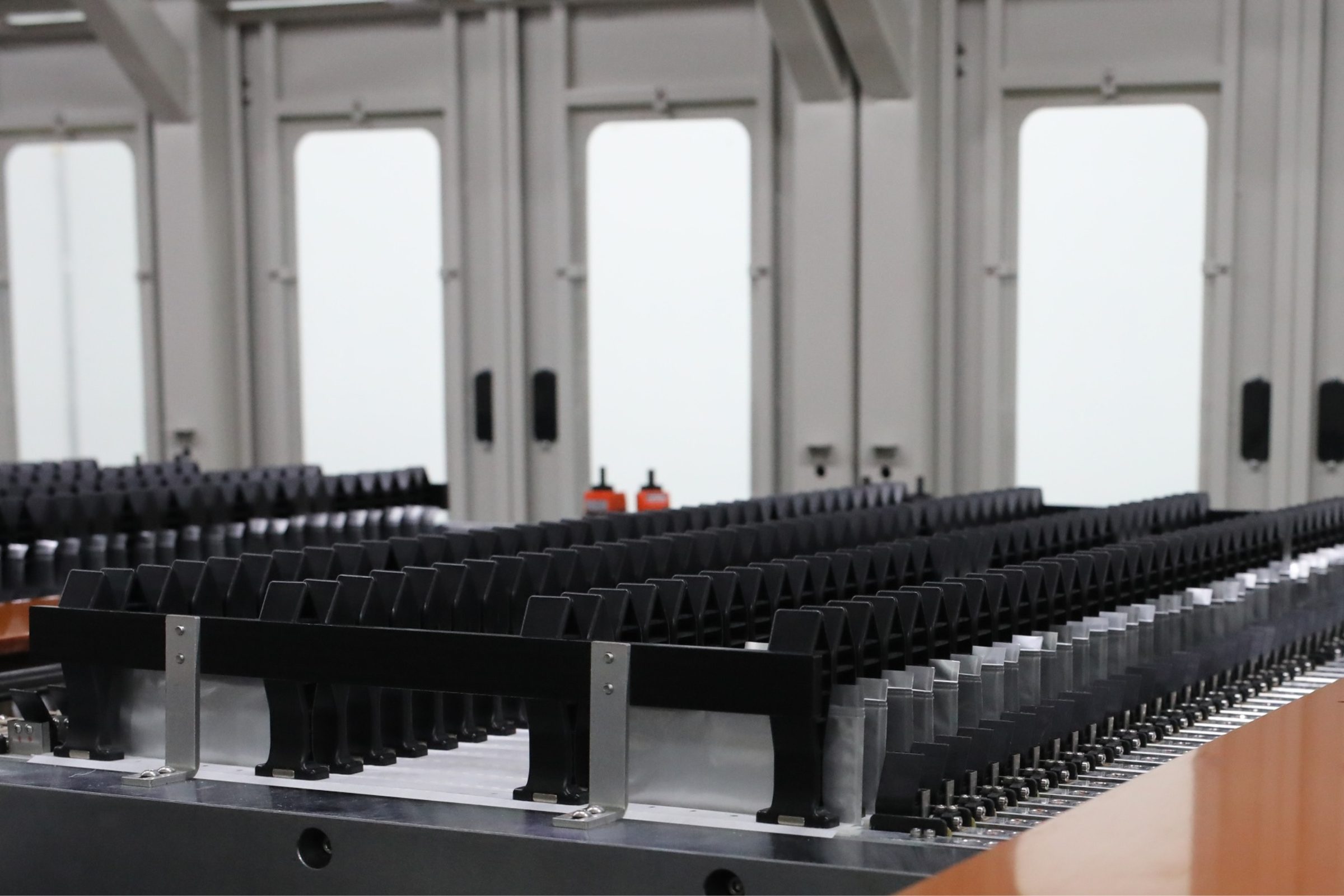
Amprius Technologies announced a manufacturing partnership with Nanotech Energy to establish domestic production of its high-performance silicon-anode lithium-ion cells. The partnership provides Amprius with a U.S. manufacturing pathway for batteries supporting customers such as L3Harris Technologies and aligns with evolving sourcing expectations under the National Defense Authorization Act.
Batteries illustrate a wider reality. Critical drone components are no longer judged solely on performance. Their origin now affects eligibility, certification, and market access.
From Security to Supply-Chain Resilience
During a recent webcast, a viewer asked a simple question: “What’s the problem with components?”
Not long ago, the answer centered on security and spyware. Today, the policy focus is increasingly on availability.
Policymakers and manufacturers are asking whether they will still be able to obtain a part if another pandemic occurs, shipping lanes close, or a conflict disrupts a region of the world. Supply-chain resilience has become a performance metric.
Policy as a Design Constraint
NDAA provisions restrict federal agencies from acquiring or operating certain foreign-made unmanned aircraft systems and components. At the same time, the Federal Communications Commission has expanded its Covered List of communications equipment deemed to pose unacceptable risk to all foreign made drones – including those made with foreign components – with only a few exceptions.
Because drones depend on radios, modems, LTE and 5G modules, satellite links, sensors, and power systems, these policies shape which parts engineers can realistically choose.
The result is compliance-constrained design. Product roadmaps increasingly begin with what can be sourced and sustained, not simply what performs best.
A Rebuilt Drone Stack
Across the ecosystem, airframes, propulsion systems, batteries, sensors, communications hardware, and onboard computing are shifting toward domestic or allied manufacturing pathways. What once resembled a globally sourced patchwork is becoming a more regionally anchored technology stack.
Amprius’ move fits squarely into this pattern. Establishing a U.S. manufacturing pathway is not only about national security alignment. It is about insulating a mission-critical subsystem from global disruption. If batteries cannot be produced, nothing flies.
Eligibility Becomes Strategy
Domestic manufacturing can be more expensive in the near term. But companies are increasingly finding that faster qualification, reduced regulatory risk, and long-term resilience outweigh those costs.
The strategic question is no longer which supplier is cheapest. It is which supplier keeps a platform eligible.
The Made in America movement is no longer just changing where drones are manufactured. It is changing how platforms are conceived, how components are selected, and how innovation itself is structured.
Read more:

Miriam McNabb is the Editor-in-Chief of DRONELIFE and CEO of JobForDrones, a professional drone services marketplace, and a fascinated observer of the emerging drone industry and the regulatory environment for drones. Miriam has penned over 3,000 articles focused on the commercial drone space and is an international speaker and recognized figure in the industry. Miriam has a degree from the University of Chicago and over 20 years of experience in high tech sales and marketing for new technologies.
For drone industry consulting or writing, Email Miriam.
TWITTER:@spaldingbarker
Subscribe to DroneLife here.

