


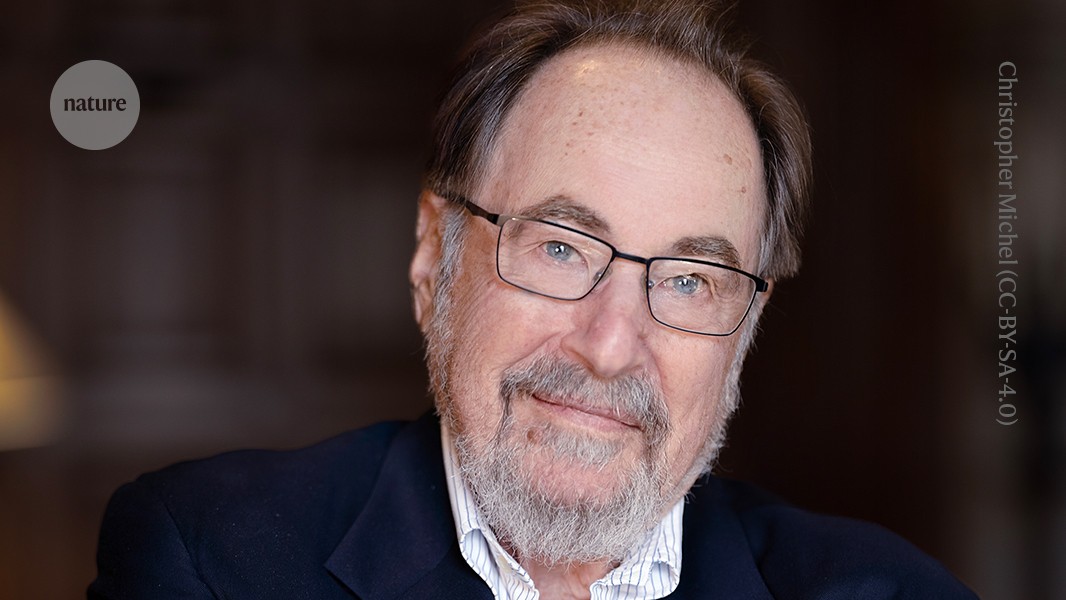

Credit: Christopher Michel (CC-BY-SA-4.0)
The world has lost a giant of virology, molecular biology and science advocacy with the death of David Baltimore, at age 87. Baltimore demonstrated that RNA viruses that cause cancer contain an enzyme capable of directing the synthesis of DNA from an RNA template. We now know this enzyme as reverse transcriptase and the viruses as retroviruses, reflecting the backward flow of genetic information in this type of virus.

This is how the world finally ends the HIV/AIDS pandemic
The discovery of reverse transcriptase in 1970 explained a mystery in the capabilities of these viruses. It clarified how an RNA virus could generate a genomic copy of itself that could persist in the infected cell and be inherited by daughter cells. It also revealed how, much later, cells could produce further copies of the viral RNA. The idea that this mechanism could involve the formation of a DNA copy of the RNA genome was proposed by Howard Temin, who shared the 1975 medicine Nobel with Baltimore and Renato Dulbecco. But accepting this theory required unusual willingness on Baltimore’s part to challenge the central dogma of molecular biology — specifically, the principle that information flows in all living systems from DNA to RNA to protein.
Reverse transcriptase has become an essential tool in modern molecular biology, because the ability to make DNA copies of any RNA molecule, coupled with the extraordinary power of recombinant DNA methods, enables the characterization of the RNA molecules that define cell types and their functions.
Baltimore was born and grew up in New York City. He graduated with a chemistry degree at Swarthmore College, Pennsylvania, in 1960. He then joined the graduate biology programme at the Massachusetts Institute of Technology (MIT) in Cambridge, before moving to The Rockefeller University in New York City, where he completed a PhD in animal virology. After a postdoc at the Salk Institute for Biological Studies in San Diego, California, he returned to MIT in 1968 to establish his own group, where he made his first seminal discovery. His laboratory went on to show how reverse transcriptase orchestrates, through an extraordinarily complex series of steps, the formation of a double-stranded DNA copy of the single-stranded retroviral RNA genome.
It’s time to admit that genes are not the blueprint for life
Baltimore uncovered aspects of the replication of many other viruses, including poliovirus and vesicular stomatitis virus. He discovered and characterized several cancer-causing genes, including the one encoding the v-abl tyrosine kinase in Abelson murine leukemia virus. The mammalian homologue, c-ABL, later proved to be the driver of chronic myeloid leukaemia in humans, a cancer now treated successfully with the kinase inhibitor Gleevec (imatinib) and its successors.

