


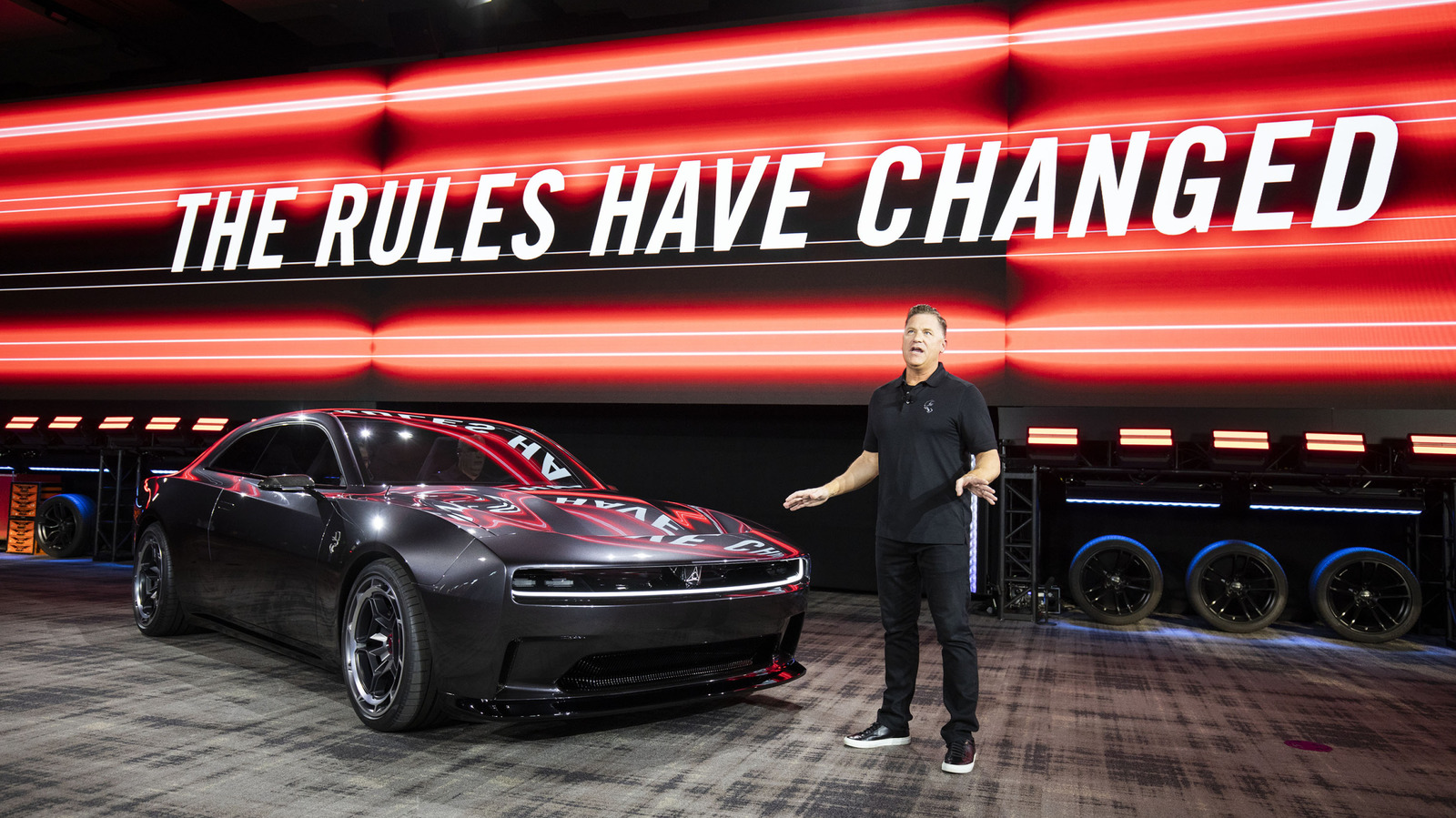
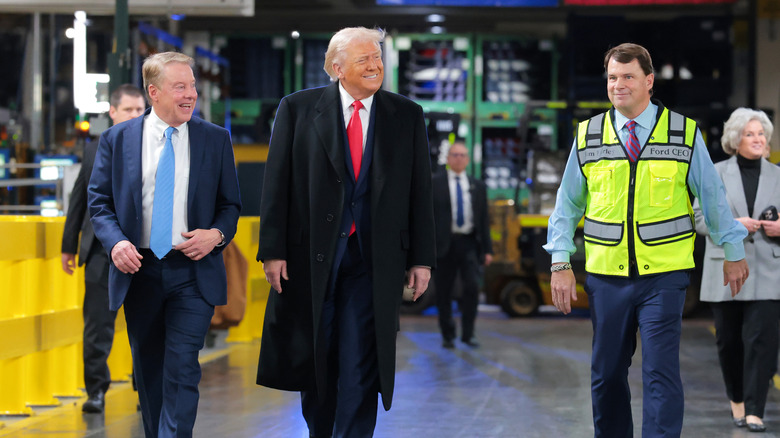
Ever since Republicans decided the president can do anything he wants as long as his last name is Trump, many automotive executives and world leaders chose to bend the knee in hopes of receiving preferable treatment on tariffs. Akio Toyoda’s pro-Trump outfit may have made him the poster child there, but American automakers also cozied up to the Trump administration. Inviting Trump to tour the F-150 factory may not have gone so well for Ford, but it looks like their appeasement strategy may have completely backfired now that the Supreme Court just struck down Trump’s tariffs.
The ruling was just announced earlier Friday, so we’ll have to see how Republicans and business leaders respond, but in a 6-3 ruling, the Court found that the Constitution gives the powers of taxation to Congress, not the president. Chief Justice John Roberts wrote the decision, saying, “The Framers did not vest any part of the taxing power in the Executive Branch.” The three normal justices on the bench sided with Roberts, as did Justices Gorsuch and Coney-Barrett. Justices Samuel Alito, Clarence Thomas and Brett Kavanaugh dissented, because of course they did.
Does that mean we’ll immediately get all the cars that international automakers decided not to sell here after the Republican tariffs made them unprofitable? That remains to be seen. The same can also be said about how the Trump administration will respond to this ruling, but at the very least, it’s always a good thing when a court decides the president can’t unilaterally raise taxes just because he got his feelings hurt.
Emergency powers don’t apply
More specifically, the Trump administration had argued that the 1977 International Emergency Economic Powers Act gave the president the authority to impose tariffs if they declare an emergency. But as Roberts wrote in the majority decision, the administration failed to demonstrate that Congress had ever intended for the IEEPA to include tariffs:
The President asserts the extraordinary power to unilaterally impose tariffs of unlimited amount, duration, and scope. In light of the breadth, history, and constitutional context of that asserted authority, he must identify clear congressional authorization to exercise it.
IEEPA’s grant of authority to “regulate . . . importation” falls short. IEEPA contains no reference to tariffs or duties. The Government points to no statute in which Congress used the word “regulate” to authorize taxation. And until now no President has read IEEPA to confer such power.
We claim no special competence in matters of economics or foreign affairs. We claim only, as we must, the limited role assigned to us by Article III of the Constitution. Fulfilling that role, we hold that IEEPA does not authorize the President to impose tariffs.
As NBC News points out, however, the Roberts court didn’t completely do away with all tariffs, and it’s possible Republicans could use other laws to revive some of the now-dead tariffs, but at least for now, things are looking pretty good for automakers who build their cars outside the United States:
The decision does not affect all of Trump’s tariffs, leaving in place ones he imposed on steel and aluminum using different laws, for example. But it upends his tariffs in two categories. One is country-by-country or “reciprocal” tariffs, which range from 34% for China to a 10% baseline for the rest of the world. The other is a 25% tariff Trump imposed on some goods from Canada, China and Mexico for what the administration said was their failure to curb the flow of fentanyl.
B**** better have my money
Over the next week, you’ll probably see plenty of analysis (as well as fears that this decision is a sign Roberts intends to finish gutting the Voting Rights Act next) of the decision, likely written by actual lawyers who understand the law better than some random car blogger who once helped an ex study for her 1L finals. But something tells me the biggest question everybody’s going to have is, “Okay, so when do we get our money back?”
After all, while far too many voters were willing to pretend Trump’s laughable claims that other countries would pay the tariffs were valid if it also meant he’d hurt the people they didn’t like, that’s just not how tariffs work. Importers pay the tariffs and pass most, if not all of the cost along to the consumer. As the notoriously conservative Wall Street Journal put it in a recent headline, “You’re Paying 90% of Trump’s Tariffs.” And since the Supreme Court just declared those tariff taxes illegal, the taxpayers deserve to get their money back, right?
As obvious as that question is, though, the Roberts decision doesn’t appear to have addressed the issue of returning the illegal tariff revenue. At all. In fact, Kavanaugh even went as far as to call Roberts out in his dissent, writing:
One issue will be refunds. Refunds of billions of dollars would have significant consequences for the U. S. Treasury. The Court says nothing today about whether, and if so how, the Government should go about returning the billions of dollars that it has collected from importers. But that process is likely to be a “mess,” as was acknowledged at oral argument.
Whether that means Roberts wants the court to avoid taking a role in how the illegal tariff revenue is returned or simply chickened out because it could get messy, no one can say, but I wouldn’t get too excited just yet. Since the importers paid the tariff taxes, if the federal government is ultimately forced to return the money it collected illegally, it would most likely go to those companies, not the individual taxpayers stuck paying higher prices. Which sucks for us, but hey, sometimes you’ve got to take your wins when you can get them.

