


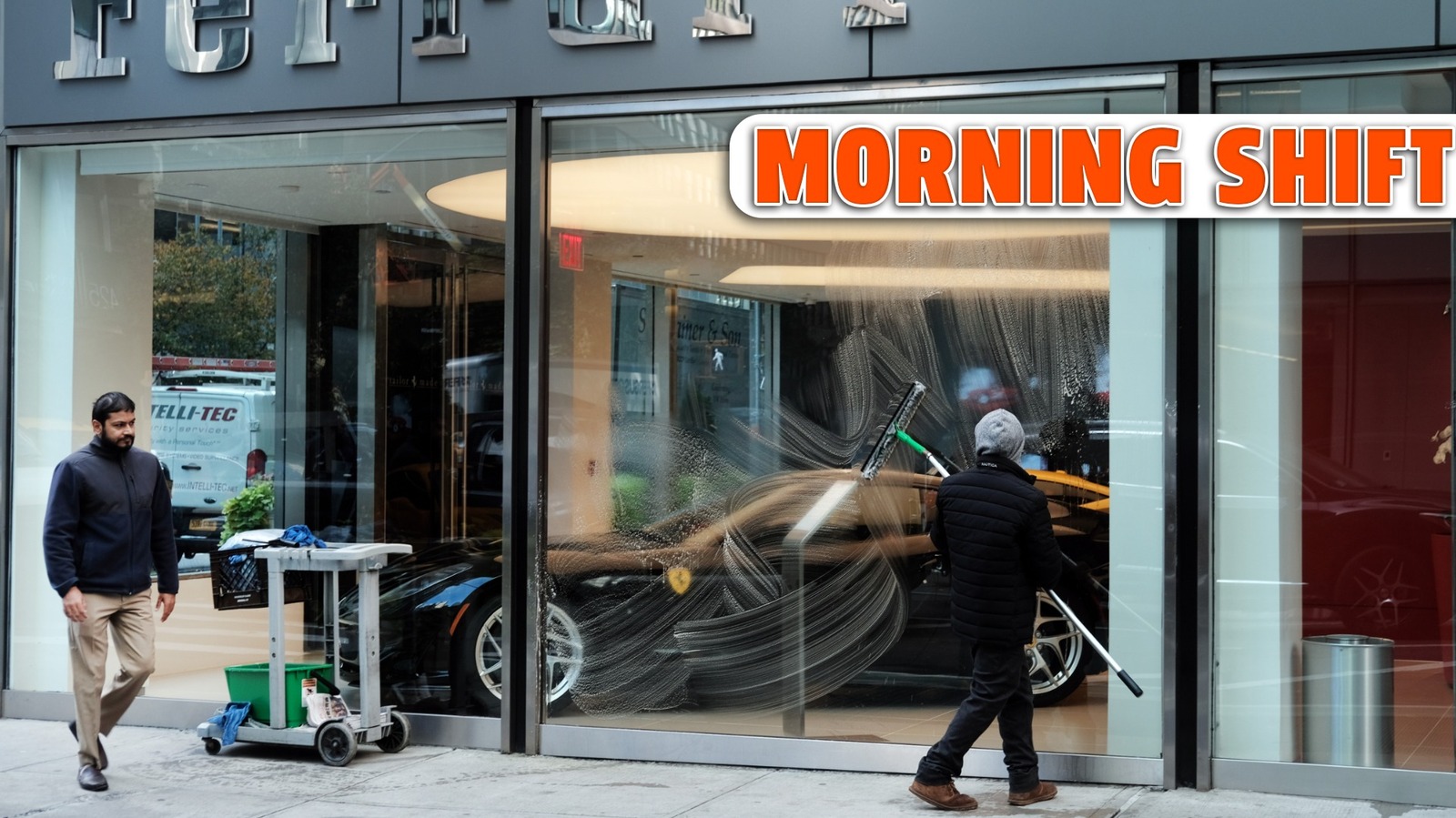
As is the case with just about everything these days, the car buying market is a tale of the haves and the have-nots. Higher-income customers seem to be doing quite well, but their lower-income counterparts are struggling to say the least. What we’ve got here is a “bifurcated consumer” base, according to an Cox Automotive Chief Economist Jeremy Robb, and it’s part of the “K-shaped” economy.
Higher-income consumers have pretty much been propping up consumer spending metrics while also experiencing faster wage growth, and at the same time, lower-income consumers have felt the “sting of inflation,” Patrick Manzi, National Automobile Dealers Association Chief Economist, said. It’s killing folks when it comes to vehicle ownership.
Between 2019 and 2025, auto parts and equipment prices increased by about 25%, according to the Bureau of Labor Statistics. At the same time, vehicle maintenance and repair costs rose 46%, and insurance rates rose 56%. It almost makes the 22% rise for new vehicles and 32% rise for used seem palatable, but even that’s disastrous. From Automotive News:
Cox also has a Private Mobility Transport index that looks at the total cost of ownership — not just the monthly payment but also gasoline, insurance and repairs. From prepandemic January 2019 to December 2025, that cost metric increased 48 percent, Robb said. It should be around 54 percent by 2027, he said.
In 2019, the average monthly cost of ownership for all vehicles — new and used combined — was $750 according to the index, Robb said. At the end of 2025, it was $1,030.
[…]
“[W]
e are really seeing what we call a ‘no-growth’ labor market out there in the economy overall,” he said. “We’re not seeing a lot of people with new jobs created.”
Lower net immigration also reduces job growth and household formation, Robb said.
“That is not good for housing, automotive — things like that,” he said.
Manzi said “job growth really came to a big halt” at the end of 2025, with the U.S. even posting net job losses some months.
Last year, the U.S. created about 49,000 new jobs per month on average, compared with about 167,000 jobs per month in 2024, Manzi said. And much of 2025’s gains were in health care, he said.
Still, the rich are getting richer, and that means sales will probably still be pretty solid in 2026. Manzi predicts about 16 million vehicles will sell this year, but they’re going to far wealthier individuals on the whole.
In 2020, 50% of new-vehicle buyers made less than $100,000 a year. In 2025, that number dropped to 37%. In that same time period, the percentage of buyers making over a quarter million bucks a year doubled to 21%.
I’d say we live in Hell, but we probably couldn’t afford the rent.

