


Good morning! It’s Tuesday, February 24, 2026, and this is The Morning Shift, your daily roundup of the top automotive headlines from around the world, in one place. This is where you’ll find the most important stories that are shaping the way Americans drive and get around.
In this morning’s edition, Mercedes-Benz is adding a hybrid option to its upcoming “Little G” baby G-Class, BMW is replacing Level 3 driving systems with Level 2 in an upcoming 7 Series update, Ford is recalling over 400,000 SUVs for a massive steering issues, and Volvo is recalling 40,000 EX30s for a pesky fire issue.
1st Gear: ‘Little G’ gets a little hybrid
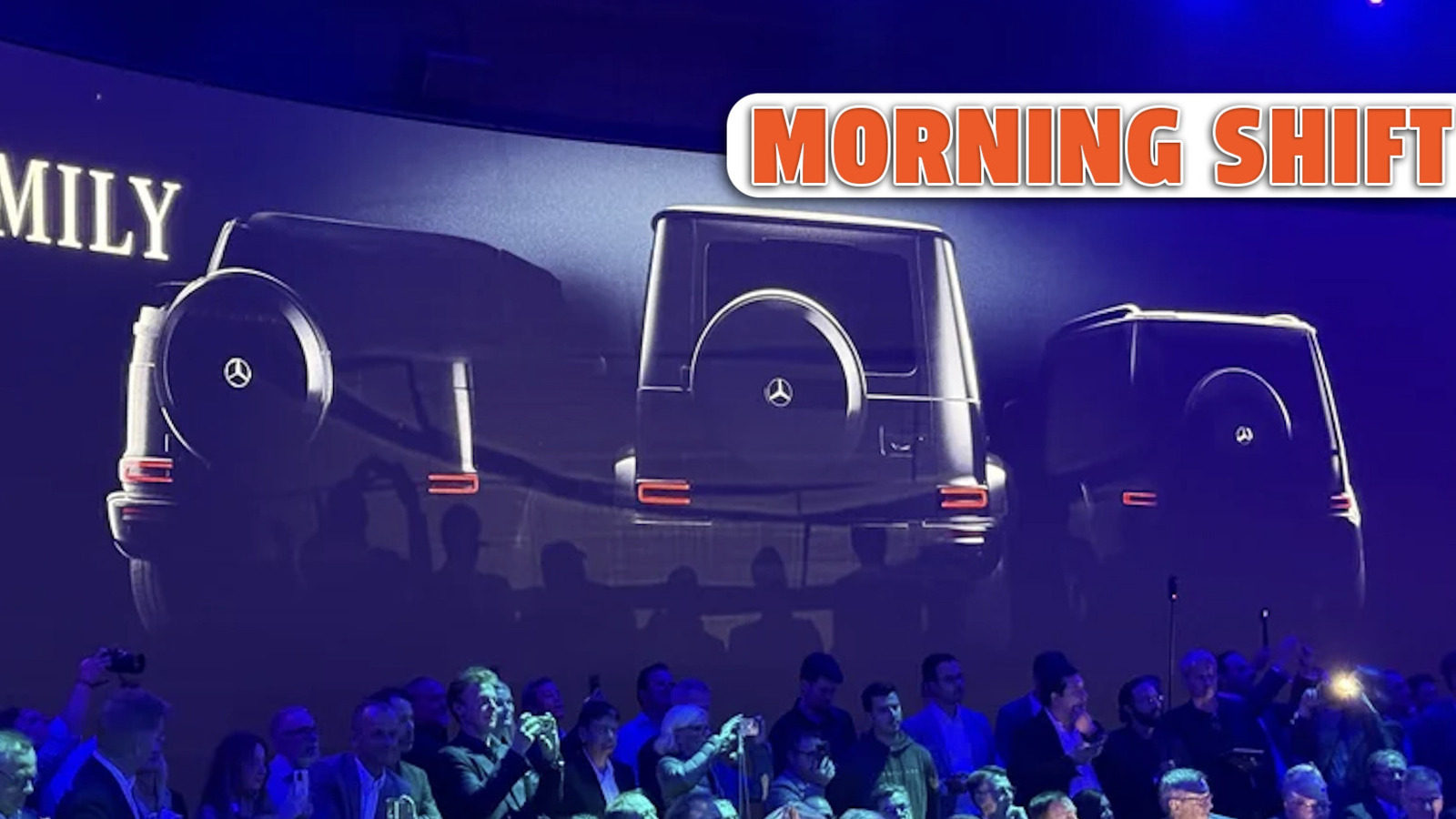
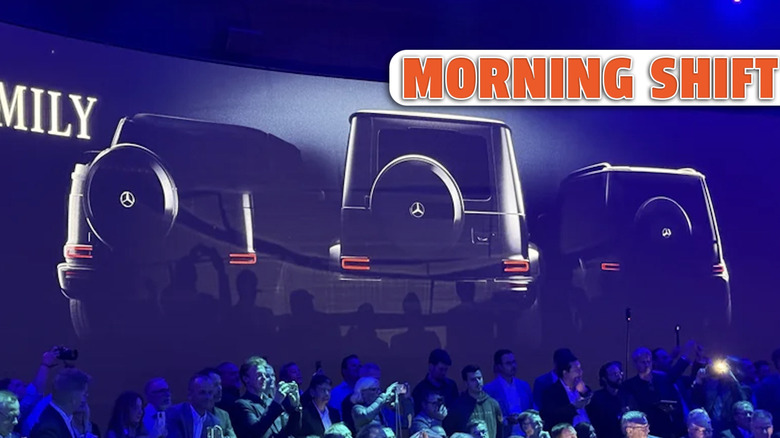
It was widely thought that when the Mercedes-Benz “Little G” baby G-Class arrived in 2027, it would be powered exclusively by all-electric drivetrains. Well, that no longer seems to be the plan from the folks over in Stuttgart. It’s now expected that the Little G — which sits on a unique architecture — will be sold with both electric and combustion engine options.
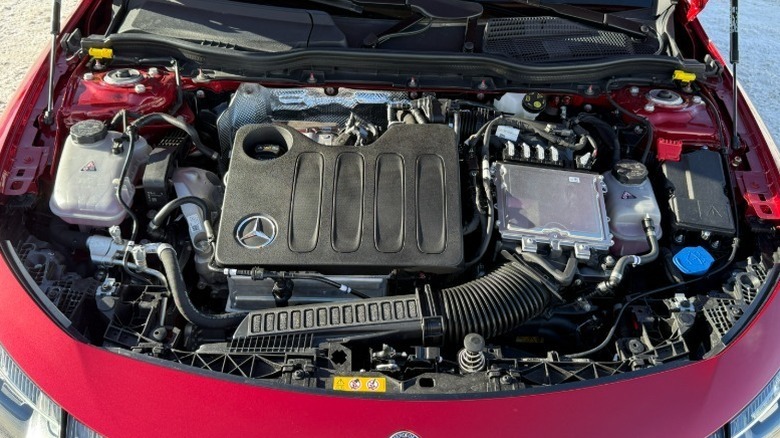
The tiny 4×4 is reportedly going to borrow the turbocharged 1.5-liter inline-four cylinder hybrid motor currently found in the CLA I tested a while back, that produces up to 208 horsepower and 280 pound-feet of torque. Its paired with a gearbox-mounted electric motor that helps the car get going, and honestly, I didn’t love it when I tested it. Perhaps it’ll be tuned better in the Little G, but if I were a betting man, the EV lil’ G would still be the one to have. That being said, it does seem like Mercedes had this plan in the back of its mind — just in case — all along. From Autocar:
This decision reflects a change in Mercedes’ strategy for its new models as it aims to balance varying global regulatory demands with consumer powertrain preferences.
The move also comes amid disappointing sales of the electric G-Class.
Indeed, Mercedes recently scrapped previous targets to go EV-only, with CEO Ola Källenius saying it will sell ICE models “well into the 2030s” as the brand aims to “remain strategically focused and tactically flexible”.
[…]
Indeed, Mercedes recently scrapped previous targets to go EV-only, with CEO Ola Källenius saying it will sell ICE models “well into the 2030s” as the brand aims to “remain strategically focused and tactically flexible”.
An 85kWh NMC battery is expected to provide a WLTP range of close to 450 miles.
Regardless of powertrain, it is understood that the Little G will be sold exclusively with four-wheel drive as part of its brief to deliver class-leading off-road performance.
Whether buyers choose the hybrid or EV, both are going to get sophisticated power management systems with torque vectoring that’ll allow individual drive to each wheel, according to Autocar. That’ll theoretically allow the Little G to offer similar off-road performance to the full-size G-Class.
It’s expected to be just 173 inches long, nearly 19 inches shorter than a G63, and run on its own platform. Initially, it was supposed to share underpinnings with the electric GLC and C-Class, but that just wouldn’t do for what Mercedes was hoping to accomplish with this car.
I cannot explain to you how excited I am for this thing, even if it’s got an engine I’m not exactly in love with.
2nd Gear: BMW says macht nichts to Level 3 driver assist in 7 Series facelift
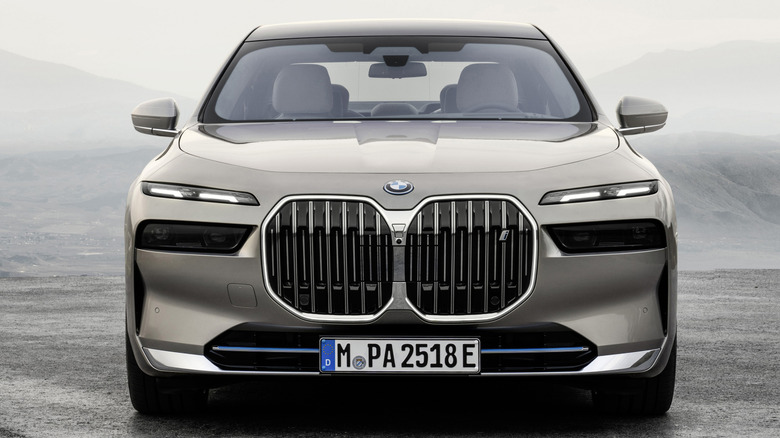
BMW is giving up on its Level 3 “eyes-off” automated driving system in the 7 Series as part of a model update that’ll come at the end of April. It’ll be replaced with a newly developed Level 2 system based on the company’s Neue Klasse tech platform, which has already been introduced in the iX3. The plan is to roll it out more broadly across future models as well.
Right now, the 7 offers “Personal Pilot L3” system that allows for conditional Level 3 automated driving. I know it sounds like a bit of a step backwards to go to a L2 system, but BMW pointed to costs and limited rear-world applications for its justification. I suppose I understand it. From Automotive News:
Level 3 systems require more complex hardware, including lidar sensors and high-performance computing, as well as extensive validation, safety certification and ongoing fleet monitoring to meet regulatory requirements. These factors significantly increased costs for both the manufacturer and customers.
The Level 3 option in the 7 Series was priced at about €6,000 ($7,000). By contrast, the new Level 2 system costs €1,450 ($1,700) and offers a broader range of functions.
The updated system enables hands-off driving on freeways, including automatic lane changes confirmed by eye movement. BMW also plans to introduce navigation-guided “address-to-address” functionality in urban traffic.
Regulatory approval under UN Regulation No. 171 allows BMW to deploy the Level 2 system across multiple markets without lengthy approval processes. The rollout is scheduled to begin in large parts of Europe this spring, with expansion planned for the U.S. and a localized version under development with partner Momenta in China.
BMW does not view the discontinuation of Personal Pilot L3 as a strategic retreat from higher levels of automation. The automaker pointed to the more than 160 million km (100 million miles) of hands-free driving on its freeway assistant in Germany, the U.S., and Canada, providing valuable data for further development.
BMW isn’t the only automaker backtracking on its Level 3 goals. Last year, Stellantis hit the brakes on its first L3 automated driving system because of high costs, tech challenges, and limited customer demand. Cross-country rivals Mercedes-Benz also says it’s refocusing on capabilities a step below Level 3, calling its MB.Drive Assist Pro system “Level 2 Plus Plus.” Level 2 Plus systems enable hands-off highway driving with automatic lane changes; the second Plus adds the ability to navigate urban environments autonomously. Theoretically, this is where Tesla’s FSD system sits.
Once you get to Level 3, drivers can take their eyes and hands off the controls and do other things in the car, but they’ve gotta be ready to take control when asked.
3rd Gear: Ford recall fans are having a big day
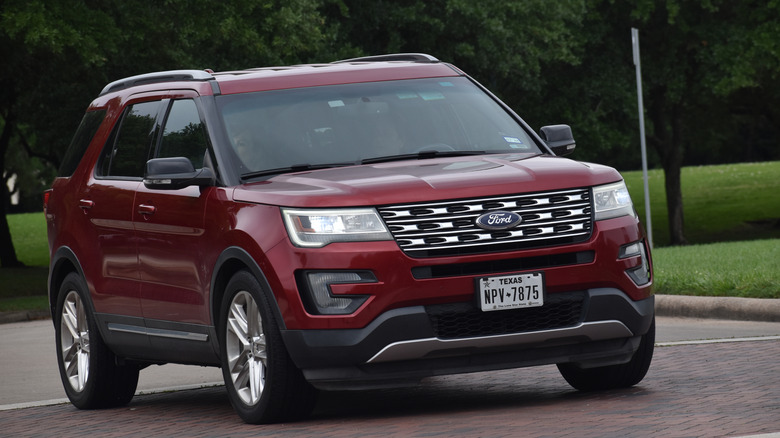
Ford, please never change. The Blue Oval is recalling 412,774 2017-2019 Explorers in the U.S. because of an issue with the rear suspension toe links. Apparently, they can fracture, and when that happens, the crossovers can suffer a total steering control loss, the National Highway Traffic Safety Administration says. I don’t have to tell you why that’s bad.
To remedy the issue, dealers are going to replace the potentially defective toe links with (hopefully) non-defective ones, free of charge, according to Reuters.
Oh, just to add insult to injury, Ford is also recalling 24,690 Escape and Lincoln Corsair Plug-in Hybrids because of a high-voltage battery issue that may lead to it short circuiting and catching fire.
All in all, Ford has issued 10 recalls impacting nearly 580,000 vehicles in 2026 already. No other automaker has issued more than 5, according to NHTSA.
4th Gear: Volvo EX30 batteries may catch fire, which isn’t good
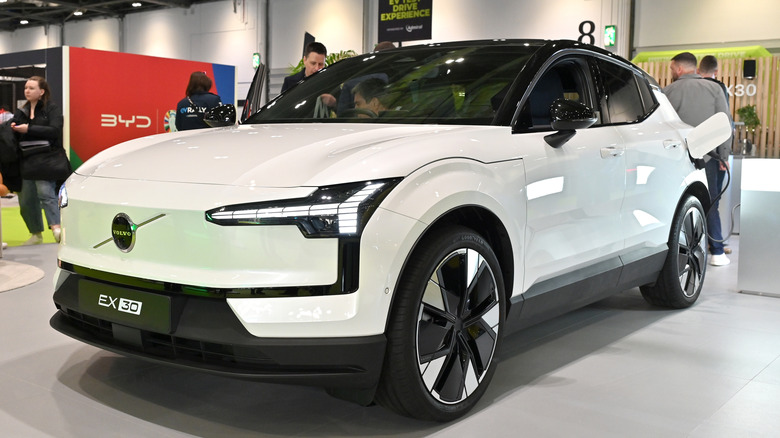
It’s apparently been a big couple of days for recalls, because Volvo is now asking to check on over 40,000 of its EX30 electric crossovers because there’s a risk the battery pack could overheat and cause a fire. This is bad news for a company like Volvo, which is already sort of struggling at the moment. The issue is a headache, given its hard-earned safety reputation, and from a bottom-line perspective Volvo really cannot afford to spend a ton of money fixing cars it just sold, either. From Reuters:
The previously unreported recall involves replacing modules in the high-voltage battery packs of the compact SUV, a crucial model in Volvo’s push to compete with cheaper Chinese brands. Battery safety is a highly sensitive issue for EV makers and consumers.
A total of 40,323 EX30 Single-Motor Extended Range and Twin-Motor Performance cars with these high‑voltage cells are affected, the Swedish automaker that is majority-owned by China’s Geely said in response to questions from Reuters.
“ We are now contacting the owners of all affected cars to advise them of next steps,” Volvo said.”
[…]
Volvo’s battery issues come as the carmaker pursues a 1.9 billion dollar savings drive and deeper integration with parent Geely. The batteries were made by a Geely-backed joint venture, Shandong Geely Sunwoda Power Battery Co. Volvo said the supplier has fixed the problem and would supply the new battery cells.
Volvo said it would replace affected units free of charge, urging owners in the meantime to continue limiting charging to 70% to eliminate the fire risk.
[…]
Since December, Volvo has told EX30 owners in more than a dozen countries including the United States, Australia and Brazil to park away from buildings and cap charging at 70%, according to regulatory filings and the company.
The new replacement battery modules could end up costing Volvo $195 million, and that doesn’t even include logistics and repair costs. What a nightmare.
Reverse: Cry more, Jerry
 History.com
Listen, if you don’t want to be made fun of, you shouldn’t be in the public eye, Jerry. Who knows what the the U.S. would be like today if the SCOTUS ruled in the other direction? Hell, maybe today it would. If you want to learn more about the case and Falwell, head over to History.com.
On the radio: Len – Steal My Sunshine
Yesterday, when I wasn’t writing, I was outside at my parents’ house helping my mother dig out from 30 inches of snowfall, so yeah, I’ve had enough of winter. That’s why I’m turning to some Summer tunes to manifest warmer weather. I can’t take it anymore. My back hurts so goddamn much.

