


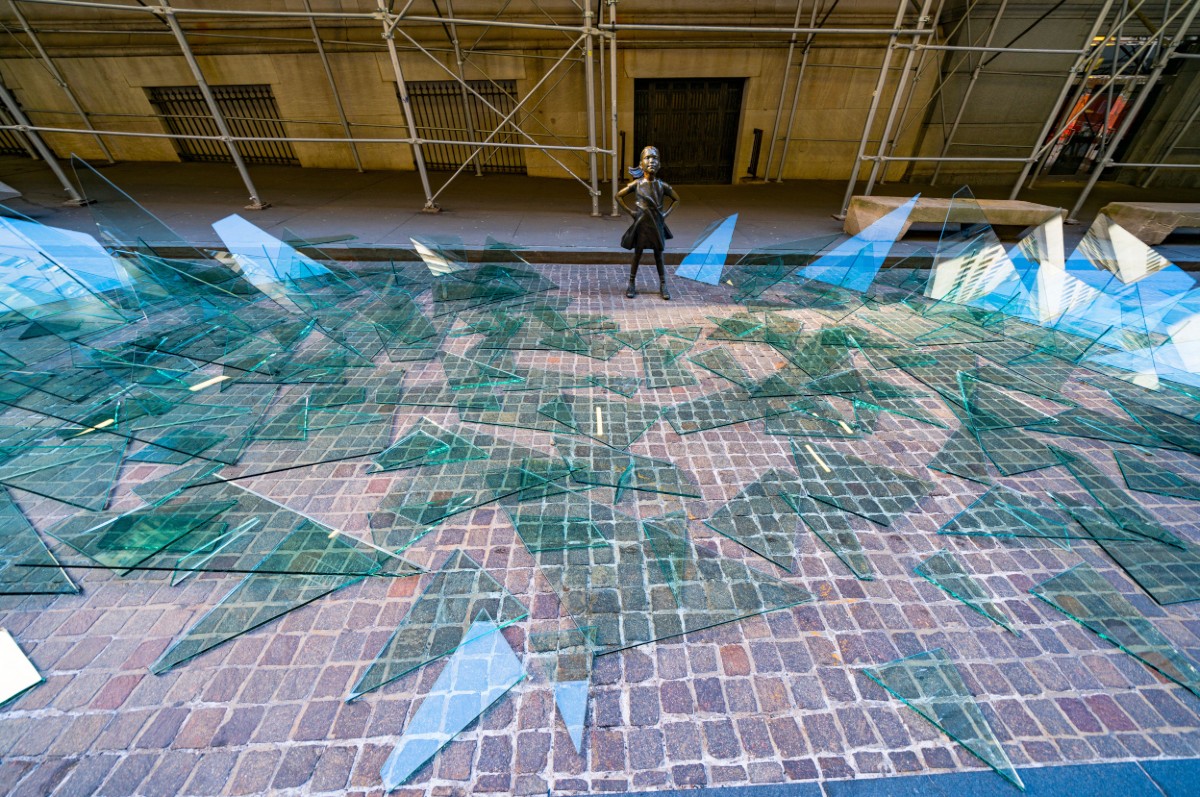

An art installation of a broken glass ceiling in New York City marks International Women’s Day.Credit: Studio Bonobo/Alamy
I think I can safely say that I have ‘made it’ as an academic. I’ve landed major grants, published exciting papers (in my opinion, at least), pursued new lines of research, cultivated an international network of collaborators and proudly witnessed former trainees become successful.
In addition, I am a full professor, hold leadership positions at Wageningen University and Research in the Netherlands, and last May was appointed to the Group of Chief Scientific Advisors to the European Commission. Together with six colleagues (including two other women), I provide independent evidence-based advice to the European Union’s main executive body.
I’ve achieved all this while flying nearly every ‘red flag’ that people say is antithetical to a successful academic career. I am a woman, am young-ish for an academic, have three children (now aged 9, 12 and 14), have moved internationally for my education and career, have worked in industry and now work in interdisciplinary research. I even have a tattoo (it’s quite boring).
None of this should matter in 2026. Yet irrelevant and superficial traits such as these often determine who is automatically granted authority and trust, and who must continually overdeliver to climb the ranks. In many workplaces — including those for science and research — we might be past the days of overt bias based on gender, race, sexual orientation or whatever else, but the glass ceiling remains. Cracked it might be, but it still holds.
Bias swells
In my career, and to my surprise, I have learnt that success does not overcome bias. Women are doubted until they overdeliver. Women in leadership positions are doubted even beyond that.
Discrimination or bias in academia is like a slow stream, a mild but persistent undercurrent that erodes your professional armour, confidence and motivation. In my experience, and that of many female colleagues, bias can hide in accusations such as ‘lacking empathy’, displaying a ‘different leadership style’, demonstrating a ‘cultural mismatch’ and being a ‘poor fit’ for a job.
I’ve been told all of these directly, and I have heard colleagues receive similar comments. It is worth noting that, even in the 2020s and in the ‘developed world’, women can still be asked questions such as “Can you manage this difficult job with young kids?” in job interviews with several people present. This happened to me a few years ago. Bias decides who receives the benefit of the doubt and who does not.

Mangala Srinivas has experienced bias as an academic.Credit: Maurice Jager
It is exhausting to be continually doubted, underestimated or dismissed. Academics are used to rejection: I can’t (and don’t want to) count the number of papers or proposals I’ve had rejected. These rejections are unpleasant, but typical, and every scientist deals with them. Academic disagreements and differences in opinion are also normal, essential and even healthy, when kept non-personal.
But how do you cope when people question whether you are a ‘real scientist’? This has happened to me: someone said it in a group meeting I did not attend, and it was preserved in the written minutes that landed in my inbox. At the time, I told myself to let that go and keep moving.
Yet it still unsettles me not just that someone felt emboldened to say such a thing aloud and on the record, but also that no one in the room countered it.

