


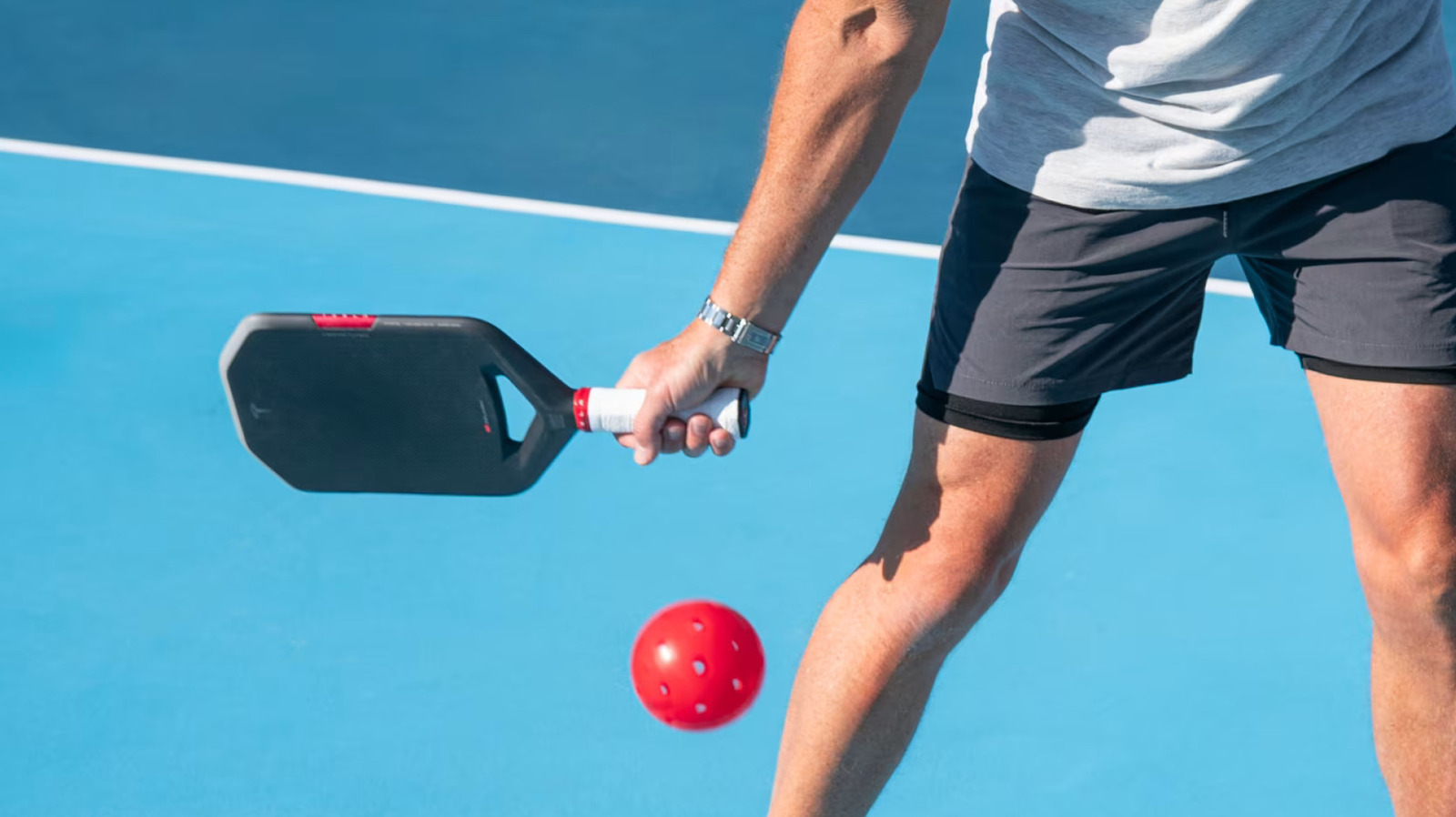
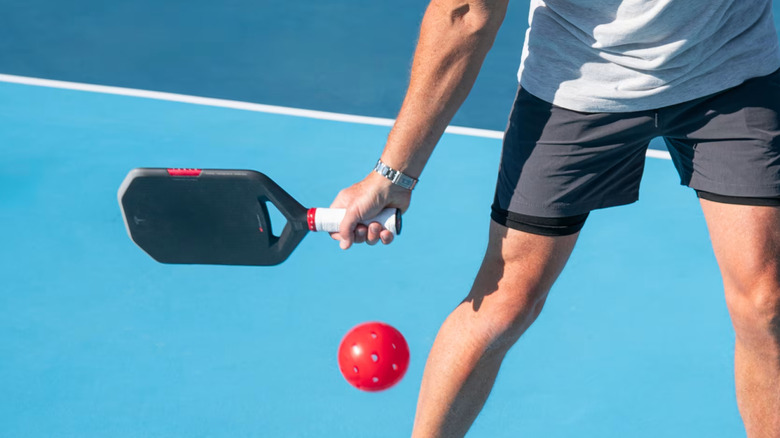
In an overvalued partnership that could only be topped by Nvidia producing baseball bats for the New York Mets, Tesla announced last Friday that it is launching a limited-edition pickleball paddle in collaboration with Selkirk Sport. The USA Pickleball-approved paddle will retail at the ludicrous price of $350. If you buy this paddle, I hope you reconsider the life choices that brought you to such a stupid purchase. Pickleball shouldn’t have multiple professional tours and Tesla shouldn’t be valued at over $1.5 trillion.
Selkirk claims that the Tesla Plaid Paddle isn’t just a branding exercise, but an engineering collaboration with the electric automaker. Tom Barnes, Selkirk co-owner and Director of Research and Development, said in a release, “Tesla’s design group and our R&D team spent more than a year trading data, refining geometry and stress-testing prototypes.” All of Tesla’s aerodynamic testing resulted in a paddle with an “edgeless” perimeter (rounded edges) and an open-air throat, similar to a tennis racket. Selkirk also noted that the paddle includes its “patent-pending” InfiniGrit Surface to help generate spin during the split second when the two-ply carbon fiber face comes into contact with the plastic ball.
As a cursory glance, it’s rare to see any pickleball paddle retail that far north of $300. The price point surpasses even high-end tennis rackets. The Babolat Pure Aero 98, used by men’s world number one Carlos Alcaraz, costs $299. Jessica Pegula, women’s world number six and my former college classmate, currently uses a Yonex Ezone 98 racket, which retails at $305. While I’ve only ever played tennis, pickleball seems like a fun recreational game. However, you shouldn’t be burning over $300 on a carbon-fiber paddle.
Tesla merchandise knows no bounds for price or poor quality
Tesla is no stranger to hawking overpriced merchandise for its legion of zealous fans to throw cash at. The company released a $450 mezcal last year, sold in lightning-bolt-shaped bottles. It was produced in partnership with Nosotros Mezcal, which sold its own brand of mezcal at $70 per bottle. Let’s not forget all of the CyberTruck-themed merch that Tesla sold to capitalize on the fervor surrounding its recalled-plagued pickup. There was the CyberVessel, a $50 stainless steel travel mug, and CyberBeer, a terrible-tasting $150 beer. The CyberHammer, a $700 intended-for-display sledgehammer.
There’s a lot of money in selling stuff to fans. Ferrari generates billions of dollars in revenue through merchandise sales. However, Tesla’s nowhere near that level of popularity and could never sell enough pickleball paddles to fill the gaping hole in vehicle sales. Despite introducing the stripped-down Standard version of the Model Y and Model 3, Tesla’s sales fell by 23% in November. Seemingly, no one wants to buy a worse version of a decade-old car from an automaker that just gave its CEO a trillion-dollar pay package.

