


March 28, 2026
The justices will weigh whether procedural rules block relief for a Mississippi inmate alleging unconstitutional juror discrimination.
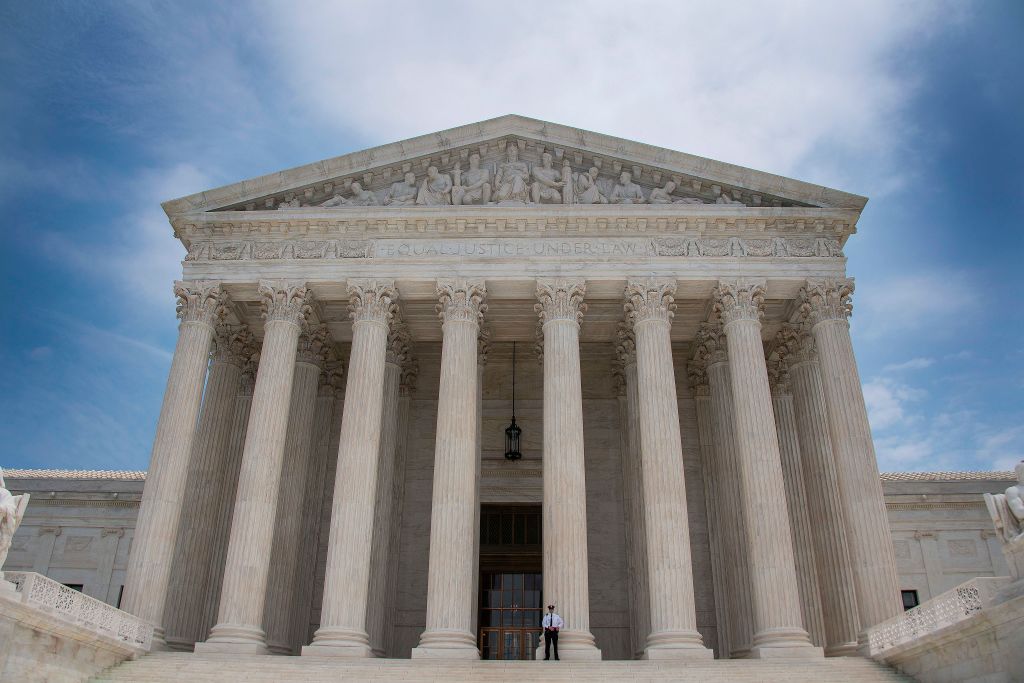
The Supreme Court of the United States is set to hear arguments March 31 in a case that could clarify how courts handle claims of racial discrimination in jury selection, particularly when raised after a conviction. At the center of the case is Terry Pitchford, a Mississippi man sentenced to death in 2006 for his involvement in a mid-2000s robbery that resulted in the fatal shooting of a shopkeeper.
Although another individual fired the gun, Pitchford was convicted and condemned by a jury that included only one Black juror in a county where roughly 40% of residents are Black.
As reported by SCOTUS Blog, Pitchford argues that his trial violated constitutional protections against racial bias in jury selection, asserting that such discrimination “undermines the foundational promise of equal justice under law.” His legal team points to the prosecutor’s removal of four Black prospective jurors during jury selection, actions they say conflict with the Supreme Court’s ruling in “Batson v. Kentucky,” which prohibits excluding jurors based on race.
The prosecutor in question, Doug Evans, has faced similar scrutiny before. In 2019, the Supreme Court overturned another conviction tied to Evans due to concerns over racially motivated jury selection practices. In Pitchford’s trial, however, the presiding judge rejected objections from the defense, allowing the case to proceed.
Mississippi courts later upheld the conviction, ruling that Pitchford forfeited his Batson claim by failing to fully challenge the prosecutor’s stated race-neutral reasons during trial. Those explanations included issues such as a juror arriving late to court or having relatives with criminal histories.
A federal district judge later sided with Pitchford, finding that the juror exclusions violated constitutional standards and ordering a new trial or release. But the U.S. Court of Appeals for the Fifth Circuit reversed that decision, citing limits imposed by the Antiterrorism and Effective Death Penalty Act (AEDPA). Under that law, federal courts may only intervene if a state court decision is not just incorrect, but objectively unreasonable.
Now, before the Supreme Court is a narrower question: whether Mississippi’s conclusion—that Pitchford waived his right to challenge the jury selection—was itself unreasonable under AEDPA.
Pitchford’s attorneys argue the state court overlooked key facts, stating that “a state court’s factual findings are unreasonable when the court ignores information that was obviously salient.” They maintain that objections were clearly raised during trial and that the court improperly denied the defense an opportunity to respond to the prosecutor’s explanations.
The state, however, contends the justices should not revisit whether discrimination occurred at all. Instead, it argues the issue is procedural, emphasizing that the prosecution “gave reasons that were facially race neutral, credible, and unchallenged,” while dismissing Pitchford’s evidence as insufficient.
Supporting Mississippi, the federal government urged the court to respect established rules requiring defendants to raise arguments at trial before presenting them on appeal.
The justices’ eventual ruling could have wide-reaching implications for how courts address claims of racial bias in jury selection, particularly in capital cases where the stakes are highest.
RELATED CONTENT: Ketanji Brown Jackson Keeps TPS Alive After Supreme Court Stands Behind One Of Her Sharpest Arguments

