


Maritime risk, insurance pressure, and degraded navigation signals point to new use cases for commercial UAV systems
Ongoing tension in the Strait of Hormuz continues to shape how commercial vessels manage risk. The region remains one of the world’s most important shipping corridors, handling a significant share of global oil transit. Amid ongoing hostilities between the United States and Iran, shipping operators are facing a steady rise in operational uncertainty.
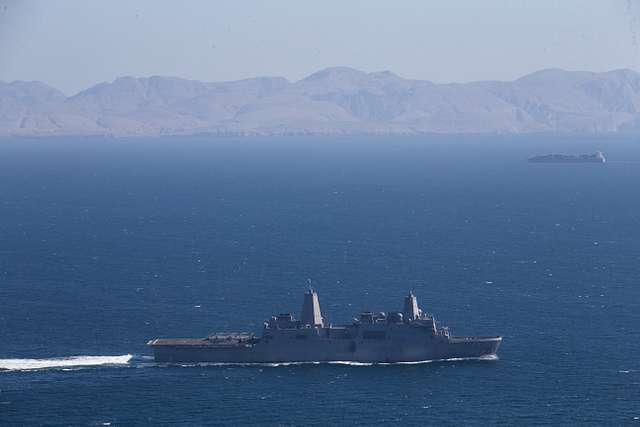
Recent reporting shows that the challenge is not limited to physical threats. Instead, it centers on visibility, verification, and decision-making in a complex environment. These pressures may create new opportunities for small, non-weaponized drone systems designed for surveillance and situational awareness.
A Degraded Information Environment at Sea
Shipping companies operating in and around the Strait of Hormuz are increasingly dealing with disruptions to navigation and tracking systems.
Maritime intelligence firm Windward has reported widespread GPS interference affecting large numbers of vessels in the region. In some cases, ships have experienced spoofed positioning data, making it difficult to confirm their true location or the position of nearby vessels.
At the same time, maritime advisory groups such as Skuld have warned operators about communication interference, congested shipping lanes, and increased risk from small craft operating near commercial vessels.
These conditions reduce the reliability of traditional tools such as AIS and GNSS. As a result, crews must rely more heavily on visual confirmation and short-range awareness when assessing potential risks.
Surveillance Gaps Drive Interest in Low-Cost Drone Systems
The need for improved visibility has not gone unnoticed. Unmanned systems are being considered as part of the solution.
According to coverage cited in outlets including the New York Post, proposals are emerging for low-cost, unmanned surveillance drones to help monitor activity in the Strait. These systems are positioned as a way to expand maritime awareness without increasing the number of crewed patrol assets.
While these discussions focus on regional monitoring, the same concept applies at the vessel level. Small drones can extend a ship’s line of sight and provide real-time visual context around nearby vessels. In environments where electronic signals may be unreliable, this type of direct observation becomes more valuable.
Insurance Pressure Is Reshaping Operational Expectations
Insurance markets are playing a growing role in how ships operate in high-risk regions. Recent developments show that financial risk mitigation is now a central factor in maritime decision-making.
Reporting from organizations such as Reuters and The Guardian highlights rising war-risk insurance premiums and expanded insurance support programs for vessels transiting the Strait. These changes reflect a broader effort to stabilize shipping activity while managing exposure to risk.
Insurance providers evaluate how operators prepare for and respond to potential incidents. This includes reviewing whether recommended safety practices were followed and whether sufficient documentation exists to explain what occurred. As a result, operators are under increasing pressure to demonstrate both awareness and accountability during transit.
Compliance Requirements Emphasize Documentation and Awareness
Maritime advisories now require a more structured approach to risk management. Operators are expected to conduct voyage-specific risk assessments, maintain communication with monitoring authorities, and report suspicious activity in real time.
These expectations depend on access to accurate and timely information. Tools that improve situational awareness and provide reliable records can help support both compliance and post-incident review.
In this context, small drone systems offer a practical extension of existing capabilities. They can capture visual evidence, provide additional context during uncertain situations, and support more detailed reporting when needed.
A Practical Role for Small, Non-Weaponized Drones
The developments in the Strait of Hormuz point to a specific role for small drones. These systems are not designed to replace naval operations or provide defense capabilities. Instead, they address a narrower need: improving visibility in a complex operating environment.
Across recent reporting, several consistent factors stand out:
- Navigation and tracking systems are not always reliable
- Operators face increasing pressure to manage and document risk
- Persistent, close-range awareness remains difficult to achieve
Small drone platforms can help address these gaps at relatively low cost. Their value lies in providing direct observation and recorded data rather than force or deterrence.
A Growing Role for Visibility and Verification Tools
The Strait of Hormuz remains a critical and sensitive shipping corridor. Current conditions highlight the importance of accurate, real-time awareness for commercial operators.
As maritime risk management evolves, small surveillance drones may become a practical tool for improving visibility, supporting compliance, and meeting rising insurance expectations. Their role is likely to remain focused on observation and documentation, but in a high-risk environment, those functions carry increasing importance.
Read more:

