


On 5 February, the planet entered an even more precarious era of escalating nuclear risks. The expiration of a strategic-arms reduction agreement, the New START treaty, between the United States and Russia means that a binding, verifiable accord to constrain the world’s two largest nuclear arsenals has been eliminated.
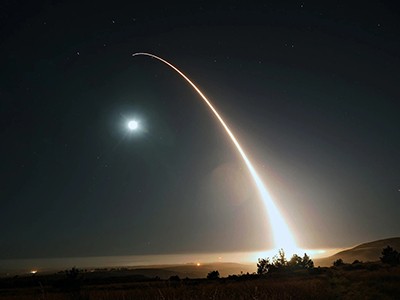
Nuclear-weapons risks are back — and we need to act like it
Now, for the first time in more than 50 years, the two pre-eminent nuclear powers are operating without the guardrails that have provided control, stability, predictability and transparency to the global order. This increases the risk of a resurgent nuclear-arms race and global proliferation. Equally concerning is the absence of public discussions about the risks posed by nuclear weapons. The public, scientists and political leaders have remained mostly silent.
Since the 1970s, the United States and Russia have established a framework of mutual restraint through several treaties. These pacts were built on the rigorous verification of data and were instrumental to reducing the total number of nuclear warheads from some 70,000 in the mid-1980s to around 12,300 today (with a yield equivalent to 146,000 of the bombs that destroyed Hiroshima, Japan, in 1945). New START capped each country’s numbers of deployed strategic warheads at 1,550 and delivery vehicles at 700, including intercontinental and submarine-launched ballistic missiles and heavy bombers.
To protect the current strategic landscape, US and Russian leaders can take unilateral action by simultaneously committing to observe a one-year moratorium on exceeding the treaty’s established limits and parameters, as proposed by Russian President Vladimir Putin last September and initially welcomed by US President Donald Trump.
How to avoid nuclear war in an era of AI and misinformation
This would signal a shared resolve to fostering global stability and prevent the spread of nuclear arms. It could serve as a diplomatic bridge towards a comprehensive, modernized security architecture and address current challenges, such as emerging technologies and other nuclear-armed states. It would also bolster the Treaty on the Non-Proliferation of Nuclear Weapons ahead of its review conference this year by affirming the commitment of the United States and Russia to pursue nuclear disarmament (as stated in Article VI).
Scientists must make their voices heard, too. In January, the Bulletin of the Atomic Scientists advanced the Doomsday Clock to 85 seconds to midnight — the closest the symbolic timer has stood to global catastrophe. The move signals that the world has reached its most precarious moment in history, because of the collapse of nuclear-arms control, the accelerating climate crisis, biological threats and the mounting risks of disruptive technologies.
Last July — 80 years after the Trinity bomb test signalled the dawn of the nuclear age — the Pugwash Conferences on Science and World Affairs, the Bulletin of the Atomic Scientists and the Existential Risk Laboratory at the University of Chicago in Illinois organized the Nobel Laureate Assembly for the Prevention of Nuclear War. The assembly warned that the world is entering a complex arms race and that the ‘luck’ that has prevented catastrophe is running out.
‘The Sun had fallen to Earth’ — a survivor’s recollection of the Hiroshima bombing

