


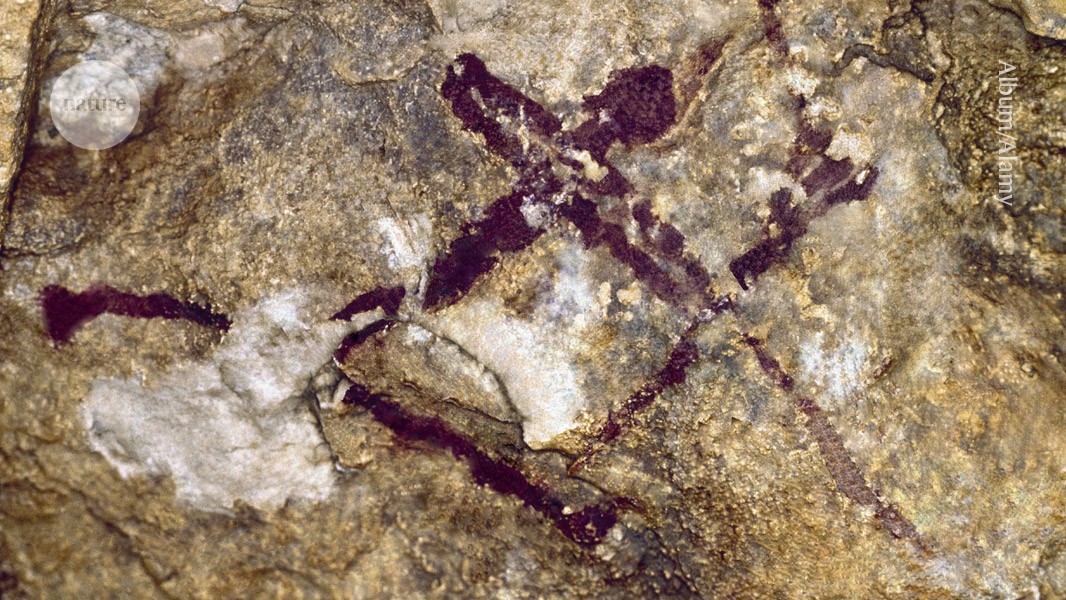

Humans have used bows and arrows to hunt for thousands of years, as depicted in this cave painting from the La Saltadora rock shelter in Spain. Credit: Album/Alamy
Traces of toxic plant compounds have been found on a handful of 60,000-year-old African arrowheads, providing the oldest chemical evidence that Palaeolithic hunter-gatherers used poison to bring down prey.
The finding, published on 7 January in Science Advances1, adds to the growing picture of how intelligent and technologically advanced people were in this era. Making poisoned arrows is about as hard as following a “complex cooking recipe”, says study co-author Marlize Lombard, an archaeologist at the University of Johannesburg in South Africa. “You have to add to it the danger of the poison, and planning to work with it without getting poisoned yourself, then you have to hunt and track the prey animal under difficult and dangerous conditions sometimes for a day or two.”
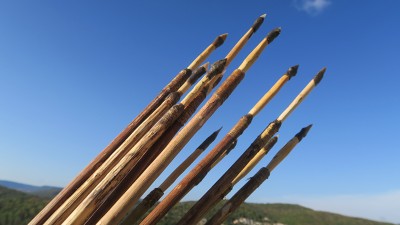
Europe’s first humans hunted with bows and arrows
“It shows advanced planning, strategy and causal reasoning — something that is very difficult to demonstrate for people living so long ago, but for which the evidence is increasing every year,” agrees archaeologist Justin Bradfield, also at the University of Johannesburg, who was not involved in the study.
Archaeologists had already proposed that early modern humans probably started using poisons for hunting around 70,000–60,000 years ago, roughly the same time as the invention of projectile weapons such as bows and arrows. A lot of the sharp stones found from this time period are too small to have done lethal damage to prey on their own without the addition of poison.
Direct chemical evidence of poisons, however, has been slim, in part because many toxic chemicals degrade over time. “Conditions must be quite extraordinary to preserve intact any organic molecules for this long,” says Bradfield.
Poison bulb
Biomolecular archaeologist Sven Isaksson at Stockholm University and his colleagues looked at a set of ten microliths — sharp stone flakes measuring about one centimetre across — found at the Umhlatuzana rock shelter in KwaZulu-Natal, South Africa. Chemical analysis revealed traces of a toxic compound called buphandrine on five of them.
Buphandrine is found in a native plant called Boophone disticha, sometimes known as gifbol or poison bulb. A small amount of material derived from the milky secretions of this plant’s root bulb can kill rats in half an hour; in humans the poison can cause nausea, respiratory paralysis and lead to a coma.

The poison bulb plant Boophone disticha.Credit: Ariadne Van Zandbergen/Alamy
The team also found buphandrine on a set of four arrowheads that had been collected by an ethnographer in South Africa in the 1700s. Indigenous people today sometimes hunt springbok, kudu, wildebeest and even zebra and giraffes with similar small, poisoned arrows, says Lombard. “There is no reason to think that the Umhlatuzana hunters did not do the same.”
There could originally have been other toxins in the mix, says Isaksson, such as snake or spider venoms, that have long since degraded. Isaksson says his previous work studying 1,000-year-old arrowheads2 helped to narrow down the types of plant-based compound that might survive for thousands of years.

