


You have full access to this article via your institution.

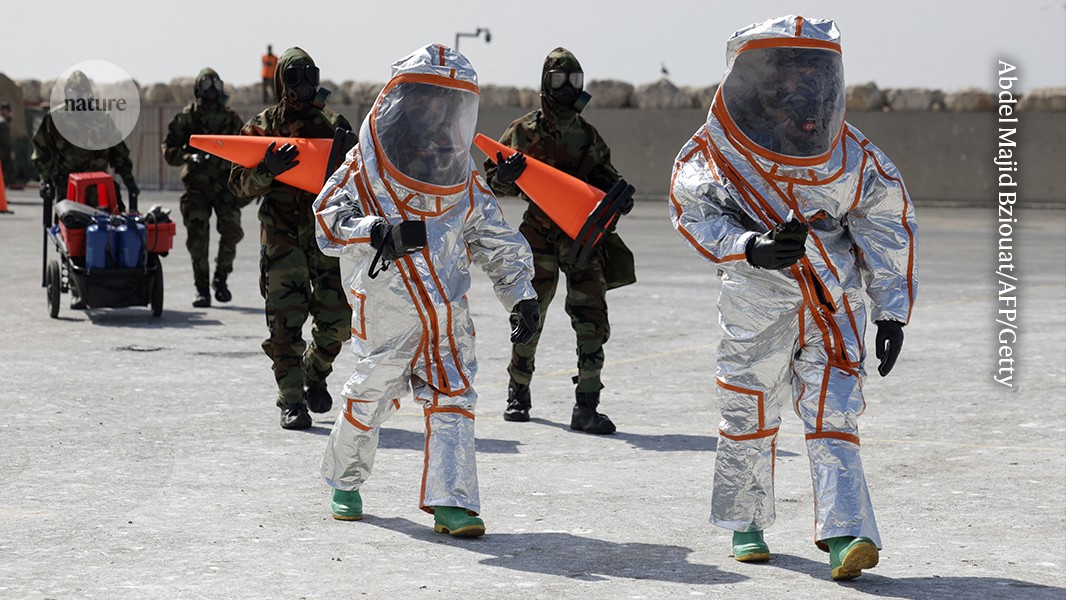
The US army regularly performs simulations for dealing with various weapons of mass destruction. This exercise took place in Morocco last May.Credit: Abdel Majid Bziouat/AFP/Getty
Earlier this month, the New START treaty, a strategic-arms reduction agreement between Russia and the United States to limit their nuclear arsenal, expired. That accord was the last in a series of such agreements that have been extended or renegotiated since the end of the cold war. This time, however, neither country has shown a willingness to extend, let alone replace, it. The world stands at a perilous moment in its efforts to control the spread of nuclear weapons, warns physicist Karen Hallberg, who leads the Pugwash Conferences on Science and World Affairs.
Scientists can help stop a slide to nuclear war — don’t shut them out again
Although Russia suspended its participation in New START in 2023, it said that it would abide by the treaty’s limit of 1,550 battle-ready warheads. Yet, in 2024, Russian President Vladimir Putin changed the threshold for using nuclear weapons to include a nuclear-armed response to a conventional attack, instead of just to a nuclear one.
Many specialists fear a new nuclear-arms race would include another major player. Researchers say that China currently has about 600 nuclear warheads, with more in production. Given these concerns, the Bulletin of the Atomic Scientists moved the Doomsday Clock to 85 seconds to midnight in January, symbolizing humanity’s proximity to self-destruction from global threats. It is the closest the clock has been to midnight since its establishment in 1947. Nuclear powers should resume — and expand — dialogue about limiting their arsenals.
The existential risk of a nuclear conflict is real. Equally concerning is the possibility that a new arms race could lead to further testing of nuclear weapons, which — for decades — had mostly been suspended. At the end of October, Russia said it had tested two nuclear weapons. On the same day, US President Donald Trump instructed the Department of Defense (now called the Department of War) to also resume testing — although no further details were provided.
‘The Sun had fallen to Earth’ — a survivor’s recollection of the Hiroshima bombing
Perhaps more so than any other group, physicists understand nuclear-weapons testing intimately. Their calls for restraint must be heeded urgently. These tests are highly damaging to human health and to ecosystems, in addition to their threat to international security. To contemplate their resumption is to disregard decades of scientific knowledge.
The late 1950s and early 1960s saw mostly atmospheric nuclear tests. One of the first studies1 on the tests’ effects reported that, across the United States, children born in 1958 had higher concentrations of strontium-90 in their teeth than did those born in 1947. The presence of this radioactive product in teeth indicated that debris can travel far beyond the test sites. This knowledge led to the 1963 Partial Test Ban Treaty, which prohibited the explosion of nuclear weapons in the atmosphere, underwater and in space. Subsequent research has shown that long-lived radionuclides, including plutonium-239, produced by such tests will persist in the ground for millennia2. Moreover, many of the people most affected by nuclear fallout belong to poor or marginalized communities, including Indigenous ones.
How a small nuclear war would transform the entire planet
The partial ban was followed in 1996 by the Comprehensive Nuclear-Test Ban Treaty, which the United States, Russia and China have signed but not ratified. Although the accord has not officially come into force, countries have mostly abided by it. The treaty includes a system of monitoring stations, which can detect underground tests conducted anywhere in the world. North Korea, for instance, did a number of tests between 2006 and 2017.
Since the early 1990s, nuclear-armed states have developed methods to maintain their arsenals without setting off nuclear explosions. The United States had learnt much from the roughly 1,000 physical tests it had already performed, and this knowledge provided the foundation for its science-based Stockpile Stewardship Program. (Russia has done 715 tests and China 45.) Researchers can now model the dynamics of explosions and how nuclear materials behave and age. This work provides a consensus that such methods negate the need for physical tests.
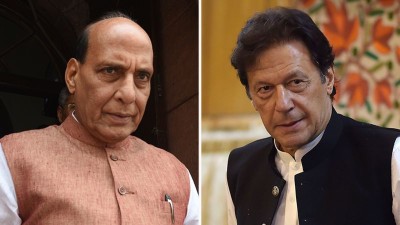
India–Pakistan nuclear escalation: where could it lead?
Countries that advocate for renewed testing say that underground explosions are safe. But safe for whom? And for how long? For many people, it will be hard to forget how the world held its breath in May 1998, when India and Pakistan went toe to toe by performing underground nuclear-weapons tests. This was followed in 1999 by the Kargil war, an armed conflict between the two nations3. The world doesn’t need another example of what could happen if one country decides to resume testing. It could lead other nations to follow suit, causing a cascade.
Instead of contemplating further nuclear-arms tests, nations need to show restraint and talk about expanding and extending New START. All of those involved must remember that the reasons for not testing nuclear weapons are just as valid now as they always have been.

