


Audi’s latest generation of interior design has gone all-in on big screens taking up most of the dashboard, but it doesn’t seem like that trend is going to continue for too long — not if the company’s nascent design director has anything to say about it. Massimo Frascella, who has been at the helm for about a year and a half now, says he wants to bring back the “Audi click” you used to get with the company’s analog controls, and up their interiors’ build quality.
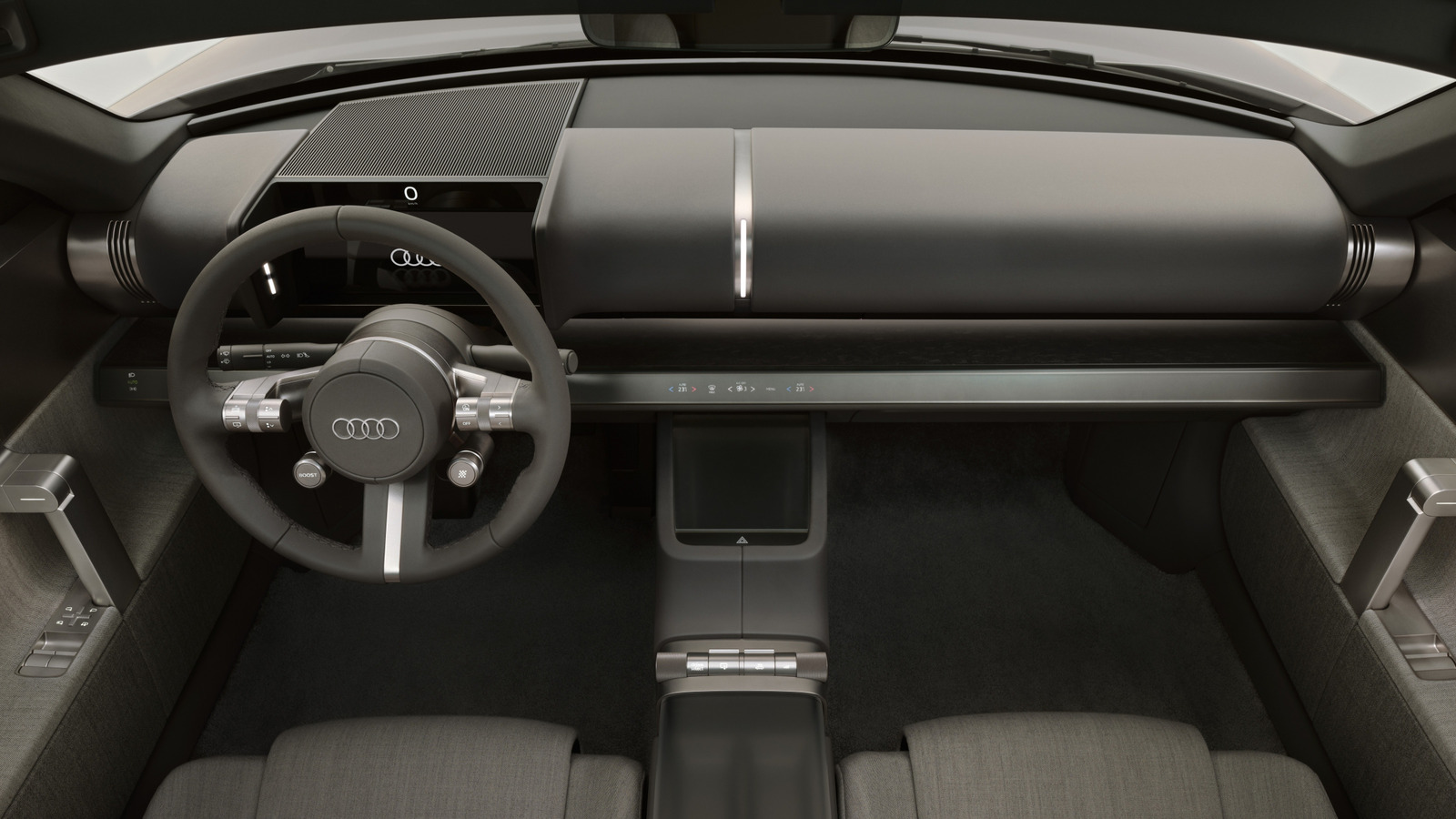
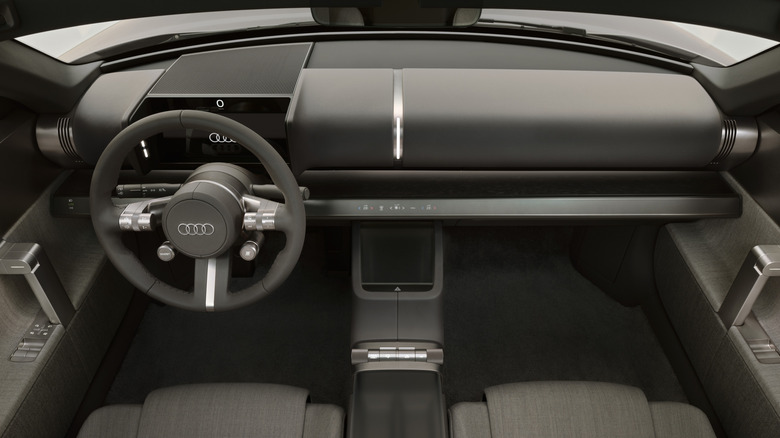
Speaking with Top Gear, Frascella pointed to the Audi Concept C as a North Star for the German automaker. While the Concept C does have a couple of screens, they’re far smaller than we’re used to seeing from Audi — with just a 10.4-inch center screen that can be folded into the dashboard. It also brought back a number of physical controls on the steering wheel and center console.
“Tactility is very important. Big screens are not the best experience. It’s technology for the sake of technology. For us, technology is there when you need it, not there when not needed. This mix of digital and analogue, the tactility, the perception of quality that is so important for Audi, the precision, the metal parts… we talk about the Audi click,” Frascella told Top Gear. “These made Audi what Audi is.”
If you take a peek inside the Audi A6 or S6 E-Tron, you’ll find 37.3 inches of screen: an 11.9-inch gauge cluster, a 14.5-inch central infotainment screen, and a 10.9-inch front passenger display, all of which are surrounded by not-so-nice-looking piano black plastic bezels. Something like the Concept C flies directly in the face of this design style, and while it’s not clear how much of it will actually trickle down into Audi’s production cars, it’s very promising that Frascella is talking this way. Keep in mind, I’m not even an anti-screen guy.
Frascella probably knows what he’s doing
I’ll be honest, I’ve got faith in what Frascella has planned. Before joining Audi, he spent years working at Jaguar-Land Rover, working on vehicles like the Range Rover, Velar and Defender, and — while those SUVs have their issues — their looks and interiors certainly aren’t one of them. Though I suppose you can argue that none of them really have enough physical controls. I don’t know, people change.
In any case, Frascella says he wants to keep Audi’s innate German-ness at the forefront, especially as its competitors — BMW and Mercedes-Benz — get more ornate and in-your-face to appeal to buyers in China.
Audi is global but by nature German, it’s part of the identity. When brands try to appeal to everyone, they lose the essence of what they are,” he said to Top Gear.
The Concept C returns to simple solid forms. “It’s very Audi, this solid metal feel on the surface. The rear fender and rear part of the cabin has a real controlled sense of solidity. That’s the difference between being organic and free-form and having that rigour and precision in the sections. Everything contributes to the final perception of the car.”
Right now, there are no plans to facelift Audi’s current range of vehicles to more clearly fit in with Frascella’s philosophy inside or out, the designer saying that the company vision is “much more zoomed out,” and you can’t just mix and match, “you cannot adapt, you cannot morph.” Basically, the Audis that are out now will have to complete their natural lifecycles before they’re replaced with less screen-heavy vehicles that follow in the Concept C’s footsteps.

