


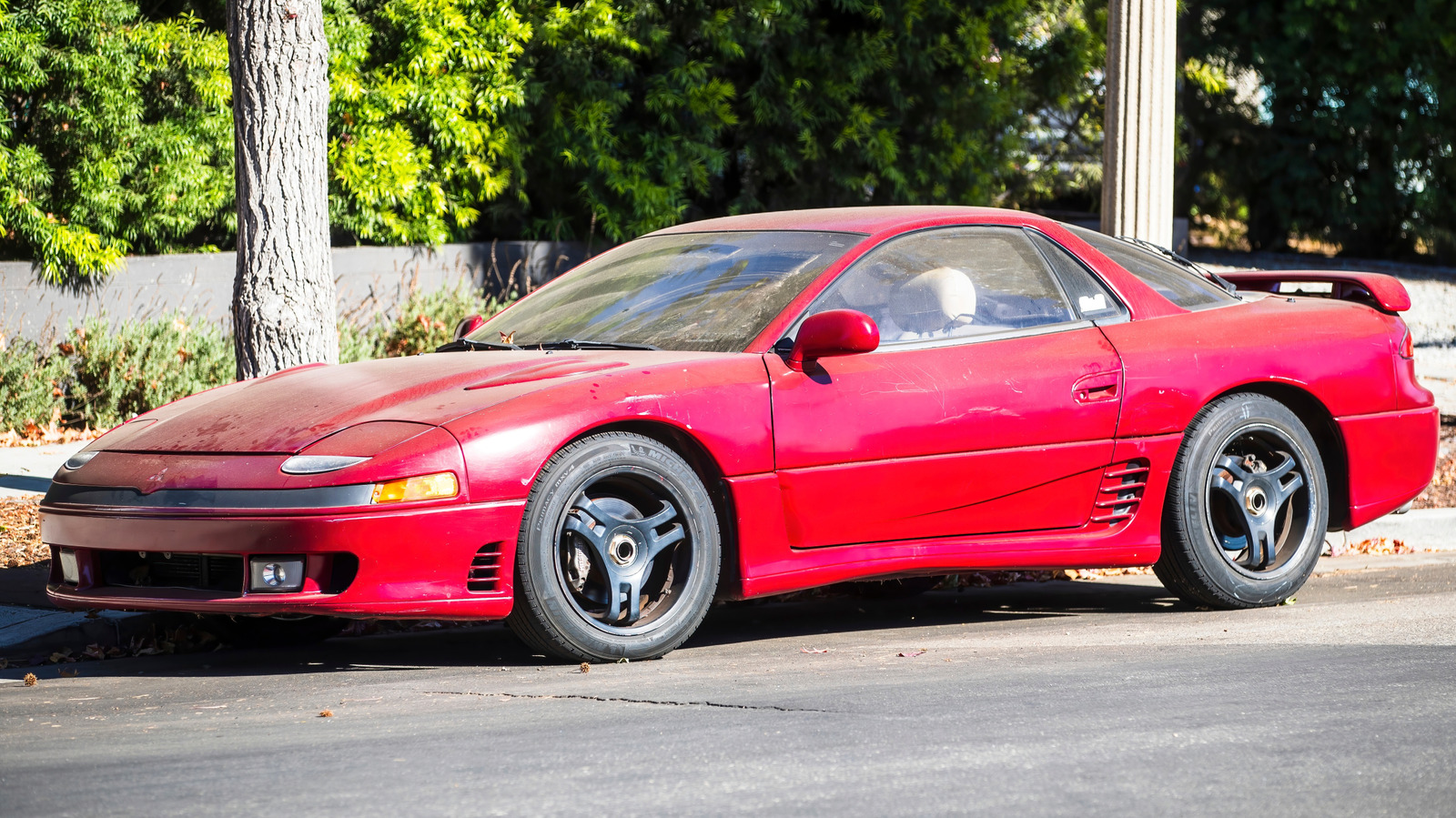
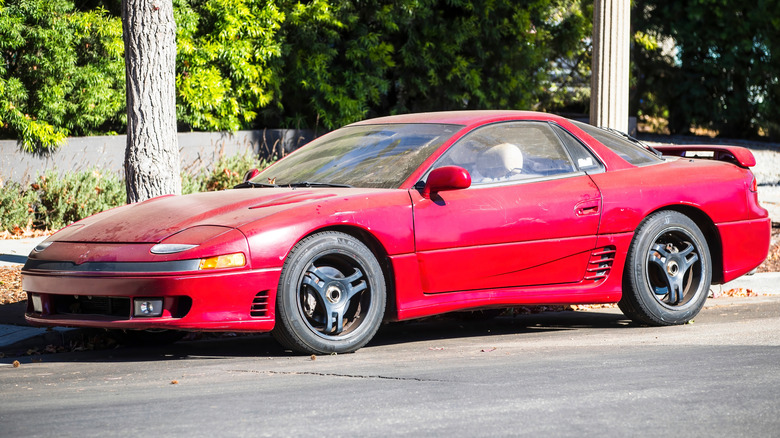
Mitsubishi has had a rough time lately, and tariffs certainly didn’t help. It must come as good news that the automaker has won its appeal of a $1 billion verdict in a case involving, of all models, a 1992 Mitsubishi 3000GT.
In 2017, Francis Amagasu and his son were driving his 3000GT on Pineville Road in Bucks County, Pennsylvania, according to CarComplaints.com. He tried to pass another vehicle, but lost control, “causing his [vehicle] to leave the road, [strike] three trees and [rollover],” as described in court documents. Amagasu hit his head on the roof, shattering his cervical spine and leaving him a quadriplegic. Amagasu and his wife sued Mitsubishi, alleging that a combination of the car’s low roof and the seat belt’s rip-stitch design is defective because it allowed his head to strike the roof even though he was wearing his seat belt.
The original jury trial found Mitsubishi liable and ordered it to pay the Amagasus over $1 billion in damages, $800 million of which was punitive damages for the allegedly defective design. Mitsubishi appealed on the grounds that the court failed to instruct the jury to apply the crashworthiness doctrine, instead “allow[ing] the jury to hold [Appellant] liable . . . based on inapplicable traditional strict liability principles.” In other words, the court told the jury to decide the case using the wrong set of laws. The Superior Court of Pennsylvania agreed with Mitsubishi, overturning the lower court’s verdict.
The crashworthiness doctrine
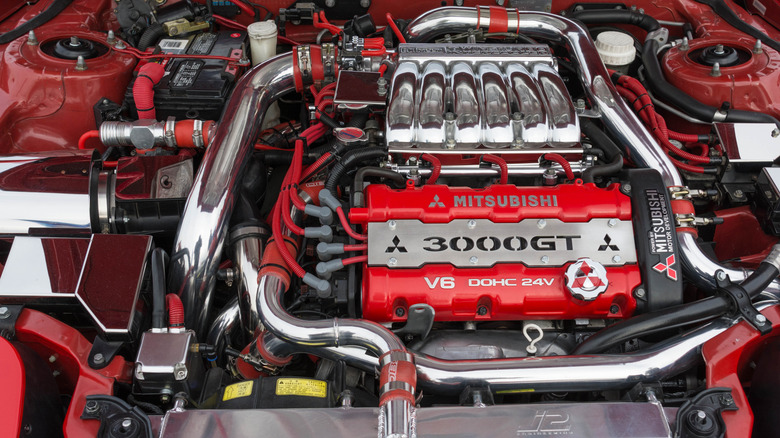
The difference between vehicles and other consumer products is that, unlike your average pencil or toaster, vehicles are going to crash from time to time, according to Cronauer Law. Vehicles must be designed with this in mind to keep their occupants as safe as possible. The court documents from the appeal outline three elements that plaintiffs must prove under this doctrine:
First, the plaintiff must prove that the design of the vehicle was defective and that at the time of the design, an alternative, safer and practicable design existed that could have been incorporated instead.
Second, the plaintiff must identify those injuries he would have received if the alternative design instead had been used.
And third, the plaintiff must demonstrate what injuries were attributable to the defective design.
Also, the car in question is a 1992 Mitsubishi 3000GT, which certainly cannot be held to the safety standards of today. NHTSA and IIHS didn’t test cars back then the way they do now. NHTSA does track recalls and complaints on cars this old, and there are some regarding the 3000GT seat belts. However, they involve problems with the retractors not pulling the belt in all the way when you take it off, which is unrelated to the design of the belt material that the plaintiffs allege was defective.
Mitsubishi is not out of the woods. The case has not been dismissed, but will get a new jury trial, this time with the new jury receiving instructions to apply the crashworthiness doctrine rather than general liability principles. It’s still possible that Mitsubishi could be found liable, but at least it will be held to the proper standards this time, and perhaps not have to pay $1 billion.

