


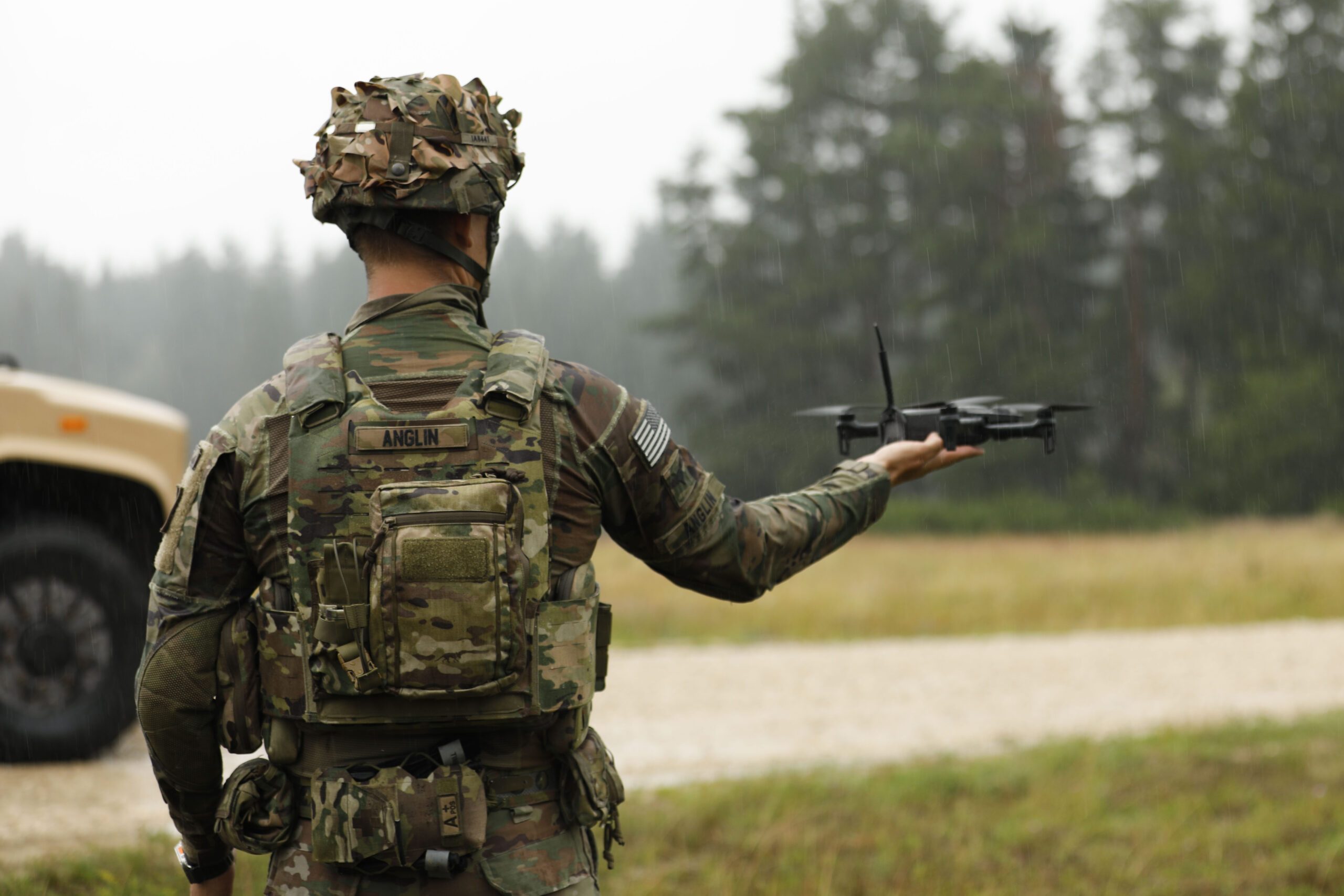
Military drone procurement is becoming one of the defining defense challenges of this decade.
Europe is confronting a paradox at the heart of modern defense: drones have reshaped warfare faster than governments can buy them. As the war in Ukraine has made starkly clear, small unmanned systems, from reconnaissance UAVs to attritable strike platforms, are no longer niche tools but central to frontline operations. Yet, European states are struggling to build a stockpile of relevant systems without locking themselves into obsolete kit the moment it arrives in service.
That insight comes from a Financial Times investigation published February 26, 2026, which reveals that countries like Finland are discovering how rapidly software, communications, navigation, and counter-jamming technologies can age out of strategic usefulness. Traditional procurement models, which are slow, cautious, and bureaucratic, are ill-equipped for a battlefield where the average drone model’s technological half-life is measured in months, not years.
It’s Not Just Europe
European defense ministries currently face a choice:
-
Buy early and risk obsolescence, or
-
Wait for better technology and risk a capability gap.
This dilemma is compounded by reliance on foreign components and the lingering specter of Chinese supply chains in sensitive systems — an issue that resonates across NATO allies and their procurement planners.
But Europe’s challenge reflects a wider Western struggle to adapt defense acquisition practices to the realities of drone warfare. U.S. military analysts have argued that while drones have “truly altered the nature of this war,” the Pentagon and its allies have been slow to fully embrace the implications at scale. Conventional doctrines rooted in legacy platforms and large-ticket systems struggle to pivot to attritable, high-volume autonomous fleets that are already dominating conflict zones.
The US is waking up to the challenge. With recent Pentagon and Executive moves to boost drone procurement, the military is making efforts to adapt. Whether they can pivot quickly enough to be ready for the next conflict remains to be seen.
Regulatory Headwinds and Market Shifts
Adding another twist, recent regulatory moves in the United States, specifically the FCC’s decision to include certain foreign drones on the Covered List, which effectively bans their import, have narrowed the competitive field for hardware providers. This action, intended to address supply chain and security concerns, has also restricted access to some foreign-manufactured platforms that had been useful stopgaps in allied inventories.
Taken together with procurement lethargy, these regulatory constraints have reduced options for European and U.S. forces at a time when drone demand is surging.
Record Capital Inflow: A Silver Lining?
Against this backdrop of procurement frustration and policy uncertainty, there is a notable counter-current: private capital is flowing into the drone industry at historic levels. Venture investors, defense-tech funds, and strategic corporate partners are pouring money into startups and specialized platforms, betting on autonomous systems to define the next generation of aerial capability.
This surge of investment is reshaping the innovation ecosystem:
-
New entrants are emerging with modular, upgradable architectures designed to avoid the traditional obsolescence trap.
-
Systems built for rapid iteration, where software enhancements can be deployed quickly, are attracting defense and commercial partnerships alike.
-
Cross-domain integration (autonomy, AI, networks, counter-UAS) is accelerating as private companies chase both defense contracts and commercial use cases.
This capital infusion may finally give European and U.S. manufacturers the runway to compete with legacy defense primes and foreign suppliers alike: but only if procurement practices evolve in parallel to reward agility and innovation.
Can Manufacturers Rise to the Challenge?
The core question is simple: will governments match urgency with execution, or let bureaucracy blunt the moment?
There are encouraging signals. Europe is testing more flexible procurement models. The Pentagon has called for high-volume, attritable systems. Private capital is pouring into defense technology.
But demand signals are not the same as contracts.
U.S. manufacturers cannot scale factories on optimism alone. Expanding production requires facilities, workforce, tooling, and long-lead components. That level of commitment depends on signed contracts, appropriations, and reliable payment flows. Venture funding can accelerate innovation, but only government or commercial purchasing at scale can sustain manufacturing growth.
Drone dominance cannot be achieved at peacetime buying speed.
Read more:

Miriam McNabb is the Editor-in-Chief of DRONELIFE and CEO of JobForDrones, a professional drone services marketplace, and a fascinated observer of the emerging drone industry and the regulatory environment for drones. Miriam has penned over 3,000 articles focused on the commercial drone space and is an international speaker and recognized figure in the industry. Miriam has a degree from the University of Chicago and over 20 years of experience in high tech sales and marketing for new technologies.
For drone industry consulting or writing, Email Miriam.
TWITTER:@spaldingbarker
Subscribe to DroneLife here.

