


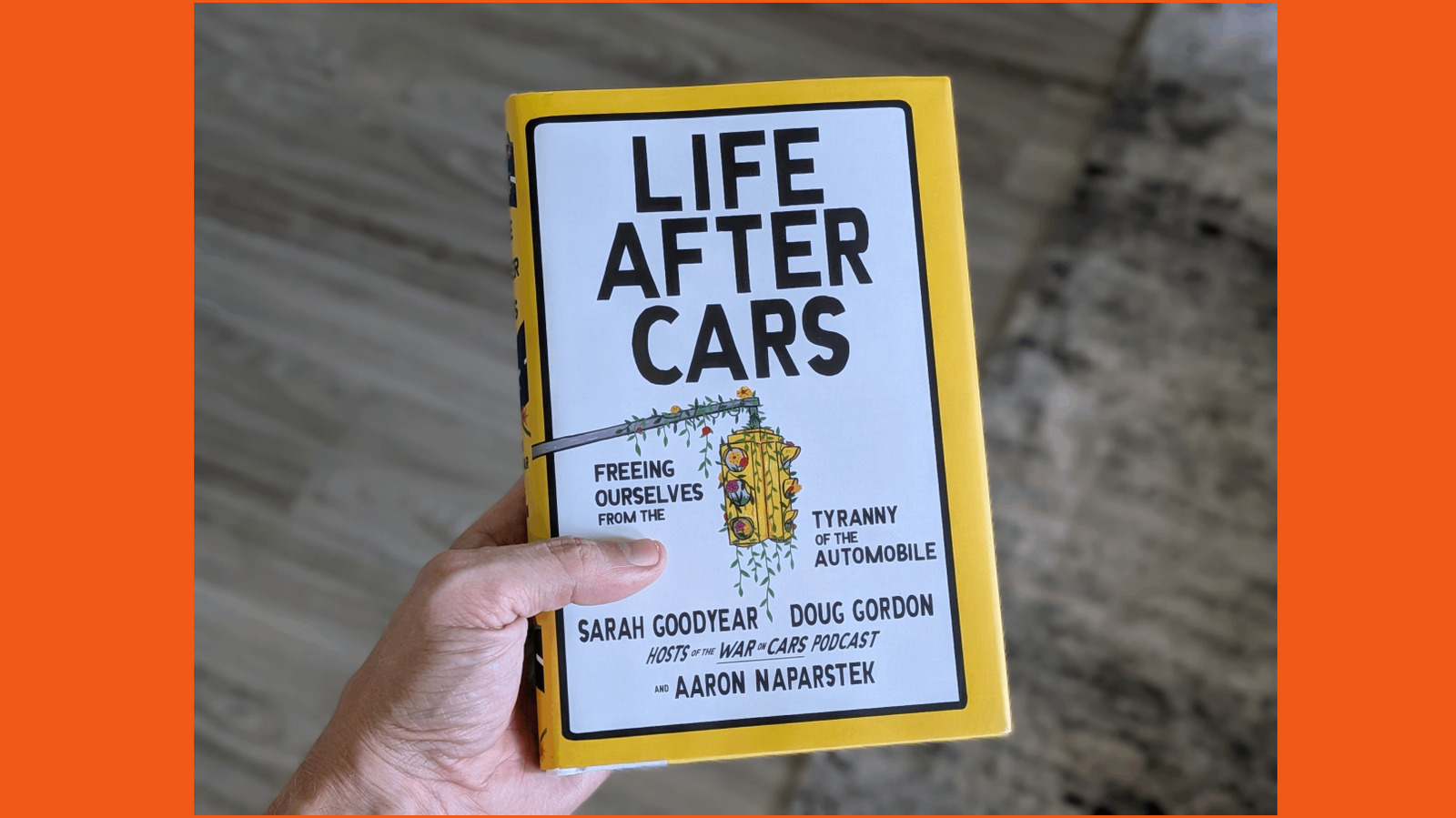
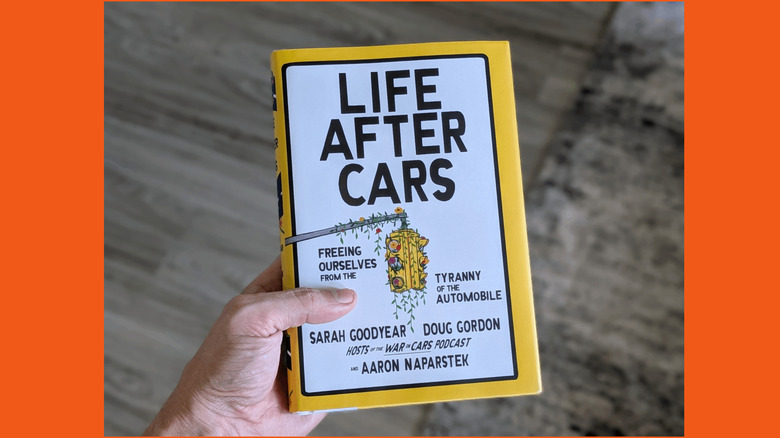
“Life After Cars” is the latest book from Sarah Goodyear and Doug Gordon, the co-hosts of the popular War on Cars podcast. It’s been out for a couple of months now, and as much as I enjoyed the book, I’ve had an incredibly hard time reviewing it. The authors’ argument that life would get better if we made driving optional in more places is a good one, but every time I sat down to write about it, I had no words. It felt like the people who need to read it the most have already made it clear they don’t care about facts or arguments and nothing would ever change their mind, and I didn’t have anything new to say.
Today, though, things feel a little different. Once again the U.S. is at war in the Middle East, gas prices have shot up more than 30%, and with the Strait of Hormuz closed again, there’s no telling how long it will be before we see sub-$3 gas again, if ever. And while gas is currently way more expensive than it was a couple of weeks ago, the price isn’t the only problem. If this were a true one-time event, that might be one thing, but it keeps happening. It feels like every couple of years, whether our government caused it or not, some crisis in another part of the world sends gas prices through the roof, and regular Americans end up stuck figuring out what they have to cut in order to pay those higher prices.
We can stop the cycle
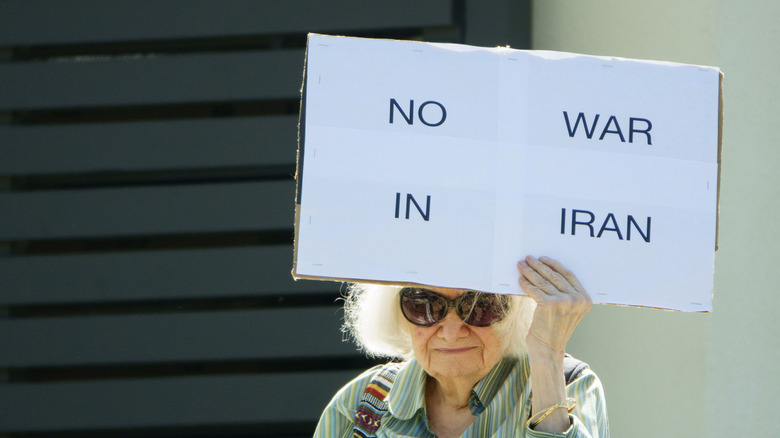
Of course, part of what’s different now is just how unpopular the war is. The exact numbers will change depending on which poll you look at, but no matter which one you look at, voters overwhelmingly do not want to be at war with Iran. I’d also be willing to bet many of those who claim they support the war publicly may have a slightly different answer in private, which is a pretty big shift from 2003, when Bush’s invasion of Iraq enjoyed overwhelming public and international support. And while the WMDs we were looking for didn’t actually exist, at least the message made the mission clear. We invaded Iraq to stop its government from using WMDs.
This time around, Trump didn’t even bother to lay out a clear argument for war, allowed Iran to close the Strait of Hormuz and turn it into a toll plaza, failed to achieve regime change, bungled the ceasefire that fell apart almost as soon as he announced he’d accepted Iran’s 10-point proposal, and wasted billions of dollars in the process. Meanwhile, back home, we’re all tired, the cost of living has only gone up since Trump took office, and now gas is expensive again. For what purpose? Tell me, why do we have to do this again? It all feels so pointless, and that’s because it is.
That is where “Life After Cars” comes in. The changes it argues for wouldn’t stop governments from starting more pointless wars that kill innocent civilians, but it does offer an escape from the endless cycle of some random event blowing up your gas budget every few years. Just close your eyes and think for a second what it would feel like to never have to think about how much gas costs again. Imagine not having to keep a close eye on international news to make sure you know when something happens that might make gas more expensive. Think about how much freedom you would feel if you never had to worry about the cost of going places and doing the things you enjoy.
It’s about freedom
Ultimately, that’s the future “Life After Cars” offers us. Not a 100% car-free existence, but freedom. Freedom to go about our daily lives, not worrying about gas prices, car crashes, traffic jams, other bad drivers, where to park, the cost of parking, car insurance, vehicle maintenance and repairs, and all manner of other stressors that come baked in with a society that’s built entirely around cars and driving. You know, like how to tell your mom she’s gotten too old to drive, so you’re taking her keys, and she’s stuck at home until she dies, unless she wants to sell her house and move into an old folks home. Or having to tell your son he can’t go to that event he’s so excited about because no one’s available to drive him.
If you’re looking for arguments or explanations that will address the sincere reservations you have about how different ideas would work or why walkability advocates support certain policies, there should be plenty in the book to make it worth your time. It’s also a great resource to keep on hand if you already support making cities more walkable and want something to refer back to in conversations with your friends. And while it probably won’t offer much in terms of new information if you’re already pretty knowledgeable and passionate about the topic, I still think you should read it.
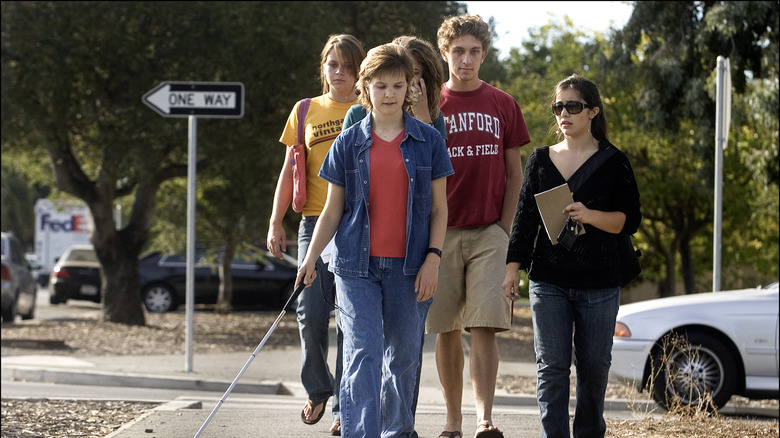
Not just because I like Sarah and Doug and want their book to sell well, but because it paints a picture of a world that gives me hope. A world where kids can easily meet up with their friends to play, grandmothers can get to church any time they want, adults with disabilities can live independently and be full participants in society, bad drivers don’t even own cars, and you never have to find a designated driver or pay for an Uber home from the bar. That should sound great no matter who you are, and it’s a very real option if we choose to make it a priority.
Dare to dream that things could get better
Those ultra-walkable cities in Europe that we could never build here? They weren’t always so car-free, and a big part of the reason they’re so enjoyable to visit today is that their leaders made a conscious decision to make driving optional. It would have been better if more U.S. leaders had started following their example decades ago, but it’s not like it’s too late to start. We can demand that our leaders quite literally build a better future, and if they don’t want to do it, we can elect new ones. Activists in other countries have overcome the barriers their opponents tried to put in front of them, and there’s no reason we can’t do the same thing if we work together and make our voices heard.
On the other hand, we could just stick with what we have now. Forcing everyone to drive everywhere all the time is clearly working, as long as you don’t mind spending hundreds of dollars on car insurance every month, dealing with the constant cycle of gas prices randomly skyrocketing every few years, feeling like your life outside of work is dominated by your kids’ activity schedule, constantly being stressed in traffic without any other reasonable way to get to work, not being able to find parking, and occasionally having a car crash ruin your month. Wait, when I put it like that, it almost sounds like what we’re doing right now isn’t working. Yeah, we should probably start changing that.

