


You have full access to this article via your institution.

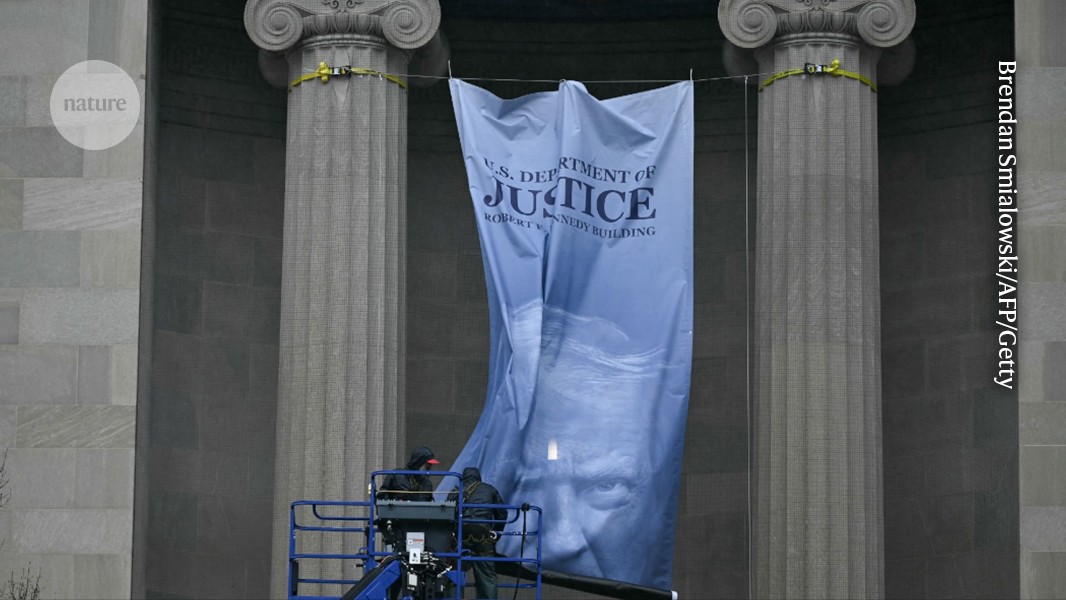
The US Department of Justice released the latest batch of files relating to Jeffrey Epstein on 30 January. These comprise more than 3 million pages, 2,000 videos and 180,000 images.
At the start of the year, Nature Index reported on a survey that asked thousands of authors of world-leading research for their thoughts on the current funding landscape. Some 53% of respondents said that they thought funding in their field was declining; just 21% said it was increasing (Nature https://doi.org/qtgx; 2026).

Scientists face fallout for past associations with Epstein
Yet overall — at least in high-income countries — research budgets are not declining, as Graeme Reid, a science- policy researcher at University College London, told Nature Index. However, as we have reported previously, in many countries around the world, more funding is being spent on government priorities, such as innovation and defence. That might be one factor fuelling the perception that there is less money flowing to researchers to address the kinds of question they want to answer.
Whatever the reality, academic researchers have long sought sources of funding beyond the public purse, including that from the many thousands of private donors who give to science. These sources are coming under renewed scrutiny owing to the case of Jeffrey Epstein, a convicted sex offender who was also a significant donor to research. Mathematical biology and artificial intelligence were among the fields he funded. The release of Epstein’s correspondence by the US Department of Justice at the end of January has provided detailed insight into the links that individual scientists and their institutions had with this one donor — and shows that some researchers maintained those links even after Epstein was convicted.
An imbalance of power
Several universities, including Harvard University and the Massachusetts Institute of Technology, both in Cambridge, Massachusetts, have previously published reviews of their institutional and individual links to Epstein. What comes across in these documents, as well as in the newly released correspondence, is the imbalance of power between some star academics, who wanted to maintain access to wealthy donors, and colleagues who lacked the authority to push back. It is also apparent that neither of these universities had appropriate policies in place to scrutinize and approve such donations — something that both are now endeavouring to change.
White House stalls release of approved US science budgets
Such policies must be a minimum requirement. They need to be backed up by compliance teams with the authority not only to perform risk evaluations of funding sources, but also to act on their findings. Scientists should never accept money if there is a possibility that doing so might cause harm; if it undermines the integrity of research; or if there is potential for unaccountable donors to influence the direction of research.
Some have suggested that principal investigators’ involvement with donors should be limited, with universities taking responsibility for the relationship with funders. However, this is complicated by the fact that, under many funding systems, money is given to named individuals. Universities are required to manage those funds, but ultimately it is the named individual who is responsible — a fact that, in many cases, also allows researchers to take a grant with them if they change institution.
Taking accountability
These issues also go to the heart of another problem Nature has covered previously: a funding and career-progression system in which prominent individuals often hold considerable power and resist taking accountability for their behaviour. This is a factor in the widespread issue of bullying and harassment at universities, and the failure of institutions to act on this problem.
One idea that is currently being promoted is to organize research at universities similarly to the way it is structured in many research-intensive corporations. Instead of funding being distributed through individual researchers, money and decision-making would be shared by senior leaders. Last November, a report from the Tony Blair Institute for Global Change, a think-tank based in London, proposed an idea called the Lovelace disruptive invention laboratories: a model of a research lab with a flatter hierarchy, individuals from different disciplines working together and stable, long-term financial support that doesn’t rely on quick results or fast publication.
More than half of authors of leading research say funding is declining
This is not a new idea. It draws on a period in science’s history when labs tended to have more autonomy to manage their funding, and when there was a greater tolerance of risk-taking. But there’s a paradox here: the culture that promoted the autonomy that many crave also supported the idea that science is about great individuals who can achieve historic breakthroughs if only they are freed from form-filling. This ignores the importance of collaboration to the scientific enterprise.
The Epstein revelations are prompting considerable reflection at universities and funding agencies, as well as in governments, about what lessons can be learnt from this scandal. One lesson is already clear, however, and should be implemented without delay. Staff with due-diligence roles must not be sidelined; they need to be empowered and supported. Their job is to protect people from harm and ensure compliance with the law — objectives that should never be considered optional. If the system by which science is organized and funded is to become more equitable, institutional policies must do more than pay lip service to the necessity of safeguards.

