


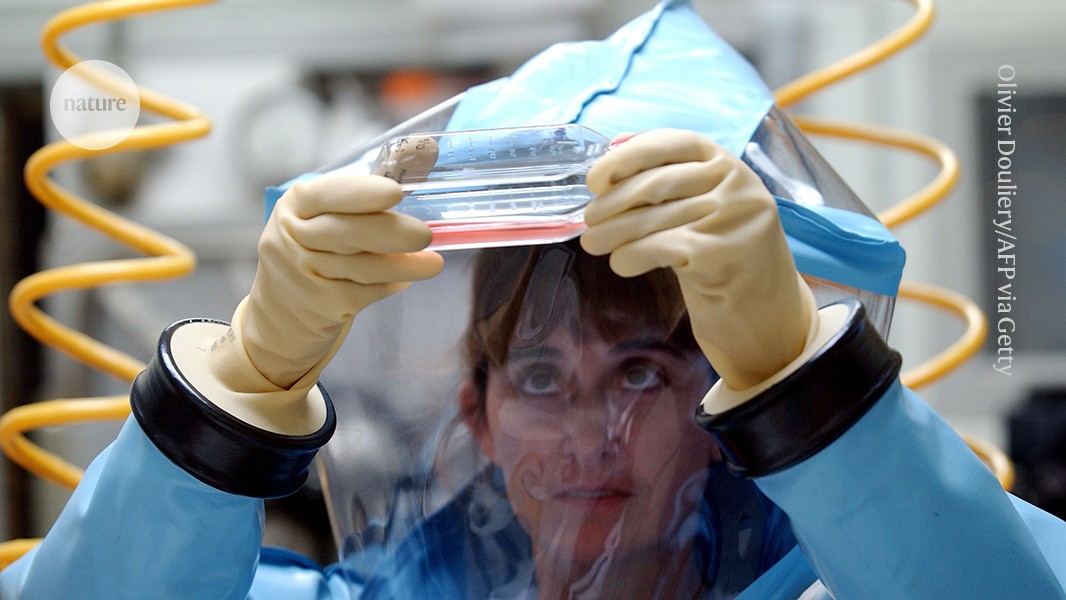

The NIAID funds high-containment biosafety level-4 laboratories, in which research on highly infectious and deadly viruses is performed. Credit: Olivier Douliery/AFP via Getty
Staff members at the United States’s premier infectious-disease research institute have been instructed to remove the words “biodefense” and “pandemic preparedness” from the institute’s web pages, according to e-mails Nature has obtained.
The directive comes amid a broader shake-up at the US National Institute of Allergy and Infectious Diseases (NIAID), one of 27 institutes and centres at the National Institutes of Health (NIH). The NIAID is expected to deprioritize the two topics in an overhaul of its funded research projects, according to four NIAID employees who spoke to Nature on the condition of anonymity, because they are not authorized to speak to the press.

NIH rolls back red tape on some experiments — spurring excitement and concern
NIH director Jay Bhattacharya explained the restructure at an event with other top agency officials on 30 January. “It’s a complete transformation of [the NIAID] away from this old model” that has historically prioritized research on HIV, biodefence and pandemic preparedness, he said. The institute will focus more on basic immunology and other infectious diseases currently affecting people in the United States, he added, rather than on predicting future diseases.
About one-third of the NIAID’s US$6.6-billion budget currently funds projects involving emerging infectious diseases and biodefence. The research studies pathogens of concern and monitors their spread, and develops medical countermeasures against threats from radiation exposure, chemicals and infectious diseases.
Nahid Bhadelia, director of Boston University’s Center on Emerging Infectious Diseases in Massachusetts, says the decision to deprioritize these areas will leave people in the United States more vulnerable to pathogens that are constantly evolving in wildlife around the world and spilling into human populations, sometimes sparking outbreaks. “Just because we say we’re going to stop caring about these issues doesn’t make the issues go away — it just makes us less prepared,” she says.
A spokesperson for the NIH, the world’s largest public funder of biomedical science, based in Bethesda, Maryland, says, “NIAID’s new vision sharpens its focus on the interconnected pillars of infectious diseases and immunology, expanding opportunities for research that address the most pressing challenges to Americans’ health today.” The spokesperson declined to respond to Nature‘s queries about the agency’s specific plans to restructure the institute.
Political heat
The NIAID is currently under the leadership of acting director Jeffery Taubenberger, after its previous director, infectious-disease physician Jeanne Marrazzo, was fired by the administration of US President Donald Trump after less than two years into the post. Her predecessor, Anthony Fauci, held the job for 38 years.
Exclusive: key NIH review panels due to lose all members by the end of 2026
Fauci and the institute have been scrutinized by Trump and other Republican politicians as a result of public-health measures used during the COVID-19 pandemic — such as lockdowns and school closures — which they say resulted in people losing trust in the country’s health agencies. (During the pandemic, Fauci offered recommendations on how to prevent the spread of the virus, but neither Fauci nor the NIAID set policy for public-health measures.)
To restore trust, Bhattacharya, Taubenberger and Taubenberger’s senior adviser, John Powers, outlined a “new vision” for the institute in a commentary1 published in Nature Medicine on 16 January.
“NIAID’s work clearly neither prevented the pandemic nor prevented Americans from experiencing among the highest levels of all-cause excess mortality in the developed world during that time,” they wrote. “Given the increasing prevalence of allergic and autoimmune disorders and the burden of common infections in the population over the past few decades, the NIAID must focus research on these conditions with a greater sense of urgency.”
New direction
The instructions to agency staff members to rebrand the institute’s language are only the first step towards implementing this new vision, according to the NIAID employees. NIH principal deputy director Matthew Memoli has ordered more changes, including the review of the portfolio of grants funding biodefence and pandemic preparedness, in the coming weeks and months, they say.

