



Near the end of his first series of chess matches against IBM’s Deep Blue computer in 1996, the Russian grandmaster Garry Kasparov lamented what he saw as an unfair disadvantage: “I’m really tired. These games took a lot of energy. But if I play a normal human match, my opponent would also be exhausted.”

Why thinking hard makes us feel tired
Whereas machine intelligence can keep running as long as it has a power supply, a human brain will become fatigued — and you don’t have to be a chess grandmaster to understand the feeling. Anyone can end up drained after a long day of work, at school or juggling the countless decisions of daily life. This mental exhaustion can sap motivation, dull focus and erode judgement. It can raise the odds of careless mistakes. Especially when combined with sleep loss or circadian disruption, cognitive fatigue can also contribute to deadly medical errors and road traffic accidents.
It was partly Kasparov’s weary comments that inspired Mathias Pessiglione, a cognitive neuroscientist and research director at the Paris Brain Institute, to study the tired brain. He wanted to know: “Why is this cognitive system prone to fatigue?”
Researchers and clinicians have long struggled to define, measure and treat cognitive fatigue — relying mostly on self-reports of how tired someone says they feel. Now, however, scientists from across disciplines are enlisting innovative experimental approaches and biological markers to probe the metabolic roots and consequences of cognitive fatigue.
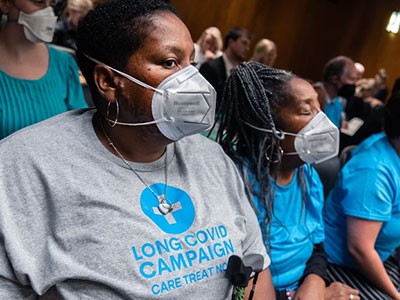
The efforts are getting a boost in attention and funding in large part because of long COVID, which afflicts roughly 6 in every 100 people after infection with the coronavirus SARS-CoV-2, says Vikram Chib, a biomedical engineer at Johns Hopkins University in Baltimore, Maryland. “The primary symptom of long COVID is fatigue,” says Chib. “I think that has opened a lot of people’s eyes.”
Chib and others hope that a fundamental understanding of cognitive fatigue will help the billions of people who face it from time to time, as well as the tens of millions who carry it as a more extreme and chronic companion. As well as being common in long COVID, debilitating fatigue is a symptom of chronic fatigue syndrome, also known as myalgic encephalomyelitis (ME/CFS), post-traumatic stress disorder, multiple sclerosis, depression and Parkinson’s disease. Extreme mental exhaustion can also follow cancer treatment, head injury, stroke or exposure to certain toxins.
“Fatigue is a really big problem,” says Chib. “We really need to figure this out — how to study it and how to intervene.”
What is cognitive fatigue?
At the start of a chess match, a professional player might rely on well-rehearsed openings. “The first five, six or seven moves can be done without thinking,” says Pessiglione. But when there’s an unfamiliar position on the board, the player no longer has a ready routine. They are “required to think”, he says. The same is true for a driver who turns on to an unfamiliar street. On roads they’ve been down hundreds of times, mental autopilot can kick in. But if they take an unknown route, Pessiglione says, the demands on the brain intensify.
Cognitive control is the term that scientists give to this effortful directing and regulating of thought. Over time, as a leading theory goes, maintaining control becomes costly for the brain, and fatigue emerges. Scientists aren’t entirely sure why. Some think it is related to how cells cope when their energy supply is strained; others point to a build-up of toxins from neural activity1. But researchers tend to agree that the sensation of fatigue is protective — a warning that the brain is nearing a physiological boundary and it’s time to rest.

During chess matches in 1996 and 1997, Russian grandmaster Garry Kasparov grew tired, unlike his opponent, IBM’s Deep Blue computer.Credit: Stan Honda/AFP via Getty
Molecular players across several brain regions might be involved, scientists say. Researchers have found potential links between cognitive fatigue and changing levels of metabolites such as glucose and lactate, neurochemical messengers such as glutamate and adenosine, and a protein involved in learning and memory called brain-derived neurotrophic factor2. Even amyloid-β, a protein fragment associated with Alzheimer’s disease, might contribute by disrupting synapses, interfering with the clearance of glutamate or increasing neuroinflammation3. But it is uncertain what is a marker and what is a cause.
Cognitive neuroscientist Clay Holroyd at Ghent University in Belgium is among the researchers who favour the toxic-build-up theory of cognitive fatigue. This idea has been gaining traction over the past five years or so, although it’s not yet clear what the waste metabolite is. He likens the sensation of fatigue to pain: both have a role in protecting the body from accumulating damage.
But even if a person ignores the sensation at first, he says, there’s little risk of real metabolic harm in most cases. “We have an automatic fail-safe,” he says. “You can work really, really, really hard for a time, but eventually you’re going to need to go to sleep.” Although taking a break from a task can offer temporary relief, sleep has a much more restorative role. Sleep, especially slow-wave deep sleep, acts as the brain’s nightly maintenance. It clears out metabolic debris and recalibrates circuits and cells so that they can best use energy reserves.
Seeking better measures
Conventionally, cognitive fatigue has been quantified either by asking a person to report their own levels of fatigue or by detecting a change in their performance on working-memory tests or other tasks. These are not great measurements, scientists say. Drops in performance can be obscured by factors such as motivation, boredom and frustration. Performance can also be offset by training, such as when a chess player automates a sequence of moves.
Self-reports, meanwhile, are subjective and unreliable. “People are terrible judges of their own fatigue,” says Daniel Forger, a researcher in computational medicine at the University of Michigan in Ann Arbor, who is investigating new ways to assess cognitive fatigue.
Long-COVID research just got a big funding boost: will it find new treatments?
To better understand fatigue, Pessiglione, Chib and other researchers are trying to bridge an understanding of its biochemical workings with how it affects motivation4. The current hypothesis: cognitive fatigue arises from metabolic changes in parts of the brain that are responsible for cognitive control. And those changes, whether resulting from depleted energy stores or amassed waste, alter how brain circuits weigh the costs and benefits of exerting mental effort — nudging decisions towards easier options that are more immediately rewarding1.
In a 2022 study5, Pessiglione and his team simulated a workday by asking otherwise healthy participants to spend several hours on either easy or hard versions of the same cognitive tasks. In one task, participants viewed letters appearing one after another on a screen and had to decide whether each new letter matched one a certain number of letters earlier. Recalling whether the letter on screen matched the third letter back, for example, would be much more difficult than recalling whether it matched the first letter back.
After this simulated workday, participants made choices between smaller immediate rewards and larger delayed ones. Those who had completed the harder tasks were more likely to opt for instant gratification. That preference was also consistent with greater accumulation of glutamate — one of the metabolites suspected to build up with cognitive exertion — in the lateral prefrontal cortex. This brain region is involved in executive functions, such as working memory and decision-making, and has been found to have lower activity after a hard day of simulated work6.
Matthew Apps, a cognitive neuroscientist at the University of Birmingham, UK, says that the dynamics of dopamine — which interacts closely with adenosine, glutamate and other metabolic players in the brain — might help to explain the connection between neurometabolic strain and the experience of fatigue. Because dopamine enhances the perceived value of rewards, it typically boosts motivation to invest effort. He proposes that sustained effort might cause dopamine levels to drop, leaving people less willing to work for the same pay-off.
Together, these and similar lines of research are starting to reveal how levels of these molecules and measures of brain activity align with fatigue.
The bottom line, says Chib, is that there is “something happening with the chemistry of your brain” that changes your calculation on whether you should exert cognitive effort. He says that baseline chemistry will differ between people: “You and I might have different concentrations of neurotransmitters in our brain, and that inherent difference could make me feel very tired, whereas you’re able to persist.”

First proposed blood test for chronic fatigue syndrome: what scientists think
These, or similar differences in chemistry, might help to explain chronic and other extreme fatigue. In people with long COVID or ME/CFS, a small mental task can feel as intimidating as performing brain surgery.
For Ana Lia Tamariz, an artist and health-and-wellness coach in Miami, Florida, who has ME/CFS, simply listening to music or reading a book often requires immense effort. “Sometimes, I cannot read one more word,” she says. “Imagine coming out of anaesthesia from a surgical procedure groggy. Imagine you never exit that state.”
For her, the cognitive and physical fatigue can be hard to separate. Any cognitively demanding task can make her physically drained, she says. And anything physically demanding can leave her mentally spent. Tamariz says she is constantly doing the calculation: “Is this worth my energy?”
Research supports the idea that some shared mechanisms might drive both physical and cognitive fatigue, and that the two interact7. “If you run a marathon, yes, there is physical fatigue in your body,” says Apps. “But by God, you’re going to feel all kinds of cognitive fatigue as well from the strain and the concentration that’s required to maintain your performance.”
The reverse also seems to be true. In a preprint from last year, Chib’s team found that otherwise healthy participants were less willing to exert physical effort after performing a mentally taxing task8.
Other researchers are studying the roles of stress, sleep, circadian rhythms and inflammation in cognitive fatigue, as well as the consequences. When the brain doesn’t get restorative sleep, small clusters of neurons can go briefly offline. These local sleep-like episodes can cause momentary lapses in attention and other slips in performance.

