


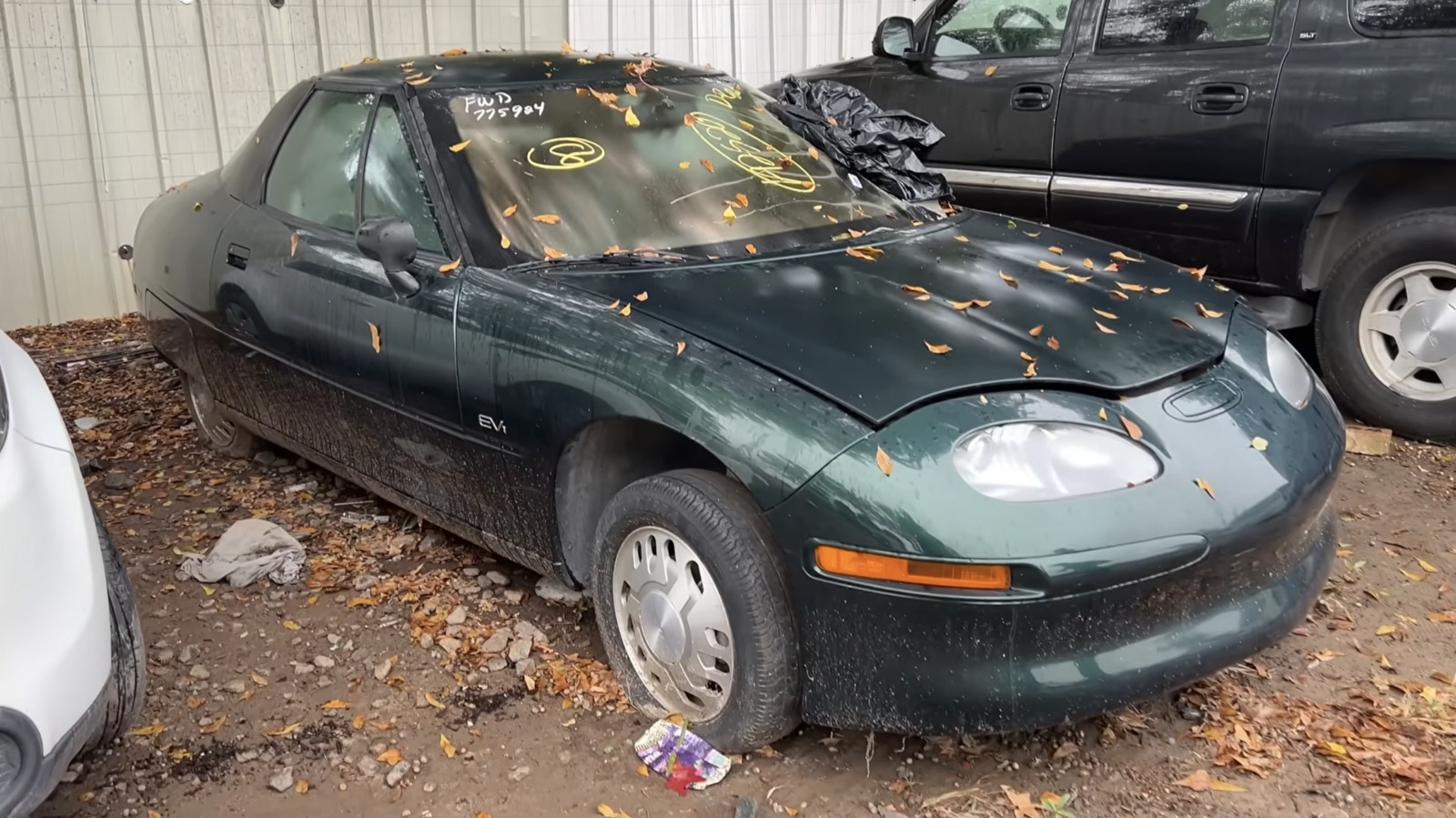
The GM EV1 was never supposed to end up in private hands. One has, and the team working on restoring it had been fearful of reprisals from GM that could endanger the project. Instead, GM President Mark Reuss has pledged his full support. “Whatever you need, we’ll help,” he says at the end of the latest project update video by The Questionable Garage.
Despite building 1,117 of them between 1996 and 1999, General Motors never sold a single EV1. They were all leases, which gave GM the power to take them all back in 2003. Most of these groundbreaking cars were crushed, while a few were saved, disabled from being able to drive, and loaned out to museums and universities. Last year, one of these at Clark Atlanta University fell through the cracks when campus police marked it as an abandoned vehicle. Eventually, a court order put it up for auction, which Billy Caruso won for a bid of $104,000, making this the first and only privately-owned GM EV1.
The team restoring the car went through the proper legal process to ensured it was no longer GM’s property, but they were still fearful that the General would somehow try to stop the project or take the car back anyway. While The Questionable Garage was brought in to help with the restoration and document the process on this historic car, the owner’s identity was kept secret, as well as the car’s location.
Looking at GM’s EV history
It turns out that GM has been watching the videos, and is interested in the project in the best possible way. Rather than taking the project away, GM wants to support the team’s goal to restore and make this car operational by November 14, 2026, the 30th anniversary of the first EV1 rolling off the production line. GM invited the team to Michigan, where Adam King and Kevin Kirbitz of the GM Heritage Center whisked them away to a secret location of its own.
Rather than disappearing without a trace, the team checked out some other historic GM EVs, which is the main focus of this video. They started with the Electrovair II, which, as the name implies, was an electric Corvair. It features bleeding edge technology for 1966, including silver zinc batteries of the same type that would go on to power the lunar rover. At a cost of $160,000 and a lifetime of just 100 charge cycles, it’s no wonder an electric Corvair never went into production.
Next they checked out the Sunraycer, a solar-powered EV that crushed the competition in a 1987 race. Although its design is impractical for a street car, GM wanted to adapt much of the Sunraycer’s technology for road use. This led directly to the Impact prototype, which bears a striking resemblance to the EV1 that the team is rebuilding. Finally, the team got to crawl all over the first production EV1, the car whose production date set the deadline for this project. GM had already undertaken a restoration project of its own to make this first EV1 somewhat operational again, and gave the team the chance to see what its car should look like when it’s done.
A benevolent benefactor
That’s where this video ends, but GM confirmed there’s even more to the story, likely to be shown in future videos. The team got to speak with some of the people involved with the EV1’s development, likely asking all their burning questions they had about the car. GM has also hooked the team up with a number of parts from a donor EV1 to help it complete the project.
The Autopian also discovered an auction listing for an undisclosed sum labeled “EV1 Parts.” It closely matches the list of parts the team needs, including everything from a power inverter module to interior pieces to body panels, including the unique windshield that might as well be made of unobtainium. From previous videos, the team had been planning to restore the original parts as best they could, then adapt and piece together electronics from the Chevy S-10 Electric, which used much of the same tech as the EV1. While I’m sure the team could have done it without GM’s cooperation, getting the parts they need from GM is a huge help toward making this car functional again by November 14.

