



Along the world’s coastlines, women are shaping conservation in ways that often go unseen.
For generations, women have carried deep, place-based knowledge that guides how tidal wetlands, salt marshes and mangroves are cared for — helping to steward ecosystems that store centuries of so-called “blue carbon” in their soils, preventing it from entering the atmosphere and driving climate change. Yet in many places, that knowledge is sidelined — and women themselves are often excluded from the decisions that shape how these ecosystems are managed.
That disconnect is at the heart of a new analysis led by Whitney Yadao-Evans, a gender and conservation expert at Conservation International.
Yadao-Evans joined Jennifer Howard, Conservation International’s blue carbon leader, to talk with Conservation News about what it will take to close that gap — including a call for research that looks not only at ecosystems, but also the people who manage them.
Conservation News: Your work suggests there’s a major blind spot in blue carbon science. What is it?
Whitney Yadao-Evans: It’sthe gender knowledge gap — and it’s a mile wide. Women play central roles in managing coastal ecosystems, yet their knowledge and experiences are largely absent from the science guiding blue carbon projects.When we looked closely at what was — and wasn’t — being studied, that disconnect became impossible to ignore. This issue touches all aspects of the sector, and that’s why we brought in such a diverse team of researchers for this analysis, representing so many different scientific disciplines. No single organization can tackle this alone.
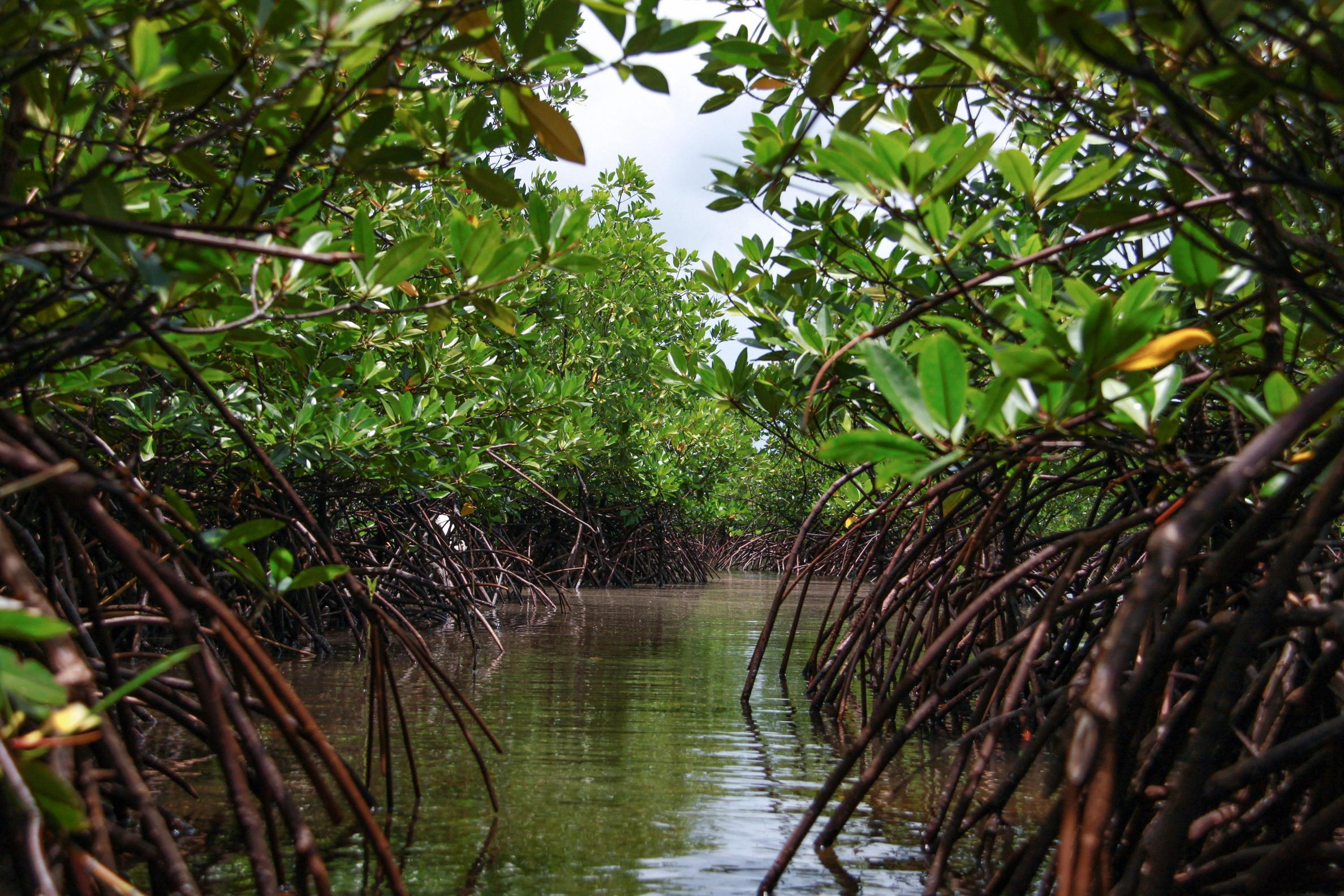
Jennifer Howard: This matters because of how urgent this work is. Mangroves once existed along nearly every tropical coastline, and there’s intense pressure now to protect what’s left — for the carbon they store, for coastal protection, and for the livelihoods they support. Because of that urgency, projects often move quickly. These projects should have important safeguards in place to make sure no one is being harmed or disadvantaged, and that includes gender. But that’s not always the case, and even where safeguards are implemented, what’s missing is the larger conversation around the impact that the project had on women and on gender dynamics in the community.
This research delves into the harsh reality that we’re not getting the full picture of what’s happening on the ground — in the mud, in the meeting houses, alongside the people doing the work and living in these landscapes every day. If we have any hope of saving the world’s remaining mangroves — and I think we do! — we need that knowledge and data.
Can you give an example of when it worked out — and when it didn’t?
WYE: In Papua New Guinea, I saw both ups and downs. One project was especially powerful: it linked mangrove restoration to women harvesting mudcrab, work that depends on a healthy mangrove forest, and connected that work to better access to markets — so protecting the ecosystem was directly connected to making a living. As more women became involved, the dynamics of the community began to change. Men started caring for kids while women earned income, and families started talking more openly about divvying up responsibilities.
For the first time, women were even invited to speak as leaders — something that had never happened before.
But every project and every community is different, and unfortunately sometimes — even when a project worked in another location — it doesn’t have the same positive impact. During my time in Papua New Guinea, which has high rates of violence, I saw firsthand how in some communities, if not everyone was on board with a new approach, trying to increase women’s roles could actually put them in danger. It’s not so simple to say women should be involved — sometimes, it can be risky. Tracking that information, learning from those stories, and sharing that knowledge with other organizations doing this work means we can design and adapt projects for the best outcomes — on a global scale.
When did you realize this gap existed?
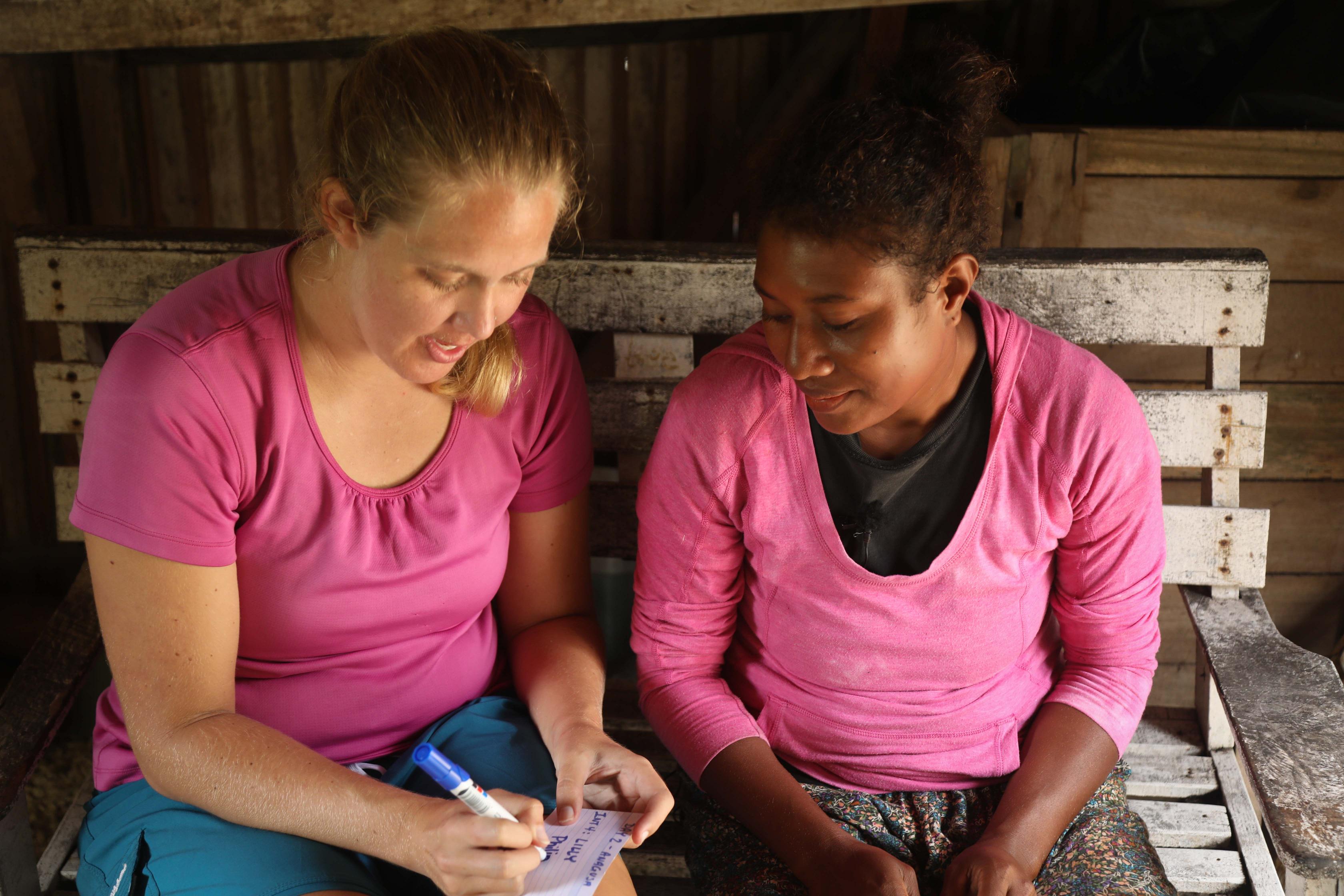
WYE: For a long time, this was a gut feeling. Working in mangroves, working with communities, we’ve seen that the role women play in blue carbon projects is a major social component of why these ecosystems are important. Mangroves are a gendered space, harvesting is how women contribute to the family and to society. We all felt it intuitively, but we didn’t have data to point to that said a healthy blue carbon ecosystem benefited women in a particular way, or that restoring a coastal ecosystem would have this additional gender-based social benefit — or even how women’s involvement was contributing to the success of the project.
And we didn’t have the data to show whether those benefits — to women and to the ecosystems themselves — were happening. This means that we had no proof that the women we were trying to empower were actually experiencing the benefits we were hoping for, nor were we aware of any negative effects they may be experiencing. Without these critical insights, we have been unable to improve how we work or learn from our mistakes, making it very difficult to replicate initiatives with consistent and predictable conservation and social benefits.
Your paper lays out a roadmap to gather and share this missing gender knowledge. What happens now?
WYE: Our intention is that this changes how we design and adapt blue carbon projects, what we choose to study — and what we’re willing to count as evidence. This paper makes the case that — in order for blue carbon projects to be successful — gender needs to be examined with the same rigor as carbon, biodiversity or coastal protection. That means asking basic questions we often skip: who benefits from these projects, who bears the risks, and how outcomes differ for women and men over time.
When we start examining those things consistently, we can design projects that are safer, more effective, and better aligned with the realities of the communities involved.
JH: And it changes how decisions get made. When governments or funders are weighing where to invest limited resources, they’re comparing options — forests versus mangroves, one coastline versus another. Carbon is usually the deciding factor because it’s what we know how to measure. If we can also show how protecting mangroves supports women’s livelihoods, food security and local economies, those ecosystems start to look very different on paper. Better data doesn’t just add nuance — it changes which projects move forward.
What becomes possible when gender knowledge and data are part of blue carbon decision-making?
JH: It becomes possible to design projects that actually reflect how these ecosystems are used and cared for in real life. When gender is part of the picture, women’s roles — as harvesters, managers and knowledge holders — stop being assumed and start being accounted for. That leads to projects that are more resilient, more effective and better aligned with how coastal communities really function.
WYE: And it becomes possible to make conservation fairer and safer. With gender knowledge and data, we can see who benefits, who takes on risk, and where projects need to change to better support women — rather than unintentionally sidelining them. Ultimately, this is about moving from good intentions to better outcomes. When women are visible in the data, they’re far more likely to be visible in the decisions that shape the future of these ecosystems — and their own.
I want to be careful not to wrap violence against women or a lack of access for women into “culture” or “tradition.” Whitney was really clear that conservation projects can actually (physically, economically) harm women, which is why it’s so imperative to have the data to try to at least avoid that.

