


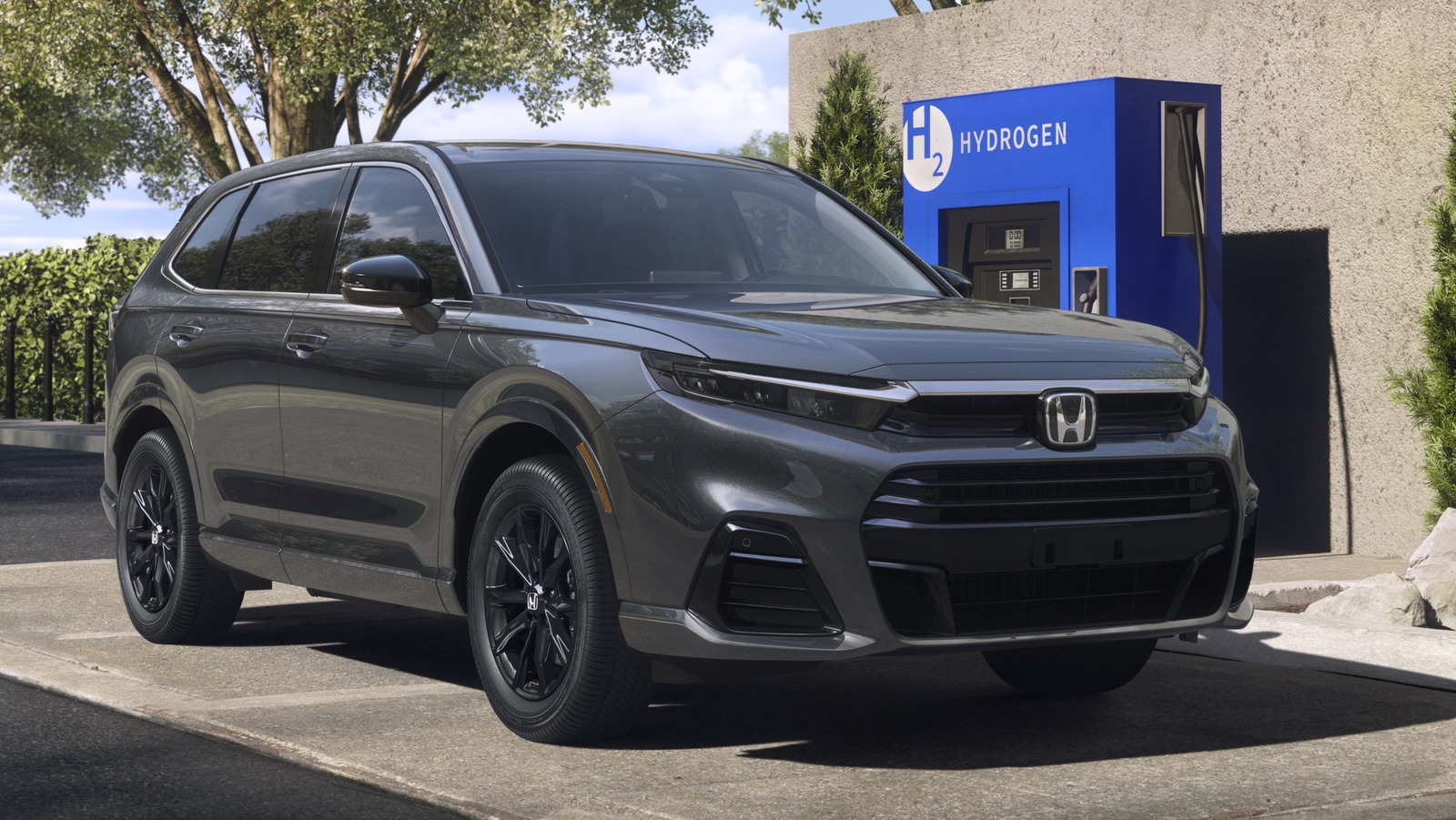
All cars are complicated and intricate machines, and that complication and intricacy multiply when cutting-edge technologies are involved. There are thousands of components in every new vehicle, and sometimes, shockingly, a few of them go wrong. That’s what’s happening with the 2025 Honda CR-V e:FCEV, for which NHTSA has issued a recall. Honda says there’s a potential for fuel cell stack coolant to leak into the fuel cell stack case, where it can create an internal short circuit that could cause a loss of drive power.
If you’re driving one of the 388 CR-V e:FCEVs involved in this recall, Honda believes there’s a 60% chance that your car is afflicted with the problem. According to the automaker, there are two potential causes:
(1) insufficient verification during a process change to reduce the amount of adhesive sealant resulted in unfilled areas, shortened adhesive length, and reduced sealing performance of the FC stack assembly end joint, and (2) the supplier failed to establish a deburring process for the O-ring groove of the wobble joint, resulting in burrs which reduced sealing performance. Over time, these conditions can allow fuel cell stack coolant to enter the FC stack case and create an electrical short between the fuel cell stack bipolar plate and the support-bar housing, leading to the ground-fault warning.
There are two potential causes for the issue
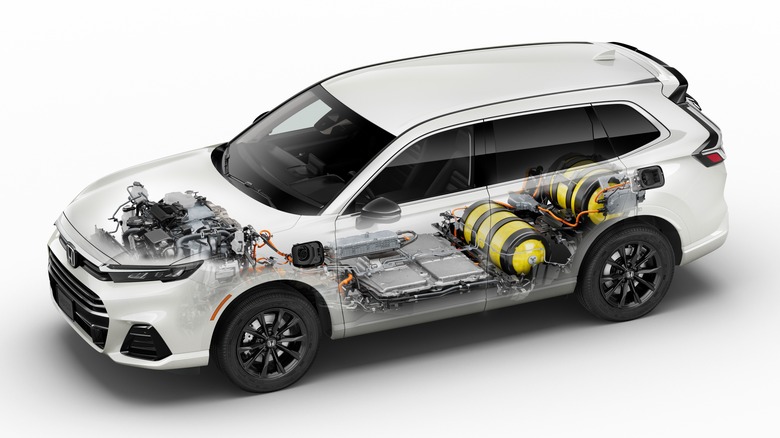
There are multiple warnings that may occur on the instrument cluster depending on the severity of the issue. The first warning that may show says “Power System” when a high voltage ground fault is detected. The second will say “FC insulating fluid low, see your dealer,” which indicates that your fuel cell stack coolant has decreased. When air is mixed into the fuel cell stack coolant it will read “power may be reduced, see your dealer,” and fuel cell power output is reduced to 20 kW. The final warning that can appear says either “do not drive” or “stop driving when safe,” indicating that the fuel cell stack coolant temperature rises and the fuel cell power generation has stopped.
Honda already notified dealers of the recall, but owners will be notified on February 2 next year. The remedy for the issue requires dealers to replace the fuel cell stack assembly with an improved part that uses a rubber end unit seal instead of an adhesive one, as well as wobble joints that have been deburred. Honda has had 14 warranty claims surrounding this issue as of December 5, and thankfully there have been no reports of injury or death related to the recall. There is no listed date when VINs will be searchable, but the recall affects vehicles produced between June 3, 2024 and March 26, 2025.

