


Last year, Nature’s careers team spoke to five recent PhD students in North America, Israel and the United Kingdom to understand how disruptions, such as the COVID-19 pandemic, had affected their career plans. At the time, these students expressed anxiety about their prospects as they prepared to enter the job market — citing concerns around substantial cuts to US scientific funding, the war in Gaza and lingering delays to PhD projects caused by the pandemic — but also a strong desire to remain in science.
Class of 2025: five PhD students reveal realigned priorities in wake of COVID and cuts
Now, to get a better sense of the global forces shaping the decisions of recent PhD students, Nature has cast a wider net, inviting people in Australia, South Korea, Germany, South Africa and China to share their career journeys. Five students explain how the shadow of COVID-19 continues to shape their careers, and how the chaos of US President Donald Trump’s second administration has reverberated across academia, disrupting plans and shifting priorities far beyond the United States. Still, these students remain optimistic about their prospects, with several pursuing opportunities abroad before they return to their home countries to build careers and, ultimately, support those of other early-career researchers.
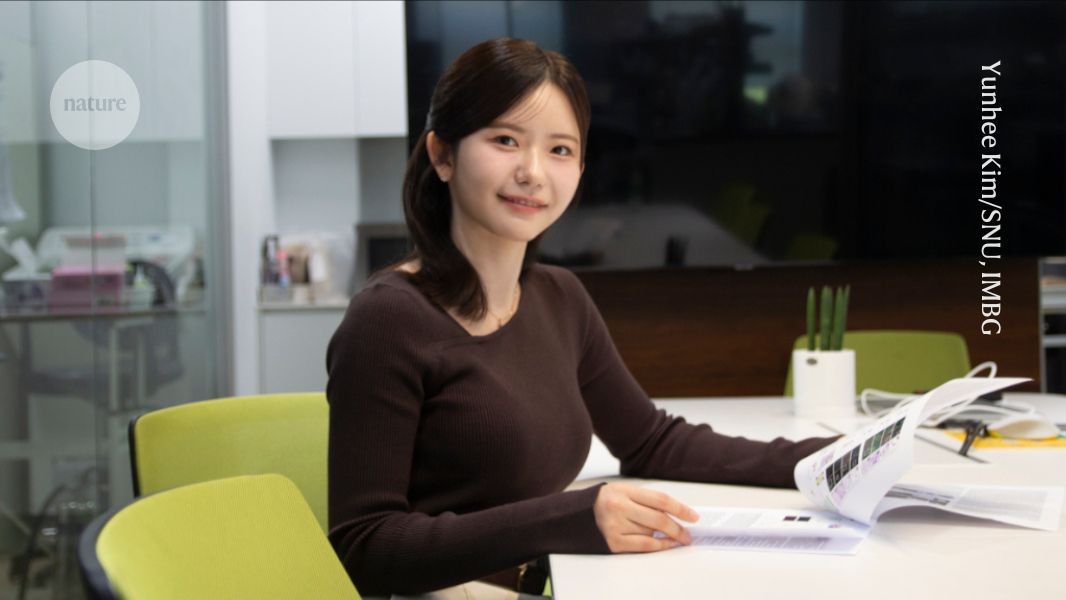
YUNHEE KIM: Supporting Korea’s next generation
Will earn her PhD in stem-cell and cancer biology in August from Seoul National University in South Korea.
I started my PhD in stem-cell and cancer biology about six years ago at Pohang University of Science and Technology in South Korea, but, in 2022, my adviser moved to Seoul National University, and I followed him there. Fortunately, the impacts of COVID-19 were not as serious in South Korea as they were in other countries because we didn’t have a heavy lockdown. And because I was living on campus, I was free to go to the laboratory. It would have been disastrous if things had been different. There was a mandatory two-week quarantine for people who became ill, and back then I had to culture stem cells and change their medium every day at the same time. Just one day of delayed experiments would have set me back by six months.
I started studying cancer because I have many family members who have had it. I think immunotherapy is one of the most powerful treatments, but the response rate varies among people, and so I’m looking at the differences between people who do and don’t respond. Why is it that certain tumours do not respond to immunotherapy, and is there a way to alter this type of cancer by changing the tumour microenvironment so that it is more similar to that of someone who does respond?

Are these the happiest PhD students in the world?
I only have one semester left before I graduate. I’m excited because it’s been seven years since I started to discuss this project with my adviser as an undergraduate student. When I first joined his lab, I was not used to reading and writing in English, so it was hard to even read articles to learn more. I’m proud to see the results, after years of struggling.
In my field, clinical translation is important, and so I was interested in exploring how my work can be turned into a real therapy. But because the underlying mechanism is more interesting to me, I decided to do postdoctoral basic research instead. I’d like to go abroad, ideally to the United States, because many of the big names in my field are there and there is a better culture of working with clinicians than there is in Korea. I’d also like to experience a different culture.
In Korea, visible outputs such as publications are strongly tied to securing research funding. Because of this, short-term goals and measurable metrics often become a priority. I sometimes feel this structure limits our ability to pursue more-difficult, long-term or time-intensive scientific questions, or to grow as researchers by tackling more-fundamental challenges. I wonder how other countries deal with these kinds of problems.
Eventually, I’d like to return to Korea to run my own group and help students like me. During my research, I often had concerns about whether it was right for me, and if I could see myself doing it for the rest of my life. Under different circumstances, I might easily have left science. Such concerns are sometimes shared more easily with someone who is close to you, or someone who resembles you, and so I want to work with our country’s students so that they know they have a place in science.

Manan Shah wants to work in research support services with scientists in India.Credit: Lisa Wolany on behalf of Manan Shah
MANAN SHAH: Seeking a research support role
Defended his PhD in biodiversity at the University of Duisburg-Essen in Germany in February 2025.
I experimented with the corporate world after my master’s degree in 2015. But in India, where I’m from, people with a master’s usually end up working in quality assurance. God knows the number of nights I’ve spent resetting passwords and debugging data banks. I soon realized that research is better, and after a few years working in a research position, in 2020 I decided to take a leap and start a PhD at the University of Duisburg-Essen in Germany.
My dissertation focused on analysing water quality in 250 lakes across Europe. With my colleagues, I extracted the complete set of genetic material from the environment, known as the metagenome, to see how varying conditions affect microbial communities. We also did experiments in the lab using artificial rivers to test specific hypotheses. In India, most of the drinking water is not very good quality, and I wanted to do something that would alleviate that problem.
During my PhD, I started thinking ahead to what I wanted to do next. In 2022, a collaborative research centre opened at my university, and my supervisor gave me the opportunity to become a data steward. I interact with different projects to see what type of data researchers are generating, help them to analyse the information and ensure that they’re storing it in a manner that conforms to funding-agency rules. The partnerships I made there allowed me to secure a postdoc with another lab head to develop methods for extracting DNA using a new liquid-handling robot.
Because I’m on a visa that is tied to my employment and I want to stay in Germany, navigating the visa system has been challenging. I’ve been hesitant to leave the country because I’m worried I won’t be allowed back in — which means I haven’t seen my family much.
My goal is to spend five years as a postdoc in Germany. When I come back to India, hopefully with a stronger work portfolio, I’d like to provide research services to scientists there. There are a lot of researchers in India, but not a lot of support staff, and I enjoy jumping into projects, learning about them and problem solving. That type of freedom, in which I get to have a say in what type of research I want to do, is very important for me.

Dezhou Cao is pursuing a physics PhD.Credit: Dezhou Cao
DEZHOU CAO: Pressured to progress
Will graduate in March with a PhD in physics from the Harbin Institute of Technology in China.
I started my PhD in China in 2021, and I’m now finishing my last year as a visiting student at the University of Barcelona in Spain. I applied for a fellowship that supports academic exchanges between China and Spain, and it has been a unique experience. In China, I focused on chemically active colloids — mixtures in which microscopic particles are suspended in a substance — in micro- and nanorobotics. I studied how those particles self-propel, rotate and self-assemble. In Barcelona, I’m learning about condensed matter that relates to how much force is generated when micromotors rotate.
Experiencing a different culture has also been good. In China, we work the whole day, sometimes more than 12 hours. But in Barcelona, I’m more relaxed. I start work at 10:00 and finish around 16:00.
Soon, I will go back to China to write my dissertation, and I’m preparing a two-year postdoctoral research plan in the lab in which I did my PhD. Afterwards, I’d like to find another position in Europe, because physics research is much stronger there than in China. Eventually, I want to run my own lab in China because I’m already adapted to the fast-paced research environment. I would also like to stay close to my parents because I’m an only child, so it’s up to me to look after them.
I am hopeful about starting a lab in China, but there’s a huge pressure. When you are hired, you undergo a three-year assessment period, during which you need to publish a certain number of papers and successfully apply for at least one national research project or grant. If an assistant professor fails to meet these targets, they risk being dismissed. That’s stressful for younger researchers. In China, researchers are also subject to age restrictions that usually don’t exist in Europe and the United States. Some universities set an explicit upper age limit of 35 (and in some cases, 32) for hiring young faculty or research staff. I’m 29, so I feel a lot of pressure to keep making progress.

Nxalati Mkhombo studies in South Africa.Credit: Nxalati
NXALATI MKHOMBO: Keeping an open mind for next steps
Plans to submit her dissertation in molecular and cell biology at the University of Cape Town in South Africa this month.

