


You have full access to this article via your institution.

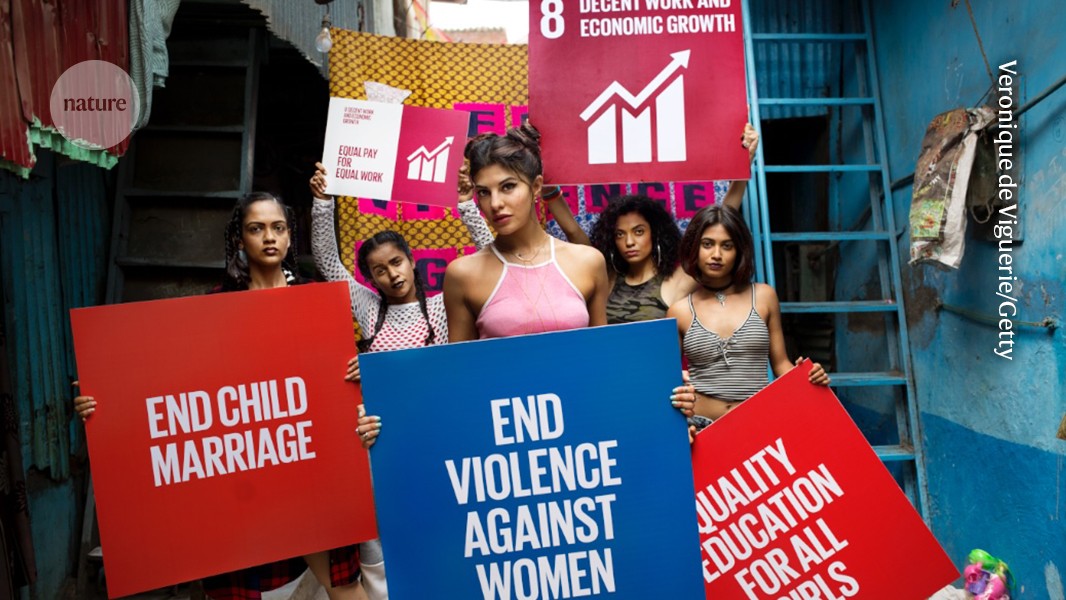
Global engagement in highlighting and achieving the Sustainable Development Goals is crucial to their success.Credit: Veronique de Viguerie/Getty
Towards the end of next month, the United Nations will publish one of its most important reports this year. Its High-Level Expert Group on Beyond GDP, appointed by UN secretary-general António Guterres, will set out its recommendations for measures of progress on development that complement and go beyond gross domestic product (GDP), ensuring that what matters to people, the planet and the future is fully recognized.
Beyond growth — why we need to agree on an alternative to GDP now
The group’s recommendations will be considered by UN member states in September, at the next general assembly. If adopted, governments will move to the next phase, which is to discuss the necessary steps to implement them.
The group has already produced an interim report and is consulting with diverse stakeholders through in-person and online events. But some researchers and policymakers are concerned that the final recommendations will not adequately incorporate the work done on the indicators for the 17 UN Sustainable Development Goals (SDGs), the world’s current plan to end poverty and achieve environmental sustainability. Progress on the SDGs is measured against more than 200 unique criteria — many more than just GDP. The high-level group is likely to recommend a much smaller number.
Earlier this week, a group of specialists responsible for ensuring that the SDG indicators are robust and transparent presented the UN with a report on lessons learnt from a decade of their work. The report says: “A central lesson from the SDG global monitoring experience is that future efforts should build on what already exists rather than start anew.”
This is good advice. The process of creating, reviewing and improving the SDG indicators and then helping countries to implement them is perhaps one of the most comprehensive, inclusive and recognizable international frameworks ever devised. The SDG logos are instantly recognizable; the targets are measured throughout the world; and progress is reported annually. Those involved in the effort to create the new indicators have, we hope, taken the time to study the SDG process and its outputs. This will be time well spent and it will help the group to learn from and build on work that has already been done.
The world’s goals to save humanity are hugely ambitious — but they are still the best option
In 2016, the year after the SDGs were announced, the UN established an international network of specialists with backgrounds in diverse sectors, including research, policy, finance and non-governmental organizations, for each of the SDGs and targets.
Known as the Inter-Agency Expert Group on SDG Indicators, its members organized the SDG criteria into three tiers. The highest classification (tier 1) comprised indicators that have internationally established methodology and standards and for which at least half of countries are collecting data regularly. An example is the proportion of people living below the international poverty line. The second tier includes measures with agreed methodology and standards but insufficient data. Tier-3 indicators are those still in development because the methodology and standards are not yet agreed. The group’s members then put in place a programme of work to move as many indicators as possible into higher tiers. By April 2020, there were no indicators left in tier 3.
An example of this work is one of the indicators for gender equality — the extent to which countries have laws that promote gender equality and protect against discrimination. It moved from tier 3 to tier 1 as the result of a deliberative process involving researchers, non-governmental groups and representatives of international organizations such as UN Women and the World Bank. They commissioned a study on how to make progress on the indicator and collected pilot data in a group of countries — slowly working towards a point at which all members of the specialist group could agree that the target was ready to be given the higher classification.

End GDP mania: how the world should really measure prosperity
All of the SDG indicators were established — and some continue to be reviewed — in a similarly deliberative way. The process of improving them is dynamic, not static. It is a decade-long example of how to create indicators so that they are robust, transparent and inclusive. There have never been no similar evidence-based processes to create prosperity indicators on this scale. That process needs to be studied, and it deserves wider recognition. We hope that the UN’s Beyond GDP advisers will continue to engage with and learn from the framework.

