


Good morning! It’s Friday, January 9, 2025, and this is The Morning Shift, your daily roundup of the top automotive headlines from around the world, in one place. This is where you’ll find the most important stories that are shaping the way Americans drive and get around.
In this morning’s edition, GM just lost $7.1 billion between an EV business writedown and restructuring in China, Jeep is actually cutting prices in 2026, Polestar saw a quarterly sales jump thanks to Europe and China could see sales stagnate this year.
1st Gear: GM takes $6 billion EV business hit
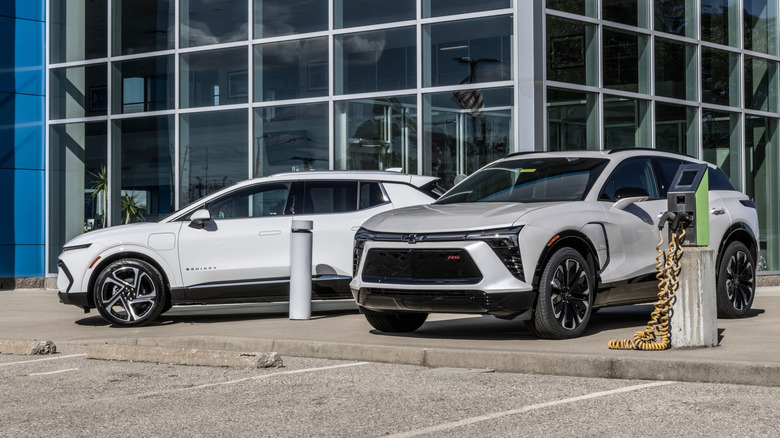
General Motors is taking another massive hit to the tune of $6 billion for unused electric vehicle investments related to production changes the automaker made in 2025, according to government filings. To add insult to injury, GM said it’s also taking on $1.1 billion in charges for restructuring its business in China. At the very least, these charges don’t carry any operational or vehicle production changes that hadn’t already been announced.
Back in October, GM said that unused equipment meant for EV production totaled $1.2 billion. GM attributed the remaining $400 million to what it owed suppliers for contract cancellation fees. Combining that with the recent filing, and we can see that GM is now out $7.6 billion for lowering EV production in 2025. From the Detroit Free Press:
“With the termination of certain consumer tax incentives and the reduction in the stringency of emissions regulations, industry-wide consumer demand for EVs in North America began to slow in 2025. As a result, GM proactively reduced EV capacity,” GM said in the filing.
Some of those changes include pivoting GM’s Orion facility, previously slated for EV production, to assemble the Cadillac Escalade, the Chevrolet Silverado and GMC Sierra light-duty pickups and reducing battery cell production capacity by selling interest in the joint-venture Ultium Cells facility to LG Energy Solutions.
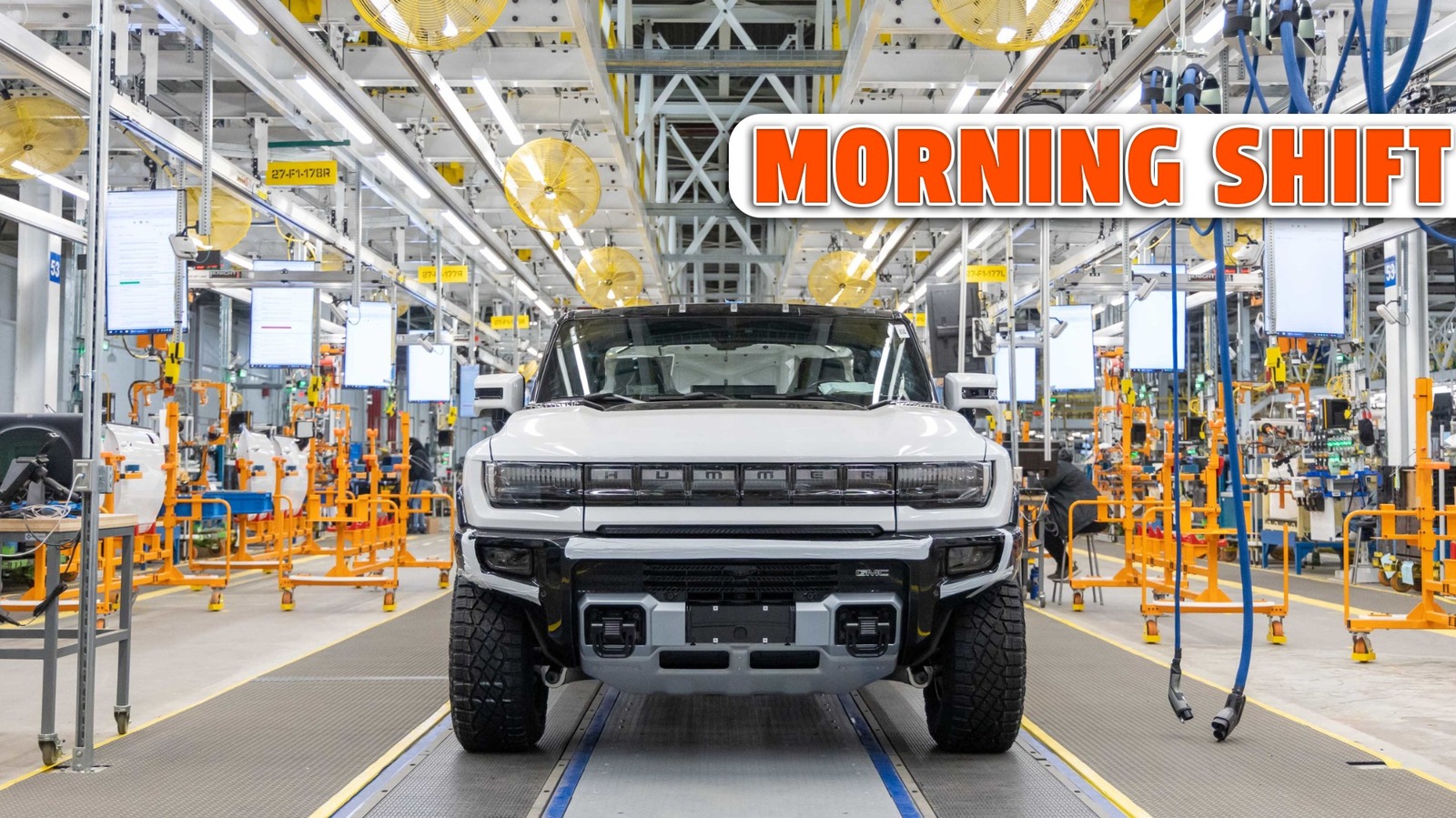
GM made numerous production changes last year to cope with a smaller-than-anticipated EV market. GM slashed shifts and laid off hundreds of workers at its electric vehicle plant, Factory Zero, in Detroit-Hamtramck who were on layoff for much of the year.
GM’s production adjustments allow the automaker to dial back, or dial up, EV production depending on demand, the company has said, while it faces an uncertain EV market. GM reported fourth-quarter 2025 sales ― the first since the expiration of the federal tax credit ― on Jan. 5, noting that EV sales fell 43% year-over-year to 25,219 vehicles after reaching record heights earlier that year.
The charges break down to $1.8 billion in unused EV equipment and about $4.2 billion in supplier commercial settlements, contract cancellation penalties and other charges, according to Freep. GM says more costs could be recorded in 2026 from continued negotiations with its suppliers, but it would not be as costly as the EV-related charges that came last year.
Of course, this is all small potatoes compared to the $19.5 billion write-down Ford took at the end of 2025 for doing a very similar move, but who’s counting?
I’m no accountant — clearly — so I cannot understand how taking a multi-billion dollar hit and just throwing money away is more financially prudent than just building and selling these cars, but I guess it is.
2nd Gear: Jeep cuts prices in the Big 2-6
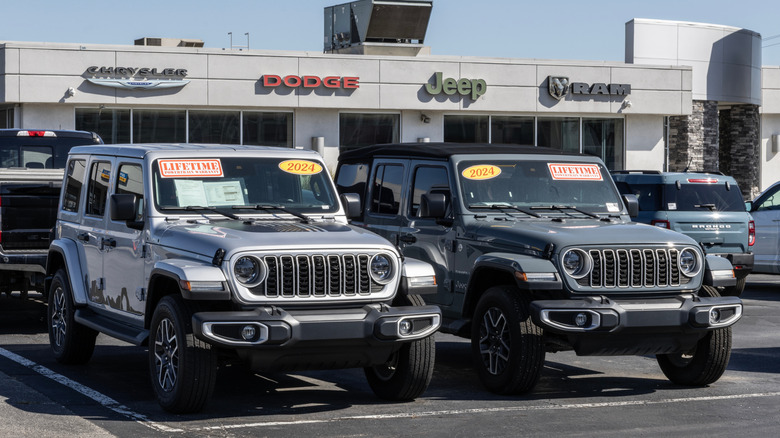
Jeep is doing something almost no other automaker has thought to do in an effort to boost sales in 2026: it’s cutting prices and simplifying its lineup. It’s now offering fewer trim levels and dropping base prices while adding more standard equipment. What a novel idea. Maybe something this radical could catch on across the industry? I mean, it won’t, but that would be nice, no? From Bloomberg:
A Wrangler Sport S now starts at $42,495, down $1,350 from the prior model year. Opting for a version with LED lights, all-terrain tires, and a heated steering wheel and seats now sets a customer back roughly another $5,000, instead of almost $9,400 previously.
“We did this on every car,” Bob Broderdorf, Jeep’s chief executive officer, said in an interview. “This is us giving back to the customer the things that make Jeep Jeep.”
While the initial response has been tepid — Jeep’s US sales rose just 1% last year — stabilizing the brand has been a top priority for Stellantis CEO Antonio Filosa. The dramatic decline his predecessor Carlos Tavares presided over was one of the biggest black marks on his record and contributed to his sudden exit just over a year ago.
[…]
“Stellantis found out pretty quickly, if we cut costs, cut content and jack up prices for the typical consumer, we lose,” said Erin Keating, an executive analyst at market researcher Cox Automotive. “They have had to do a structural reset simply because the rest of the market was humming along and they were tanking.”
[…]
Broderdorf, Jeep’s CEO, is betting the trim-level changes and new configurations can drive both volumes and profits, rather than sacrifice one for the other. Stellantis has little room for error, having forecast a low-single digit adjusted operating income margin for the second half of 2025.
Jeep still has a hell of a long journey if it wants to get back to the peak it saw in the mid-to-late 2010s. Last year, its share of the SUV market dropped to 5.6%, which was its lowest since at least 2002. That’s well off the 13.4% peak it enjoyed in 2016, when not every automaker was all-in on the SUV craze just yet.
3rd Gear: Europe gives Polestar a win in Q4
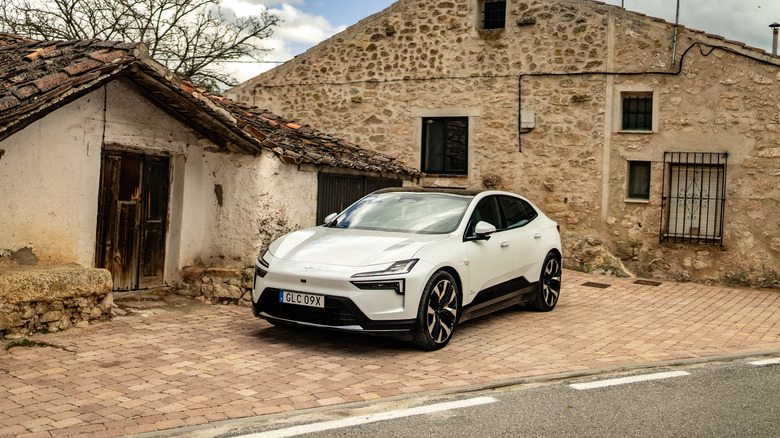
Polestar just got a much-needed win, and it has Europe to thank. The Sino-Swedish automaker just saw a sharp rise in fourth-quarter vehicle sales, which was helped greatly by a recent strategy focus in Europe. The company’s sales rose 27% to 15,608 vehicles in Q4. Overall, it sold 60,119 cars in 2025.
Because of U.S. tariffs, last year, Polestar decided it would spend more time focusing on Europe, which now accounts for 78% of its sales. It sure seems like this move has worked out for the best. From Reuters:
Polestar has also scaled back its emphasis on online, direct‑to‑consumer sales in favor of a traditional dealer‑led model, expanding its sales network, although the company shut all of its 30 retail sites in China.
U.S. tariffs have hurt the carmaker’s margins, forcing it to rejig supply chains and shift production to Europe.
“For retail sales volumes, 2025 has been the best year ever for Polestar, despite continued external headwinds and challenging market conditions,” said Polestar CEO Michael Lohscheller.
[…]
High debt loads, persistent losses, and financial difficulties have also led to a weak share price, prompting the company to avoid a NASDAQ delisting by conducting a reverse stock split, mechanically lifting the price from below $1 to $18.
Polestar has relied heavily on Chinese carmaker and majority-owner Geely Holding to help fund its loss-making operations. In December, it got up to $900 million in fresh financing and loan deals made with Geely and two European banks.
Much like its sister Volvo, Polestar is also increasingly dependant on Geely’s platofrms and supply chain to cut costs, reduce development spending and improve efficiency.
It’s a small win for Polestar, for sure. But, at the end of the day, a win is still a win.
4th Gear: China’s sales could stall in 2026
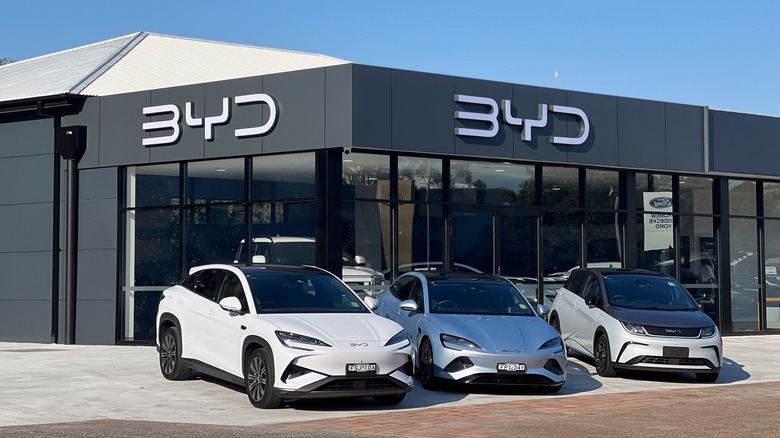
China’s car sales have been experiencing wildly high growth for years now, but that’s almost certainly going to change in 2026. At the same time, the strong EV exports the country enjoyed in 2025 are unlikely to continue. In 2025, car sales were up 3.9% over 2024, and in 2024, they were up 5.3% over 2023. Don’t expect the same trend to continue this year. From Reuters:
Domestic demand faded in the last quarter, as many cities and provinces reduced or suspended government subsidies for auto trade-ins due to a funding shortage, intensifying cut-throat competition and prompting automakers to step up overseas expansion to offset a sluggish domestic market.
Chinese automaker BYD posted its weakest sales growth in five years in 2025, but sales abroad hit a record of more than 1 million vehicles.
China’s overall car exports increased 19.4% to 5.79 million vehicles last year, while pure EV exports were up 48.8% to 1.52 million units, [China Passenger Car Association] data showed.
The association had expected car export growth to cool to 10% in 2025 from 25% a year earlier. It had predicted zero growth for EV exports.
Cui Dongshu, CPCA secretary-general, said domestically the sector will be under pressure to reduce inventories this year, while EV export growth will likely trend down, given a weaker outlook for electric cars and falling oil prices.
Plug-in hybrid exports are estimated to remain strong this year, however, he added. Exports of these vehicles more than tripled in 2025.
It’s very possible that 2026 ends up being China’s worst domestic car sales year since 2020, when, you know, there was a whole-ass global pandemic. And, it’s unlikely that the extension of car subsidies as part of the country’s consumer goods trade-in program will prevent sales from falling.
Reverse: Thank you for my magic box
 History.com
God, Apple used to be so cool. I mean, I’m still an Apple Guy, but everything feels so stagnant now. It really needs an evil lunatic like Jobs at the helm to inspire (read: scare) people into innovation. If you wanna learn more about the iPhone’s debut, head over to History.com.
On the radio: Phoebe Bridgers – Kyoto
God, I love this song, and I’ve got a great relationship with my father, so I can’t even really relate to it — it’s just that powerful and wonderful. To me, “Kyoto” is one of the best songs of the 2020s, and there is some stiff competition.

