




Many doctoral students and early-career researchers do not feel empowered to report poor working conditions or supervisor misconduct.Credit: Getty
When you spend enough years in academia, you begin to hear the same sentence spoken over and over:
“It won’t make any difference.”
We have both heard it, too many times. It is what a doctoral student says when a supervisor crosses a line and they are encouraged to report misconduct. It is what a postdoc says when they are urged to complain after being asked to work unpaid overtime, under the shadow of a recommendation letter. And it is what a young academic tells themself when they experience humiliation or dismissal and cannot find a formal channel through which to discuss their situation.
Academic life has changed. But we feel that academic culture hasn’t kept up. One of us (F.G.S.) has spent eight years working with educators across Europe to promote mentorship training, safe learning environments and ethical leadership. The other (R.A.H.) has spent decades listening to doctoral students who feel voiceless. We represent two distinct nations and institutions, but we share a concern that something fundamental is broken in the culture of how people are taught, trained and treated in academic spaces.
We met through a small but growing group called the Academic Think Tank, an informal international network that brings together educators, researchers and academic leaders to discuss how to improve academic culture.
We think that improvement is possible, but only if we speak openly about the challenges that academics and students face.
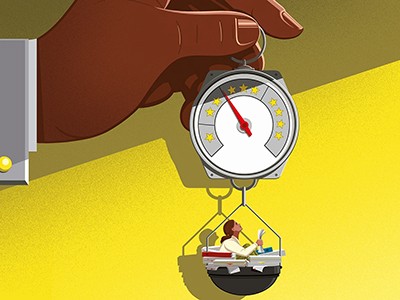
The human costs of the research-assessment culture
Despite attempts by many universities to improve workplace culture in higher education by introducing codes of conduct and leadership training, the system remains strongly hierarchical, rewarding research output over respectful behaviour. This, in our view, could drive future generations of researchers to choose industry over academia. People at the bottom of the hierarchy are often invisible to their institutions; at the top, a person’s publication record can act as a shield for bad behaviour. Those in charge of people’s work contracts, funding, authorship attribution and reference letters can easily forget how vulnerable other people’s positions can be.
We asked our Academic Think Tank colleagues (in North America, Europe and Asia) to reflect on what needs to improve the most. The same issues kept surfacing: supervisors who see students as labour, not as learners; early-career researchers who are afraid to report abuse or harassment; and institutions that tolerate workplace toxicity in exchange for prestige.
Here are five things that we think must become standard practice in academia.
Mandatory leadership training
Some professors are promoted for their research output, not for their ability to manage people. This has to change. Every leadership role should include mandatory training in supervision, leadership and communication, with regular refreshers and feedback mechanisms that embrace diverse perspectives, such as the 360-degree method.
Some universities require academics to attend an introductory doctoral supervisor course before they can act as principal supervisors, and offer follow-up leadership courses for people managing research groups.
Anonymous reporting systems that work
Reporting mechanisms must be followed up with real action to ensure that people can trust them. A reporting system that doesn’t work is one in which complaints disappear, nothing is documented, there is no feedback to the person who made the report and problematic behaviour patterns never reach leadership teams. Institutions should publish anonymized data to build transparency.
At the Karolinska Institute in Stockholm, all graduating PhD students are invited to complete an anonymous survey, and the results are summarized in public reports that highlight the strengths and problem areas of the doctoral environment.
Cultural climate audits
Departments should be internally assessed regularly by the university on how inclusive, respectful and equitable they are — not just on financial and research metrics used to estimate productivity.
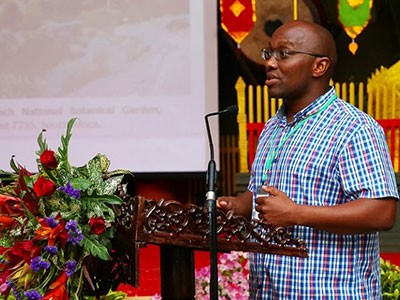
Developing an inclusive culture at South Africa’s research institutions

