


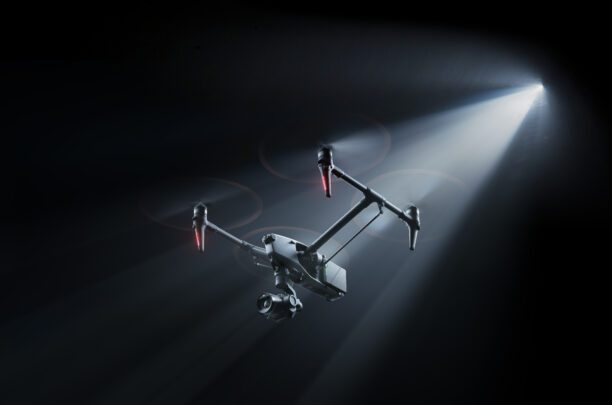
New FCC action blocks future equipment authorizations for foreign-made drones and critical components, while previously authorized aircraft remain legal to operate.
Key Facts: What Changed and Why
On December 22, 2025, the Federal Communications Commission (FCC) added foreign-made unmanned aircraft systems (UAS) and a range of critical UAS components to its Covered List, identifying them as equipment that poses “unacceptable risks to the national security of the United States and to the safety and security of U.S. persons.” The determination falls under the Secure and Trusted Communications Networks framework, which prevents equipment on the Covered List from receiving new FCC equipment authorization. Without authorization, manufacturers cannot legally market or sell new drone models or affected components in the United States.
The FCC emphasized that the action applies primarily to future hardware. Previously authorized drones and components are not revoked, and aircraft already in service or already approved for sale may continue to operate and be used. For operators and agencies, the effect functions less as an immediate ban and more as a freeze on future market entry for new foreign-made platforms and hardware revisions that would normally require new authorization.
Federal officials linked the determination to broader supply chain and communications security concerns, as well as the operational environments surrounding major upcoming events such as the 2026 World Cup and 2028 Los Angeles Olympics, where airspace security and communications assurance are viewed as critical planning priorities.
Industry Reactions: Support, Criticism, and Operational Concerns
Reaction to the FCC action spans a wide range of perspectives, reflecting both national security priorities and practical challenges for users and manufacturers.
Some industry and policy voices support the move, arguing that it may accelerate development of a stronger domestic drone manufacturing ecosystem. Michael Robbins, President and CEO of the Association for Uncrewed Vehicle Systems International (AUVSI), said that “recent history underscores why the United States must increase domestic drone production and secure its supply chains,” framing the determination as part of a longer-term industrial and strategic shift.
Others inside the industry have raised concerns about the breadth of the policy language, particularly where it relates to components sourced from allied nations or mixed-origin platforms assembled in the United States. In the same article, Arthur Erickson, CEO of U.S. drone manufacturer Hylio, described the language as “a blanket statement” and warned that the scope makes it difficult for manufacturers and operators to determine how compliance will be interpreted in practice. He suggested that policymakers refine and clarify how critical components are defined and evaluated.
DJI, the world’s largest commercial drone manufacturer, expressed disappointment with the FCC action and questioned the transparency of the national security review process. The company has previously noted that some of its recent professional models were not introduced to the U.S. market in anticipation of tightening federal restrictions, a trend that may continue as authorization pathways narrow.
China Issues Formal Diplomatic Objection
The FCC determination also prompted a direct diplomatic response from Beijing. On December 23, 2025, China’s Commerce Ministry issued a public statement calling the action a “wrong practice” and urging the United States to reverse the decision. The ministry stated that China would “take necessary measures to safeguard the legitimate rights and interests of Chinese enterprises,” signaling that the issue is being treated within the context of broader technology and trade tensions rather than as a narrow regulatory dispute. (Reuters)
China framed the FCC action as discriminatory toward Chinese technology firms and potentially damaging to global supply chain stability. The response highlights that the policy exists within an expanding geopolitical technology environment, in which drones, communications equipment, and dual-use components play an increasingly strategic economic and national security role.
What This Means for U.S. Operators and Agencies
For agencies, enterprises, and commercial operators, the immediate operational impact is limited, but the longer-term implications are significant. Existing, previously authorized fleets remain legal to fly, and there is no retroactive grounding requirement. Organizations may continue to operate current aircraft and may continue to sell inventory based on earlier approvals.
However, future equipment lifecycles may become more complicated. New aircraft models or even minor hardware revisions that normally require new FCC authorization may no longer be eligible if they fall under the Covered List designation. This may affect upgrade planning and platform replacement timelines, particularly for sectors such as public safety, utilities, mapping, inspection, and infrastructure monitoring that rely on established foreign-made platforms for cost and performance efficiency.
There is also ongoing uncertainty around how the term “critical components” will be applied. Because the policy extends beyond complete aircraft to include communications modules, navigation hardware, and other onboard systems, domestically assembled drones that incorporate foreign components may also be affected depending on future guidance, enforcement, and waiver processes.
Broader Policy and Industrial Context
The FCC action aligns with a broader federal shift toward supply-chain security and technology risk mitigation, echoing prior actions in telecommunications and network equipment. It also reflects increasing federal interest in developing a domestic drone industrial base across defense, public safety, and commercial sectors.
At the same time, many in the industry are watching how the waiver process administered by the Department of Defense and Department of Homeland Security will function. Whether waivers remain rare and security-specific, or evolve into a limited approval pathway for certain systems or components, may influence both procurement strategy and market participation over the next several years.
What to Watch Next
-
Federal publication of waiver criteria and review thresholds
-
Clarification of how critical components are identified
-
Potential supply chain shifts among manufacturers
-
Price and availability trends for enterprise and public safety fleets
-
Ongoing diplomatic and trade developments between the United States and China
Read more:

Miriam McNabb is the Editor-in-Chief of DRONELIFE and CEO of JobForDrones, a professional drone services marketplace, and a fascinated observer of the emerging drone industry and the regulatory environment for drones. Miriam has penned over 3,000 articles focused on the commercial drone space and is an international speaker and recognized figure in the industry. Miriam has a degree from the University of Chicago and over 20 years of experience in high tech sales and marketing for new technologies.
For drone industry consulting or writing, Email Miriam.
TWITTER:@spaldingbarker
Subscribe to DroneLife here.

