


FBI on track to train 60 state, local officers in drone mitigation by June
By DRONELIFE Features Editor Jim Magill
(Editor’s note: This is part of an ongoing series of stories on efforts to establish new counter-UAS protocols in the U.S. to protect high-profile sporting events and critical infrastructure from the potential threats posed by drones flown by careless or hostile actors.)
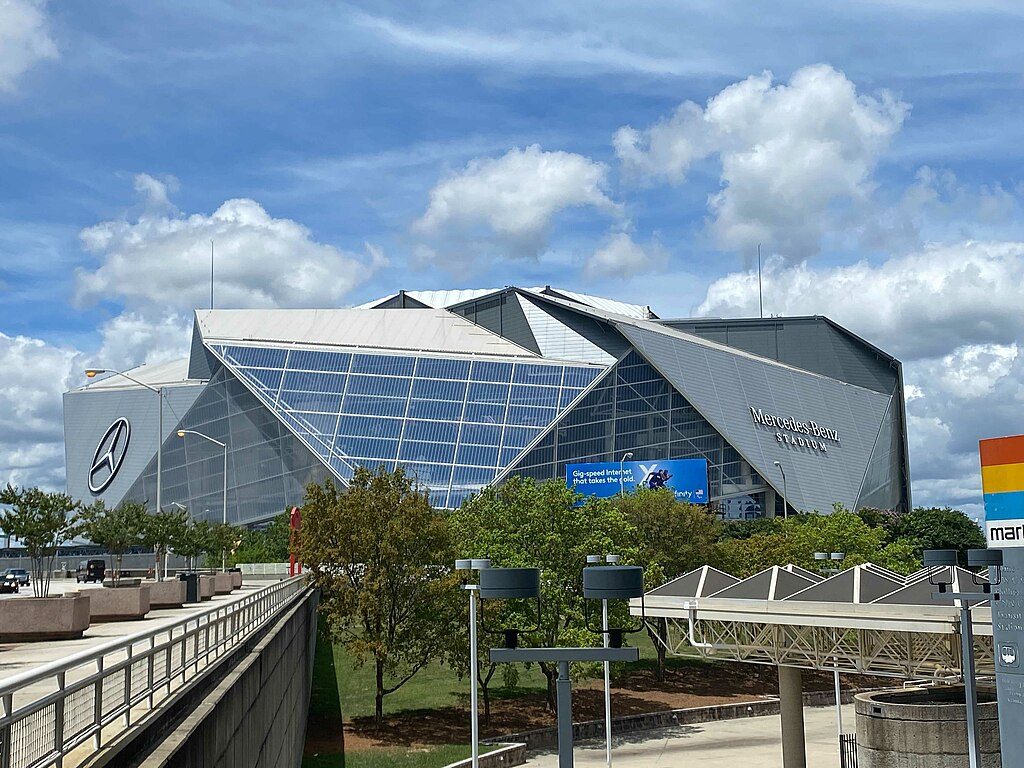
The FBI said it expects to train about 60 state, local, tribal and territorial (SLTT) law enforcement officers to qualify to operate drone-mitigation equipment in time for World Cup events set to get under way in 11 U.S. cities in June.
The training is a vital part of an intense government effort to ensure that the thousands of fans expected to attend the world’s premier soccer tournament are protected from the threats of drones operated by hostile actors.
The FBI, in coordination with government interagency partners, established the NCUTC at Redstone Arsenal last June, at the direction of President Trump’s executive order Restoring American Airspace Sovereignty.
In January, the Federal Emergency Management Agency announced the distribution of a $250 million counter-UAS grant to 11 states hosting World Cup events, as well as to the National Capital Region comprising Washington D.C. and parts of Virginia and Maryland. The grant will help fund the purchase of counter-UAS equipment and training for the SLTT law enforcement personnel.
Under the terms of the grant, law enforcement personnel must undergo NCUTC training before being permitted to operate equipment capable of disrupting or mitigating drone flights.
“The NCUTC flagship two-week course combines classroom instruction, hands-on training, and a capstone field exercise,” the FBI statement says. “The course serves as a critical step forward in building safe, lawful, and coordinated counter-drone capability nationwide.”
The FBI declined to say how many nominations to the program it had received as a result of the FEMA grant program, saying it doesn’t track nominations based on grant funding sources.
“However, interest and nominations from SLTT agencies have increased significantly in connection with preparations for major events, including the 2026 FIFA World Cup,” the statement says.
The agency said it prioritizes the NCUTC training seats based on operational need and jurisdictional responsibility, rather than funding source, with nominations for spots in the program coordinated through FBI field offices and reviewed centrally.
“NCUTC training incorporates instruction on data minimization, appropriate retention and lawful use of information collected during counter-UAS operations, consistent with DOJ [Department of Justice] policy and applicable privacy protections. Information collection is mission-specific and not used for generalized monitoring of lawful UAS activity,” according to the statement. In addition, the FBI said it plans to scale up the NCUTC training incrementally “with additional courses planned based on operational demand and defined major-event security requirements.”
The FBI said it recognizes the importance of the recreational and commercial UAS community to innovation, public safety and economic growth.
“The Bureau engages regularly with industry, standards bodies and other stakeholders to ensure counter-UAS policies are narrowly tailored, technologically informed and respectful of lawful use.
The Bureau supports DOJ oversight of counter-UAS authorities by helping implement deputation and the SAFER SKIES Act.”
Drone security experts weigh in
Drone security experts praised the process the federal government had set up to beef up the country’s counter-UAS capabilities and said it would ensure that cities hosting World Cup events would have enough law enforcement officers trained in drone mitigation measures to keep the venues safe.
“The FBI started training officers specifically for counter-UAS in the World Cup ahead of the World Cup. And then a lot of the state and local law enforcement were able to request those grants specifically to buy systems to be delivered ahead of the World Cup,” said Brett Feddersen, vice president, strategy and government affairs at D-Fend Solutions.
He said federal officials have worked with state and local officials to ensure that SLLT law enforcement agencies have the funding through the grant program and training through the NCUTC program to make sure that the appropriate counter-UAS measures are in place in time for World Cup events.
“I think the approach the government took is the right approach instead of complicating it or overcomplicating it with a large oversight operation over 11 cities,” he said.
Ben Higginbotham, federal sales team lead at SkySafe, said the challenge of ramping up the counter-UAS capabilities of the 11 U.S. World Cup host cities is daunting, but one that can and will be met.
He quoted Andrew Giuliani, who heads the White House Task Force on the FIFA World Cup 2026, on the scope of the challenge. “This is the largest sporting event in history; more athletes, more spectators, more venues and more challenges than any proceeding event,” he said.
Higginbotham said that Michael Torphy, acting director of the NCUTC, had personally assured Higginbotham that the FBI would train a sufficient number of law enforcement officers on the operation of counter-UAS equipment needed to provide coverage for all the U.S. cities hosting World Cup events.
“A number of departments and agencies, a number of vendors will see challenges in delivering that capability on time, but I think a lot of them have really leaned forward and are on track to have that capability in place by the time that spectators start showing up this spring,” Higginbotham said.
Read more:
 Jim Magill is a Houston-based writer with almost a quarter-century of experience covering technical and economic developments in the oil and gas industry. After retiring in December 2019 as a senior editor with S&P Global Platts, Jim began writing about emerging technologies, such as artificial intelligence, robots and drones, and the ways in which they’re contributing to our society. In addition to DroneLife, Jim is a contributor to Forbes.com and his work has appeared in the Houston Chronicle, U.S. News & World Report, and Unmanned Systems, a publication of the Association for Unmanned Vehicle Systems International.

Miriam McNabb is the Editor-in-Chief of DRONELIFE and CEO of JobForDrones, a professional drone services marketplace, and a fascinated observer of the emerging drone industry and the regulatory environment for drones. Miriam has penned over 3,000 articles focused on the commercial drone space and is an international speaker and recognized figure in the industry. Miriam has a degree from the University of Chicago and over 20 years of experience in high tech sales and marketing for new technologies.
For drone industry consulting or writing, Email Miriam.
TWITTER:@spaldingbarker
Subscribe to DroneLife here.

