



FAA official emphasizes regulatory progress, BVLOS rulemaking, and collaboration as public safety drone programs expand nationwide
At the DRONERESPONDERS National Public Safety UAS Conference held March 10, 2026 in Williamsburg,VA Federal Aviation Administration leadership highlighted the rapid evolution of drones in public safety and the agency’s ongoing efforts to support safe integration into the national airspace.
DRONERESPONDERS is a global nonprofit program dedicated to advancing the use of unmanned aircraft systems (UAS), counter-UAS technologies, and advanced air mobility for public safety agencies. The annual conference brings together emergency responders, aviation regulators, technology providers, and policymakers to share lessons learned and discuss the future of aerial public safety operations.
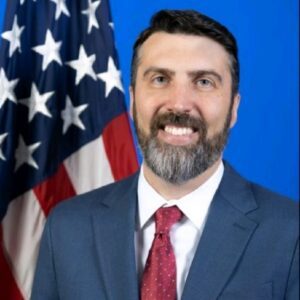 Opening the event, Paul Strande, FAA Deputy Executive Director for the Office of Advanced Aviation Technologies, emphasized that drone technology has already become an essential operational tool for emergency response agencies across the United States.
“At the FAA, we recognize the value of that work,” Strande told the audience, referring to the expanding role of drones in public safety missions.
Public Safety Drone Operations Continue to Expand
Strande noted that many of the capabilities now used by police, fire departments, and search and rescue teams were once considered experimental. Today, they are routine tools that help agencies respond faster and operate more safely.
“These are not future state capabilities, they are current state realities,” he said.
Over the past decade, public safety drone programs have evolved significantly. Early adopters often relied on a single drone operated by a trained officer or firefighter for occasional missions such as crash reconstruction or missing-person searches.
Today, many agencies operate fully developed aviation units with standardized training, dedicated pilots, and integrated workflows tied to emergency dispatch centers. In some cities, automated Drone as First Responder (DFR) programs deploy aircraft from rooftop docking stations within seconds of a 911 call. These systems can provide aerial situational awareness to officers on the ground before they arrive on scene.
This rapid growth has placed new demands on the regulatory framework that governs unmanned aircraft operations.
From Waivers to Clear Regulatory Pathways
One of the FAA’s priorities, Strande said, has been to make it easier for public safety agencies to adopt drone technology while maintaining airspace safety.
“Our goal has been to respond more quickly to public safety needs,” he explained.
That effort includes shifting from case-by-case operational waivers toward broader regulatory frameworks that provide clear and scalable pathways for agencies to operate drones.
Early drone programs often depended on individual waivers issued by the FAA to authorize specific missions or operational parameters. While effective for early adopters, the waiver system could slow broader adoption and create uncertainty for agencies planning long-term programs.
By developing standardized rules, the FAA aims to create predictable pathways that allow agencies to deploy drones confidently while maintaining consistent safety standards across the national airspace.
BVLOS Rulemaking Remains a Key Focus
A major element of this regulatory effort is the development of rules governing beyond visual line of sight (BVLOS) operations. BVLOS capability is widely viewed as essential for enabling many advanced drone applications, including long-distance inspections, cargo delivery, and expanded public safety missions.
Strande noted that the FAA has received significant public feedback on the proposed BVLOS rule.
The agency received more than 3,000 public comments during the initial comment period. In response to the strong interest from industry and public safety stakeholders, the FAA reopened the comment period to allow additional input.
“Thank you for your insights,” Strande said, acknowledging the role of industry and public safety professionals in shaping the rulemaking process.
The FAA continues to work toward a performance-based regulatory framework that will allow a wide range of operations while maintaining safety standards.
Identification and Accountability in a Growing Ecosystem
As drone operations expand, Strande emphasized that accountability and coordination between different airspace users are becoming increasingly important.
Integration of unmanned aircraft into the national airspace requires reliable identification of all aircraft operating in the system. Technologies such as Remote ID are designed to provide this transparency, allowing regulators and operators to understand who is flying and where.
Strande noted that the FAA maintains a dedicated team focused on integrating drones into the airspace, including support for public safety operations.
These efforts aim to ensure that public safety agencies, commercial operators, and traditional aviation stakeholders can share the airspace safely as drone activity continues to grow.
Collaboration Across the Aviation Community
Another theme of Strande’s remarks was the importance of cooperation among regulators, industry, and public safety operators.
As drone technology advances, coordination between stakeholders becomes essential to address both operational challenges and policy questions.
“Cooperation between stakeholders is important,” he said.
Public safety agencies have often served as early adopters of drone technology, helping demonstrate practical applications and operational benefits. Their experiences frequently inform both industry development and regulatory discussions.
Ensuring Sustainable Growth
Strande concluded by emphasizing the FAA’s responsibility to guide the growth of drone technology in a way that maintains safety and public confidence.
“Our responsibility at the FAA is to ensure that this growth continues in a consistent and predictable manner,” he said.
For the public safety professionals attending the DRONERESPONDERS conference, the message reflected a shared understanding that drones have already become a permanent part of emergency response operations.
As regulatory frameworks continue to evolve, collaboration between regulators, technology providers, and frontline responders will play a key role in shaping the next phase of public safety aviation.
Read more:

Miriam McNabb is the Editor-in-Chief of DRONELIFE and CEO of JobForDrones, a professional drone services marketplace, and a fascinated observer of the emerging drone industry and the regulatory environment for drones. Miriam has penned over 3,000 articles focused on the commercial drone space and is an international speaker and recognized figure in the industry. Miriam has a degree from the University of Chicago and over 20 years of experience in high tech sales and marketing for new technologies.
For drone industry consulting or writing, Email Miriam.
TWITTER:@spaldingbarker
Subscribe to DroneLife here.

