


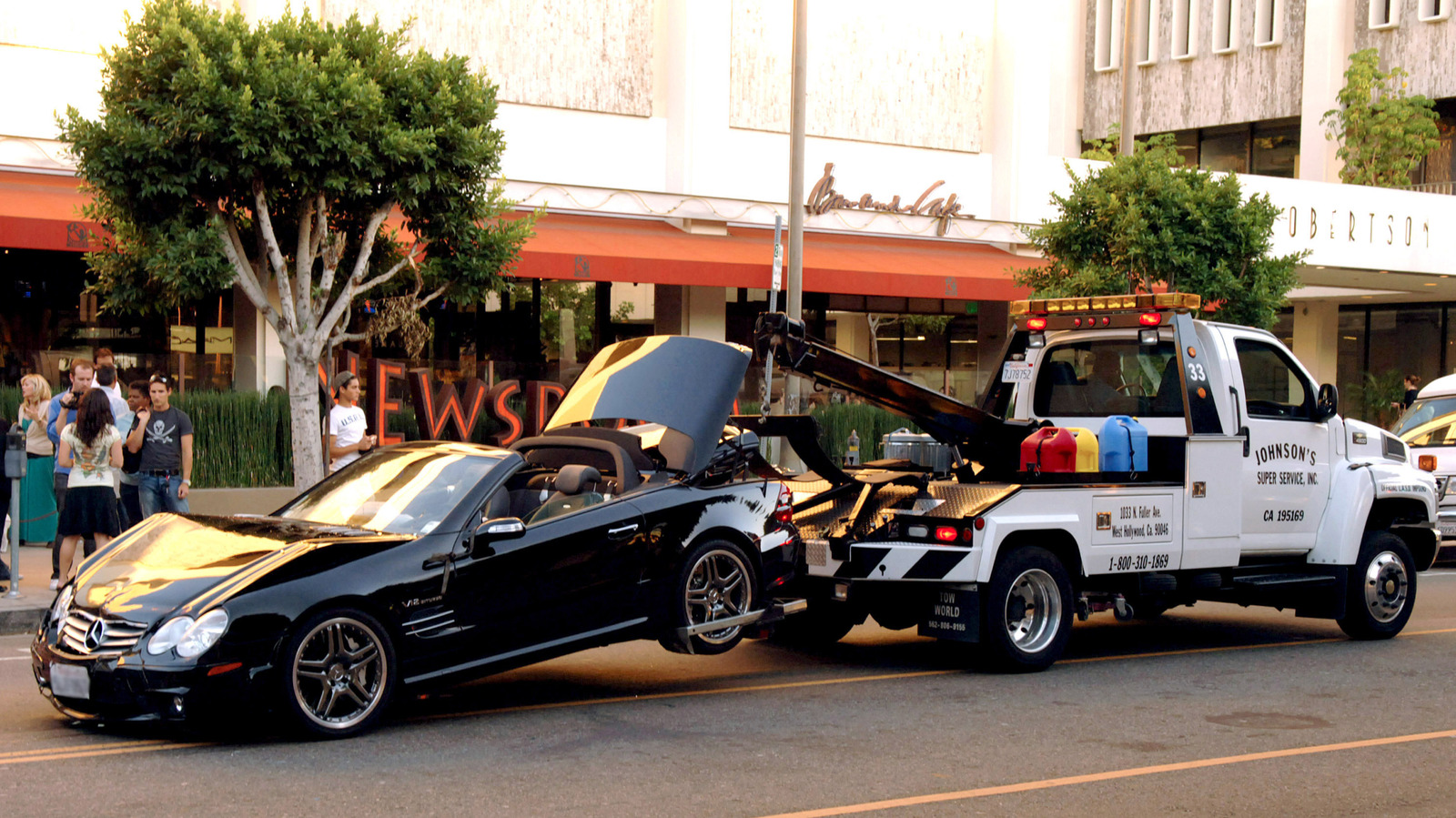
The City of Los Angeles is famous for many reasons, but considering that Jalopnik is a transportation blog, we’ll start by focusing on its reputation as one of the most car-centric major cities in the United States. Pair that with the fact that it’s the second most-populous city in the country, and you end up with over 2 million registered vehicles in the city in 2019, or an average of 1.63 cars per household.
Anyone who lives in LA or has visited knows that finding parking and deciphering the absurdly layered street signs is a pain, and that only gets worse when events like the LA Marathon, or The Academy Awards take place. This year, thanks to the reckless and idiotic acts of our current president and the global chaos that he has caused, the city established a larger-than-usual one square-mile perimeter around the Dolby Theatre in Hollywood, with street-parked cars over half-a-mile away from the theater were towed away. Residents who didn’t expect their proximity to the theater to warrant concern told The Los Angeles Times, “they did not notice the signs before leaving their vehicles parked overnight, then awoke to the nasty surprise of an empty street.” Even the local tow yard, Hollywood Tow Service, said they haven’t seen that many people there in one day.
It costs around $400 to retrieve a vehicle from this tow yard, ask me how I know.
One resident, Mitchell Crispi, posted a video that went viral of the tow trucks clearing Wilcox Avenue, which is six city blocks, or about half-a-mile away from the Dolby Theatre where The Academy Awards were held on Sunday. Crispi told The Times, “I left the house to go to the grocery store at 7 a.m. and when I got back at 7:30 all the cars on the street were gone.”
In some areas, “no parking” signs were placed restricting street parking on Friday in order to facilitate setup of the Academy Awards as well as Sunday for the actual event. A resident told Fox News LA, “Some signs read ‘no parking 6 a.m. to 6 p.m. Friday only.’ The signs even confused the officers issuing tickets.
In a statement issued to The Times, the Los Angeles Department of Transportation said, “The City issues permits for major events that require road closures and LADOT posts temporary no parking signs a minimum of 48 hours in advance. For the 2026 Academy Awards, LADOT posted signs to restrict parking on certain days to facilitate both event setup and for the awards ceremony.”
Who’s at fault?

I used to live one block away from the Hollywood Walk of Fame, so I’m intimately familiar with how rapidly these signs go up and how rapidly the tow trucks work to clear the streets. I had my car parked on the street late last year, and the day after I parked, the city put up “no parking, tow away zone” signs effective two days after posting. Since I parked before the signs were put up, I didn’t feel it was necessary to monitor the street signs, since I knew I wasn’t violating street sweeping hours, the only other posted restriction. My car got towed on the morning of the Hollywood holiday parade, and I had to pay about $400 to retrieve it from Hollywood Tow Service, which was only three blocks away from my house.
For reference, LADOTparking.org says, “Under CVC§22651(k), the City can cite and/or tow any vehicle that remains parked or standing in one place longer than 72 consecutive hours,” but the “tow away zone” signs are only required to be placed 48 hours prior to enforcement.
Some residents are understandably frustrated by the unanticipated expense and hassle of having their vehicle towed despite living a reasonable distance away from the theater, just so actors and rich people can have a big party. Some believe that Hollywood residents should anticipate such restrictions given their proximity to events, while others believe the people who receive permits to shut down public access roads should do more to warn residents of the impending restrictions, or help them find alternative places to park. As someone who has faced the unanticipated $400 cost before, I’m naturally in the latter camp; if you can afford a permit that enforces a mile-wide radius of one of the most popular places in the second-largest city in the country, you can afford to figure out a way to help notify local residents, even by sending a generic mailer.

