


When Donald Trump won the US presidential election in November 2024, Nature asked six leading biomedical researchers to outline their priorities for the incoming administration (A. Clark et al. Nature 635, 812–814; 2024). Here, those same researchers reflect on the first year of Trump’s presidency and chart ways to protect crucial areas of science and health in the future.
AMANDER CLARK: Reimagine higher education
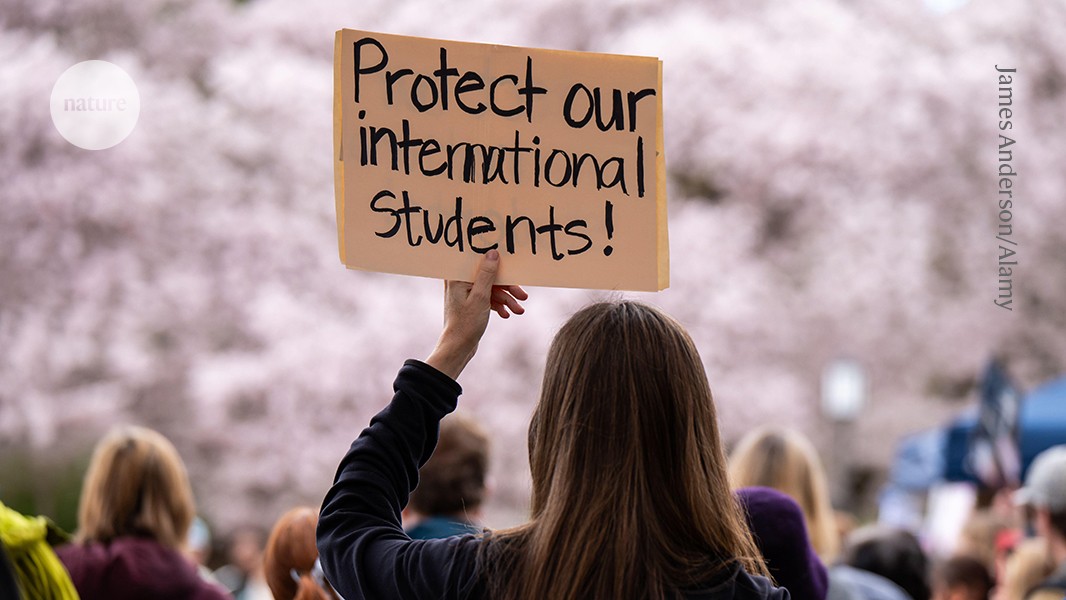
For those of us who teach, work and learn on a university campus, fatigue and burnout are taking their toll. The past year has seen an onslaught of executive orders aimed at universities: changes to policies on immigration, student visas, transgender rights, student-loan forgiveness, admissions practices, free speech and academic freedom. Every aspect of my professional life — from research and teaching to mentoring and outreach — has been affected. In each of these areas, I have found myself censoring topics that touch on reproduction and reproductive technologies that could one day be of benefit to people from sexual and gender minorities (the LGBTQ+ community).
How Trump 2.0 is reshaping science
For people like me — the first in a family to attend university — higher education provides the ladder to a well-paying job, to which our parents had no access. I had hoped that the incoming administration would help low-income students to find debt-free paths through university. But the executive orders focused on higher education, along with policy changes in the One Big Beautiful Bill Act that lower federal aid for students and staff lay-offs at the US Department of Education, will instead widen inequities by making it even harder for low-income students to afford a university education.
One light at the end of the tunnel is the possibility that — after researchers build back from the current crisis — higher education might be reimagined to serve the public good in a better way, with research findings made more accessible to people outside the academic elite. Those of us working in the sector should reflect on the purpose, mission and vision of universities. It’s crucial that educators and researchers listen to the public on whether university visions align with public needs, values and the jobs that will be needed in the future workforce. And scientists must be provided with federal research funding to mentor and inspire the next generation of scientists and critical thinkers.
In the meantime, university faculty members can use the US justice system to protect the first-amendment right to freedom of expression and to restore suspended research funding. In November 2025, a coalition of plaintiffs led by university professors and faculty associations filed a lawsuit in Northern California’s District Court to block the Trump administration from taking unconstitutional actions against the University of California, where I am a professor. I am one of 74 people who made a declaration of harm in support of the case, discussing my right to talk about the science of reproduction using inclusive language. The plaintiffs were granted a preliminary injunction in November and our freedom to operate has been restored — for now.
HANK GREELY: Tackle health-care problems to stop the chaos
At the end of 2024, I worried that the incoming administration might decide to protect company profits over the interests of people receiving medical care. Sure enough, the protections for patients provided by the US Food and Drug Administration (FDA) and the US Centers for Disease Control and Prevention (CDC) have been weakened in 2025 — not so much by commercial interests as by ideology and chaos. At one point, the FDA lost almost 20% of its staff members, and the CDC about one-third. And much of the data needed for public-health research have been removed from websites. As a law professor, it’s hard to know what I will be able to teach in my FDA law class this year.
‘Shattered’: US scientists speak out about how Trump policies disrupted their careers
The questioning of vaccine safety by Robert F. Kennedy Jr, who leads the US Department of Health and Human Services, and the weakening of recommendations for childhood vaccination schedules, are just two examples of how ideology can harm human health. More people will get ill and die. The rise in measles cases exemplifies the dangers. In 2025, there were more than 2,000 reported measles cases in the United States — more than in any year since 1992, and ten times the annual averages since then. At least three people have died. This epidemic started before Inauguration Day in January 2025, resulting at least in part, from increased vaccine hesitancy after the COVID-19 pandemic.
Going forwards, much depends on those who control the FDA and the CDC. FDA drug approvals, for example, are out of the hands of researchers, as are decisions on what data to collect and disseminate on what medical conditions. Political will is needed to rebuild strong agencies. If faced with public discontent, mid-term election results that go against the administration might push it to rethink its approach. Pressure from the biopharmaceutical and health-care industries — which need strong federal regulatory agencies to create confidence in their products — could also encourage a return to science-backed policies.
But state governments can help, as can professional societies and health-care organizations. These bodies can make recommendations, and in some cases decisions, on which vaccines and treatments should be used on the basis of sound science. And they can provide accurate information, for instance about the safety of Tylenol (also called paracetamol and acetaminophen) in pregnancy and about the use of aluminium in vaccines.
Limiting the damage will not be easy, but all those involved in medicine and bioscience need to speak out, with friends and in public, against federal government misinformation and harmful actions. That will be scary, with no guarantee of success. But it is already clear that ignoring the problems just lets the chaos grow.
ERIC TOPOL: Focus health systems on preventing disease
Just over a year ago, I wrote about how medical artificial intelligence, if supported by the government, could help to improve diagnosis rates and even prevent diseases. Today, there is little evidence of the US government grasping this opportunity. Instead — despite big talk about making America healthy again — our health system remains focused on treatment and not prevention.
What researchers can predict, we can work to prevent. And multimodal AI that analyses the ‘full stack’ of biomedical data — electronic medical records, genomes, biomarkers and more — is now enabling us to predict important age-related conditions, such as heart disease and cancer. In September 2025, one such model showed the ability to predict any of more than 1,200 diseases and health events, from heart attack to pancreatic cancer, up to 20 years in advance (A. Shmatko et al. Nature 647, 248–256; 2025). There have also been breakthroughs in the use of blood biomarkers to help predict a person’s risk of developing Alzheimer’s disease.
Instead of the US government supporting this work, funding for the large data sets that multimodal AI relies on has been gutted — including the All of Us programme, which collects genomic and health data for diverse people. The administration’s AI ‘genesis mission’ which aims to harness big data to drive science, makes no mention of disease prevention.
Researchers must instead look to philanthropic support and more efficient ways to collect full-stack data. Philanthropic funding is enabling my team at Scripps Research in La Jolla, California, for instance, to initiate a randomized trial to prevent Alzheimer’s disease. We’ll use multimodal AI to find those who are most at risk of developing the condition, and target them to be advised on lifestyle changes known to reduce that risk. Prevention trials such as this cost a fraction of what a clinical trial for a treatment would. There is no need for clinical sites and participants can be enrolled rapidly through outreach campaigns.
The US administration should take heed, given the country’s ageing population. Large-scale data resources and low-cost trials — which potentially come with the high rewards of reducing disease and decreasing the financial costs of treatments — are a no-brainer. Similar initiatives will no doubt move forwards in other countries where disease prevention has been deemed a high priority, such as in the United Kingdom. If the United States doesn’t get on it, our country will lag behind others that will soon see the economic fruits of large-scale disease prevention.

Programmes to treat people living with HIV were cut short when USAID funding was slashed.Credit: Arlette Bashizi/Washington Post via Getty
SALIM S. ABDOOL KARIM & QUARRAISHA ABDOOL KARIM: Rebuild efforts to prepare for pandemics
On 27 January 2025, the Centre for the AIDS Programme of Research in Durban, South Africa, which we co-direct, received a ‘stop work’ order from the US Agency for International Development (USAID). The order instructed us to immediately halt a USAID-funded clinical trial of a new HIV-prevention technology for women in Africa. This raised serious ethical concerns — we could not simply stop the study while women still had the test product, a silicone ring, inserted in their vaginas. We had to act in the participants’ best interests and used the centre’s own funds to bring them back to our clinic to remove the inserts and close the study.

