


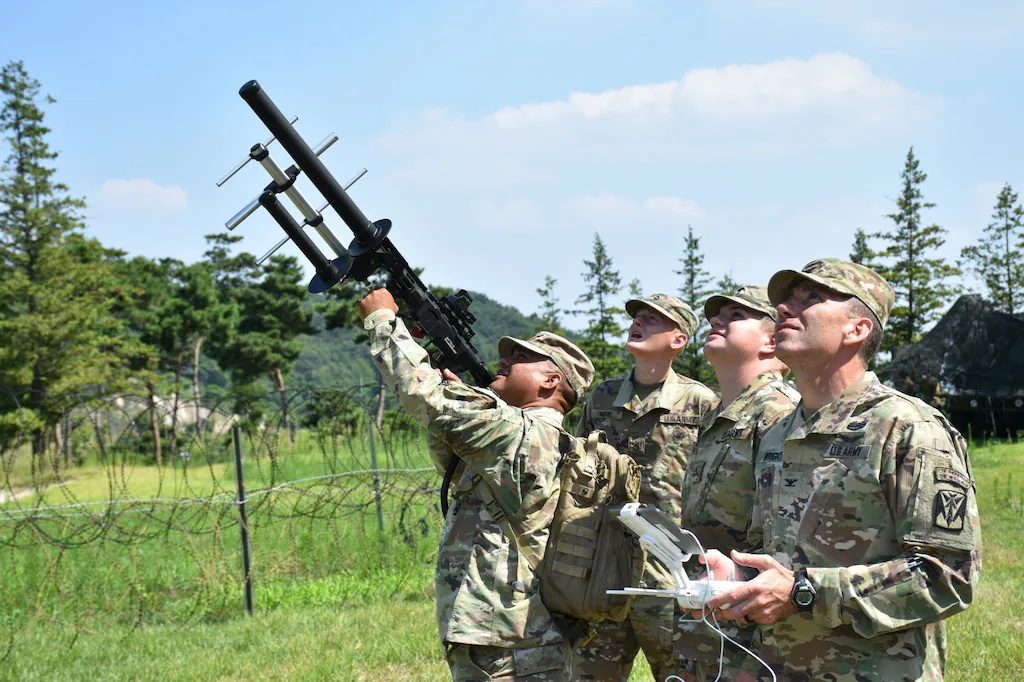
Commercial Solutions Opening Targets Scalable, Survivable Detection Technologies
The Defense Innovation Unit (DIU) has issued a new Commercial Solutions Opening (CSO) focused on one of the fastest growing security challenges facing defense and homeland operations: detecting and tracking small unmanned aircraft systems (sUAS).
The solicitation, titled Counter UAS Sensing for Homeland and Mobile Defense, seeks commercially available and emerging technologies capable of delivering scalable, survivable, next-generation sensing for both fixed installations and tactical forces. The effort reflects growing concern over the proliferation of small drones that can evade traditional air defense systems.
Addressing a Persistent Sensing Gap
Small UAS present unique detection challenges. Their low radar cross section, varied flight profiles, and increasing autonomy make them difficult to track with legacy systems. At the same time, their affordability and accessibility have expanded their use across both commercial and adversarial applications.
Traditional counter-UAS systems often come with significant cost, power, and sustainment requirements. These limitations make it difficult to deploy them widely across dispersed installations or mobile forces. DIU’s new effort aims to break that cost-performance barrier by encouraging industry to deliver commercially driven sensing solutions that can scale without imposing excessive logistical burdens.
The goal is clear: enable persistent, distributed sensing layers that close coverage gaps while remaining adaptable to evolving threats.
Two Lines of Effort
The CSO outlines two complementary lines of effort, each targeting different operational environments.
Homeland Defense Sensing
The first line focuses on persistent protection of fixed U.S. installations, including sites located in populated and electromagnetically complex environments. DIU is seeking radar-centric sensor networks capable of detecting and tracking Group 1 sUAS at ranges of 2 kilometers or greater.
Beyond simple detection, systems must demonstrate the ability to:
• Autonomously classify threats
• Discriminate biological and ground clutter
• Maintain multi-target tracking in real time
• Integrate with existing command and control frameworks
• Operate reliably in varied weather conditions
This reflects the growing need for high-fidelity sensing that reduces false alarms while providing operators with clear, actionable information.
Mobile Tactical Sensing
The second line addresses sensing for maneuver forces operating in contested environments. DIU is requesting compact, low-signature systems capable of operating while stationary or on the move, including in GPS-denied and electromagnetically contested conditions.
Key characteristics include:
• Rapid setup and teardown
• Redundant sensing elements to avoid single points of failure
• Strong performance against RF noise
• Compatibility with tactical vehicles such as JLTVs and ISVs
This focus aligns with modern battlefield realities, where adversaries increasingly deploy small drones in swarms to disrupt ground operations. A sensing capability that can move with tactical units and operate independently of vulnerable infrastructure would provide significant operational advantage.
Pathway to Demonstration and Production
Selected vendors may be invited to participate in Phase 2 demonstrations at Yuma Proving Ground in spring 2026. These evaluations will test performance in realistic operational environments.
DIU emphasizes mature technologies with strong potential for rapid transition. Successful prototype efforts may lead directly to follow-on production awards without additional competition, offering companies a clear path from demonstration to fielded capability.
The solicitation also encourages teaming arrangements, particularly between innovative small firms and experienced integrators capable of addressing complex hardware and software integration requirements.
What This Signals for the Industry
This initiative highlights a broader shift in defense acquisition strategy. Rather than relying exclusively on large, centralized air defense systems, the Department of Defense continues to move toward distributed, commercially derived sensing architectures that can scale quickly and adapt to emerging threats.
For companies operating in radar, RF detection, passive sensing, AI-driven classification, and sensor fusion, this represents a significant opportunity. The demand is not simply for detection hardware, but for resilient, networked systems capable of delivering actionable intelligence in dynamic environments.
As small UAS continue to proliferate globally, scalable sensing solutions will remain a priority across homeland security and tactical defense missions. DIU’s latest solicitation reinforces the urgency of closing sensing gaps and accelerating commercial innovation into operational use.
Read more:

Miriam McNabb is the Editor-in-Chief of DRONELIFE and CEO of JobForDrones, a professional drone services marketplace, and a fascinated observer of the emerging drone industry and the regulatory environment for drones. Miriam has penned over 3,000 articles focused on the commercial drone space and is an international speaker and recognized figure in the industry. Miriam has a degree from the University of Chicago and over 20 years of experience in high tech sales and marketing for new technologies.
For drone industry consulting or writing, Email Miriam.
TWITTER:@spaldingbarker
Subscribe to DroneLife here.

