


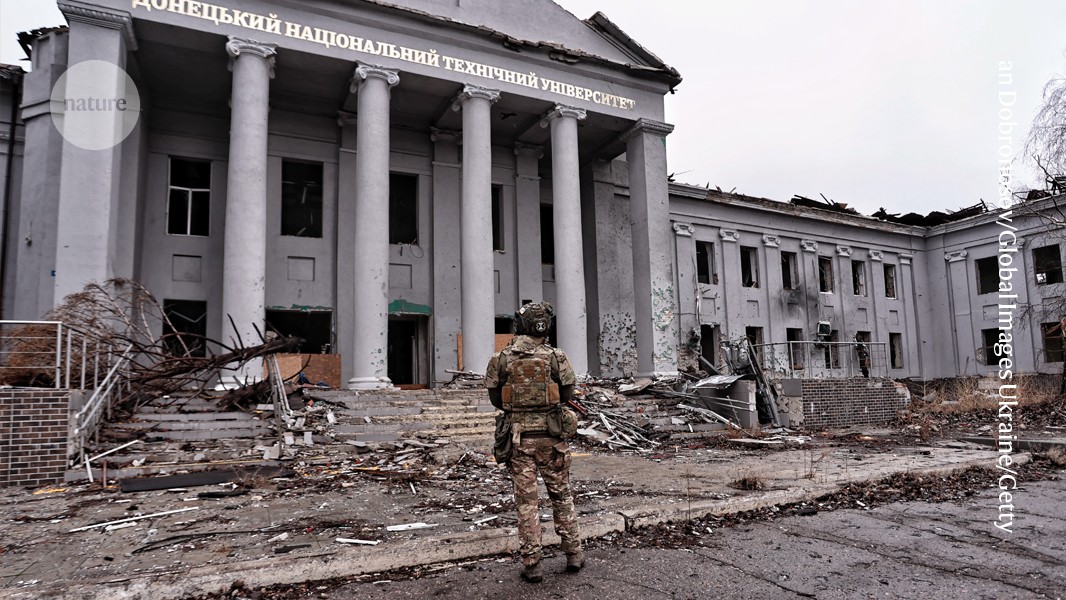
“I will never forget that Saturday evening when I first saw Russian tanks on the streets of my city,” says Viktoriya Voropayeva, a systems engineer and vice-rector at the Donetsk National Technology University (DonNTU). In 2014, after Russian-backed forces took over Donetsk, the unofficial capital of Ukraine’s Donbas region, Voropayeva and many of her colleagues chose to leave, setting up their university in exile. “We hoped that it would be one semester or one academic year,” she says about the university’s relocation to Drohobych in western Ukraine. “Nobody thought that it could be forever.” Her family left with only their documents, family photos and their cat.
The university’s first new home was in Pokrovsk, a small city about 60 kilometres away from Donetsk, still in the Donbas region, where it already had a sister institution. About one-third of its students and staff members moved into three academic buildings and two dormitories. “Most of the teachers who stayed in Donetsk did so not because they supported the Donetsk People’s Republic [the separatist government created by Russia-backed paramilitaries in 2014], but because they could not find the strength to leave everything — homes, elderly parents, hospitals, schools,” says Voropayeva.
In April 2022, two months after Russia’s full-scale invasion of Ukraine, the university moved again. It went to Lutsk in northwestern Ukraine, to a building offered by Lutsk National Technical University. Then, seven months later, it moved to its current base in Drohobych in the Lviv region, about 1,050 km from its original home. The city council offered several buildings to turn into offices and classrooms. The space is much smaller than the facilities in Donetsk, but since the war started, most classes are now held online. DonNTU went from an 18,000-strong student body and more than 2,000 staff members in 2013, to 1,180 students and 116 staff members in 2024.
How the invasion of Ukraine is affecting Russian expat researchers
The European nation is not the only place where war or political unrest has forced universities and their staff members into exile. Others around the world, including in Sudan and Myanmar, have also had to relocate. Some institutions have instead moved teaching online and found new ways to reach students and faculty members. What unites scholars is a will to keep education and scholarship alive, retaining a sense of community and, in some cases, the hope that they can return and be part of a better future in their homelands.
Voropayeva says DonNTU continues to maintain close ties with local schools and the community in Donetsk, organizing webinars and courses for schoolchildren and teachers. But it, and other displaced universities in Ukraine, are now also serving local students from their new locations and recruiting local staff members. More than 50% of DonNTU first-year students are from the Lviv region.
Checkpoint challenges
Illya Khadzhynov, an economist and vice-rector for scientific work, was last in Donetsk in July 2014, when his institution, Donetsk National University (DonNU) was taken over by the pro-Russian separatist government. Students and academics protested to the Ukrainian government. It authorized the university’s roughly 700-km move west to a former jewellery factory in Vinnytsia, in the west-central region of Ukraine, a building with no lecture theatres or laboratories. DonNU’s plight prompted an unofficial motto that “the university is not only the walls, it’s the people”, says Khadzhynov. But with support from international donors, including US$350,000 from the International Renaissance Foundation, a Ukrainian charity founded by Hungarian-born US philanthropist George Soros, DonNU refurbished the factory building and re-established a campus there, including labs for research and teaching.
Khadzhynov estimates that about half of the university’s 12,000 students moved to Vinnytsia. In 2016, the institution changed its name to Vasyl’ Stus Donetsk National University, honouring its alumnus Vasyl Stus, a poet who died in a labour camp after going on hunger strike after his arrest for anti-Soviet activity in 1980.
Serhii Radio, a chemistry researcher at DonNU, says that back in 2014, not everyone felt able to leave everything behind. Those who did took only “the most necessary things that you can carry in two hands”, he says. He was unable to take any lab equipment that might stand out at the checkpoints they had to pass, controlled by armed pro-Russian separatist groups. “They checked personal belongings, scrolled through the contents of smartphones, examined saved photos and music, and even reviewed social-media accounts,” he explains.
I fled the war in Ukraine. Now I work on ways to help the country’s soil heal
Khadzhynov says that the arrival of DonNU initially created tensions in Vinnytsia because the institution was larger and therefore had been allotted many more student places by the government than had local universities. But now, the institution is more integrated into the local community and DonNU students are mostly from Vinnytsia and neighbouring regions. Their current 650-strong staff includes 180 who have been displaced from other cities.
The war itself has brought the added problem of electricity cuts, which make it difficult for Radio to perform experiments for his studies using single-crystal X-ray diffraction. “An experiment needs more than eight hours, and this is a very long time for electricity,” he says. At DonNTU, Voropayeva says: “Laboratory equipment has been in storage since 2022 or was destroyed during shelling.” The university is gradually restoring its labs, and a pooled centre for collective use of scientific equipment enables Ukrainian academic institutions to share resources, sometimes on a fee-for-service basis. DonNTU plans to provide access to its mobile ‘makerspace’, a computing cluster and a 3D-modelling centre.
Faculty members and students from both former Donetsk institutions report problems in finding affordable accommodation in their new, smaller cities. Salaries have become catastrophically low — Voropayeva says that a full-time associate professor receives the equivalent of €300–350 (US$350–410) a month, which is comparable to pre-war wages but now buys considerably less because of rising prices.
Another challenge for both institutions has been the move from the heavily industrial Donbas, where many institutions excelled in applied science, to a region with a different industrial history. DonNTU had particular expertise in coal mining and metallurgy but is now shifting teaching and industrial collaboration to areas such as composite materials, chemicals and natural-gas extraction, which are more in demand in western Ukraine.
Russians in exile
The war in Ukraine has also forced some Russian academics into exile. Art historian Philip Fedchin was a staff member at the Smolny College of Liberal Arts and Sciences in St Petersburg, Russia — a collaboration forged in 1997 between Bard College in Annandale-on-Hudson, New York, and St Petersburg State University. Smolny was the first liberal-arts college in Russia, awarding degrees from 2003 and following a broad multidisciplinary curriculum. But in June 2021, Bard College was declared an “undesirable” organization by the Russian prosecutor’s general office and all ties were cut.
“Everybody at the university in Smolny was shocked. It was considered the worst possible scenario, but it was just one of the few minor signs of what is going to come,” says Fedchin, referencing the looming war with Ukraine. Many faculty members and students left the country when the invasion of Ukraine started in February 2022, he adds, with more following that September, when Russia began its mobilization of reservists into the military. Fedchin left Russia in 2020 owing to his opposition to the country’s political direction. He relocated to Germany, joining Bard College Berlin, where he now works as a technology strategist.
In November 2022, Fedchin and his colleagues launched Smolny Beyond Borders, a university-in-exile initiative that enables many former Smolny faculty members to teach courses online with a similar ethos to the original Smolny College. So far, they have taught 2,585 students. Last semester, they ran 23 courses and now offer a two-year associate-degree programme accredited by Bard College.
Fedchin says that about 50% of its students taking non-degree courses are in Russia. Only displaced students are eligible to enrol for its degree programmes, and are taught by displaced faculty members located all over the world.
One of those is Andrei Rodin, a researcher in the history and philosophy of mathematics. He and his family relocated from Russia to France in March 2022, where, as well as teaching maths and statistics for Smolny Beyond Borders, he has a temporary teaching position at the University of Lorraine in Nancy.
The ambitions of Smolny Beyond Borders have now grown to supporting a broader community of students in exile from other parts of the world through two Bard partner organizations. One is the Global Higher Education Alliance for the 21st Century network, which provides opportunities for students to pursue learning, and the other is the Realizing Higher Education Access Program, a 12-month bridging programme intended to prepare refugee students for university. It is currently under way in Kenya, Jordan, Bangladesh and parts of East Africa. “My group has become much more international,” says Rodin. “I have students from Afghanistan, from Africa, from refugee camps.”
Fleeing civil war in Sudan
Gihad Ibrahim fled his home in the Sudanese city of Khartoum North soon after the civil war broke out in April 2023. Most of the population in affected regions escaped to other parts of the African country, or to neighbouring nations. A large number moved to Cairo, including Ibrahim, an engineer who taught at Mashreq University and Sudan University of Science and Technology. The two institutions both abandoned their main campuses in the Khartoum region.
The civil war has devastated higher education. “Some of the universities are still not working today,” says Ibrahim. Others, including the University of Khartoum, have adopted online teaching and have set up centres in regional universities to host exams and crucial practical training in subjects such as medicine.
Salaries for most academics were reduced to 60% of the original amount for the first 9–12 months of the war, although they have subsequently rebounded, says Ibrahim. Pointing to one positive, he describes how displaced medical students created medical camps to try to care for locals in those areas, even with the little experience they had.

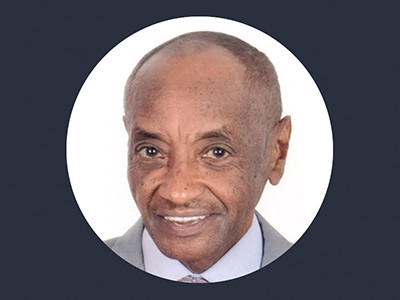
Engineer Gihad Ibrahim had to leave his home in the Sudanese city of Khartoum North when civil war broke out.Credit: Mashreq University
Some private universities have fared better than public ones. This includes the private Mashreq University, which specializes in applied science, engineering and medicine. It served 10,000 students at three campuses in and around Khartoum that had to close when fighting came to the region — so the university had to adapt.
The idea was for Mashreq University to establish mini teaching centres elsewhere, says Ibrahim, forging collaborations with the Red Sea University in Port Sudan, a city less affected by the war, and renting space in Jeddah, Saudi Arabia. In Cairo, Mashreq University rented an entire unused college building. “It also had its own laboratories, mainly focusing on the engineering side,” Ibrahim says, adding: “We had to re-establish and buy new equipment for all the laboratories related to the medical field.” A smaller number of students fled to the United Arab Emirates, from where they can access lectures that are live-streamed from the Cairo campus.
A planned expansion of the medical college of Mashreq University into a university hospital has been abandoned, alongside its once-growing graduate faculty. Student numbers have also decreased by 45% owing to drop-outs and temporary suspensions of study. “Many students were not able to pay their fees because we had 300–400% inflation after the war and lots of people have lost their jobs,” says Ibrahim. The college has tried to provide scholarships where it can. After two-and-a-half years working this way, Ibrahim says with pride and determination that they are sustaining teaching “regardless of the difficult situation”.
Sudan’s disastrous war — and the science it is imperilling
Although the war is still devastating the Darfur region of Sudan, fighting has stopped in the capital and the central regions. But Ibrahim says these areas are devastated. “My house has been hit by a bomb and everything inside was stolen, including the air conditioning, the fridges, even the clothes,” he says. Most of the universities in conflict zones have also been destroyed and looted.

