



Biofuels, such as rapeseed, are not an ideal alternative to non-fossil carbon.Credit: Krisztian Bocsi/Bloomberg/Getty
There’s a relatively new word doing the rounds in sustainability research and policy: defossilization. Beyond expert circles, it isn’t necessarily obvious that phasing out fossil fuels does not mean phasing out carbon. Under net-zero scenarios, carbon-based fuels are still needed, to provide power, for example, and for aviation. Carbon, currently often derived from fossil hydrocarbons, is also integral to everyday consumer products such as soaps and detergents, as well as medicines, fertilizers and plastics.
Worldwide, demand for ‘embedded’ carbon — that found in chemicals — is expected to double by 2050, according to the nova-Institute, a green-energy research institute in Hürth, Germany (see go.nature.com/4jpx6qi). But this carbon cannot come from the usual sources, such as coal, natural gas and oil. These must remain in the ground, and this is where defossilization comes in.
Chemistry can make plastics sustainable – but isn’t the whole solution
Defossilization means finding sustainable ways to make carbon-based chemicals. Alternative sources of carbon include the atmosphere and plants, as well as carbon in existing biological or industrial waste, such as used plastics or agricultural residue. In some cases, these chemicals will eventually return carbon dioxide to the atmosphere through burning or biodegradation. In principle, this will occur as part of a circular process, rather than one that has added greenhouse gases.
The subject of defossilization is of increasing research interest — as it needs to be — despite signs that some governments, including a number in Europe and that of the United States, are backsliding on their climate commitments. In this two-part Editorial, we describe some of the challenges faced by researchers, in both academia and industry, that scientists and policymakers need to solve to enable defossilization to happen on the scale required. In this first instalment, we focus on Europe. In the next, we explore advances under way in China.
Biomass from crops is a key source of non-fossil carbon, and one that can be obtained at scale. One driver of large-scale production is the European Union’s biofuels strategy. This mandates that transport fuels include biomass-derived products. Examples include biodiesel, which can be made from oils such as sunflower and palm, and bioethanol, which is synthesized from crops such as maize (corn) and wheat. But clearing existing cropland or converting uncultivated land to grow biofuels can’t be the alternative of choice, not least because of the attendant risk to biodiversity and soil health, and the demand it puts on water resources. There’s also some evidence that, by encouraging farmers to convert land previously used to grow food crops, the directive has pushed up food prices.
Reinvent oil refineries for a net-zero future
The extraction of carbon from lignocellulose — tough plant matter — in crop waste is an alternative with potential that remains mostly untapped. One major advantage is the fact that it can be produced without the use of extra land. But it is expensive to extract, and production timelines are long, both of which hinder scalability1.
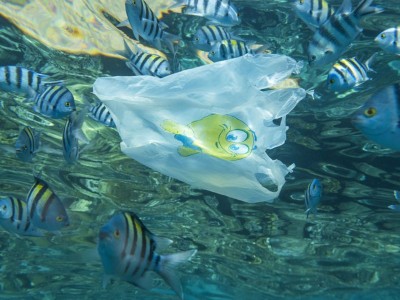
Other potential sources of waste carbon include municipal and industrial waste, with used plastic among this. More than 40% of plastic produced in the EU is already recycled. This recycling rate could be increased if technical challenges can be surmounted2. Current recycling methods break waste plastics into flakes through shredding or melting, then form pellets that can be used to make new products. For higher recycling rates to be achieved, chemical recycling methods will need to be further developed and scaled up. These methods break down plastics into smaller molecules that can be used to rebuild new, larger ones.
Carbon dioxide captured from fossil-fuel burning or the air offers one of the largest potential avenues for defossilization. The global chemicals industry could obtain one-third of its carbon needs from this source by 2050, according to the nova-Institute. That compares with 22% from biomass. By one estimate, there are almost 900 gigatonnes of carbon in the atmosphere, nearly double the 450 gigatonnes of carbon contained in vegetation3. But the scenarios for 2050 vary widely. Some say CO2 will become the main feedstock for chemicals, whereas others say its contribution will be negligible.
How fast fashion can cut its staggering environmental impact
To make useful carbon-based molecules, CO2 must first be transformed into other molecules. Usually, it is reacted with hydrogen, either to form hydrocarbons or to remove an oxygen atom. Because CO2 is highly stable, a considerable amount of energy is needed to overcome the thermodynamic barrier to these reactions. This must be powered renewably for the process to be truly sustainable. Capturing atmospheric CO2 is difficult and expensive, in part because of the compound’s stability. As a result, the technology has not been a priority for European governments. This must change.
In May, Elisa Morgera, the United Nations Special Rapporteur on human rights in the context of climate change, published a report urging governments to defossilize economies as part of the fossil-fuel phase-out. In the United Kingdom, the Royal Society and the Institution of Chemical Engineers have urged the government to support research on defossilization. They have a strong case, because such research, which is intended to boost the chemical industry, aligns with government policies to invest in science that supports economic growth. The EU and China also have a joint research programme called the EU–China Bridge, which is focused on decarbonization, but this is set to expire next year. This not only needs to be renewed, it needs a renewed focus — on defossilization.

