


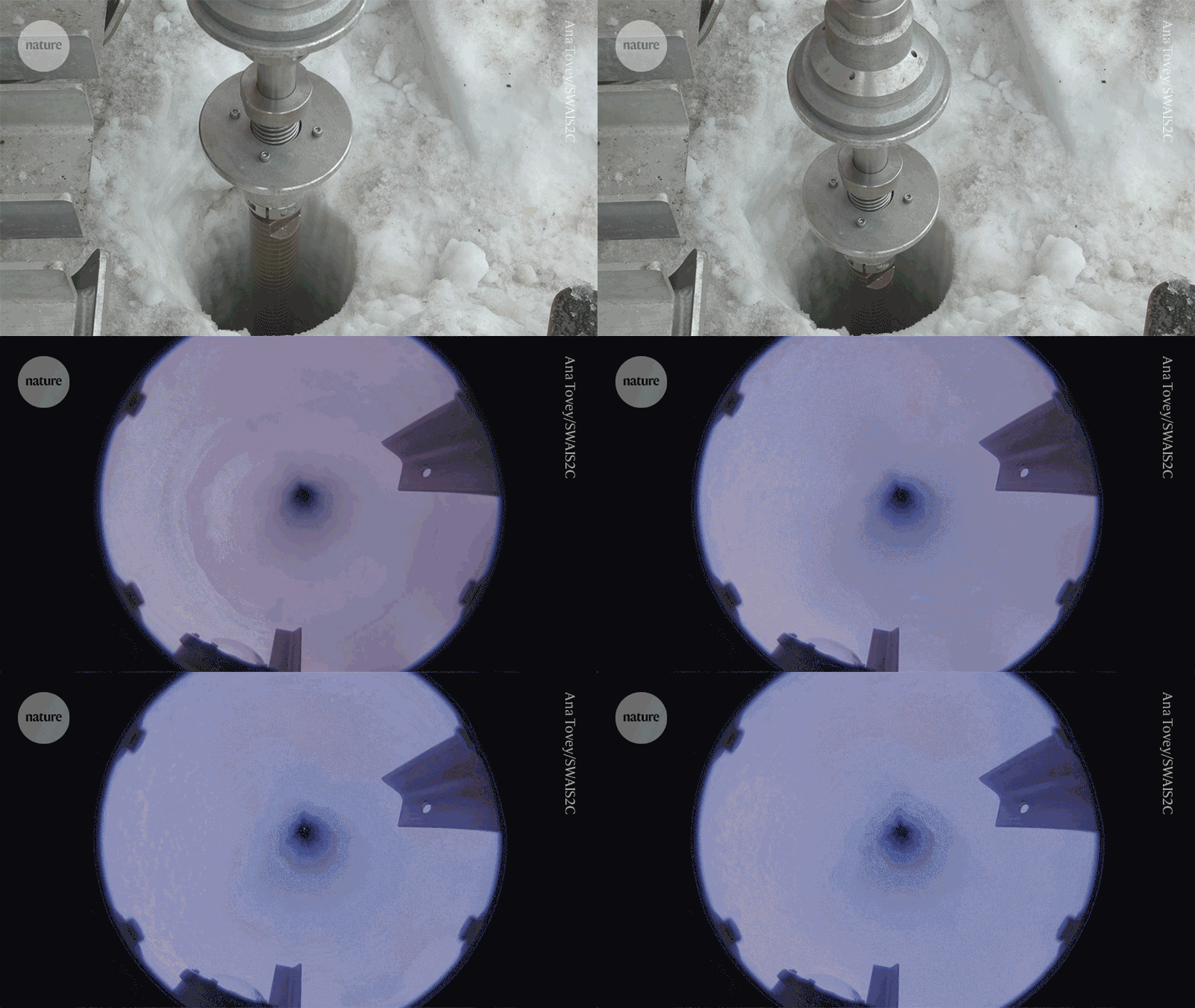

Researchers on the SWAIS2C project camped on the ice — the site is 700 kilometres from the nearest Antarctic station.Credit: Ana Tovey/SWAIS2C
An international team of scientists has returned from the heart of West Antarctica with 228 metres of ancient rock and mud, the longest core ever retrieved from below an ice sheet.
Preliminary dating, based on the presence of fossilized algae that only existed during specific geological periods, suggests that the core represents an archive of the past 23 million years. This includes periods when Earth’s average surface temperature was hotter than today’s — and higher than the temperature projected for 2100 under current global climate policies.
The core was retrieved as part of the Sensitivity of the West Antarctic Ice Sheet to 2 °C (SWAIS2C) project. It aims to determine how far the West Antarctic Ice Sheet retreated during previous periods of global warming, and whether there is a temperature threshold after which its retreat becomes irreversible.
Antarctica holds most of the world’s fresh water locked up in ice. Melting of the West Antarctic Ice Sheet alone would raise global sea levels by up to five metres. It is already losing mass at an accelerating rate, and scientists are concerned that further warming could trigger rapid changes.

The SWAIS2C team drilled a 523-metre hole in the ice to extract a 228-metre sediment core.Credit: Ana Tovey/SWAIS2C
The team drilled at Crary Ice Rise, a site where the ice sheet remains pinned to bedrock but is close to lifting off into the Ross Ice Shelf, the world’s largest mass of floating ice. The site is more than 700 kilometres from the nearest Antarctic station.
The expedition was high-stakes. Technical issues thwarted drilling attempts during two previous seasons, and project co-leader Huw Horgan, a glaciologist at the Swiss Federal Institute of Technology (ETH) in Zurich, knew that this season would be a ‘boom or bust’ situation.
Success at last
First, the team cut a hole through 523 metres of ice using a hot-water drill and set up a geological rig to core through the bedrock below. Drilling in Antarctic conditions is hard, says Horgan: “You really worry about every single length of core.”

