


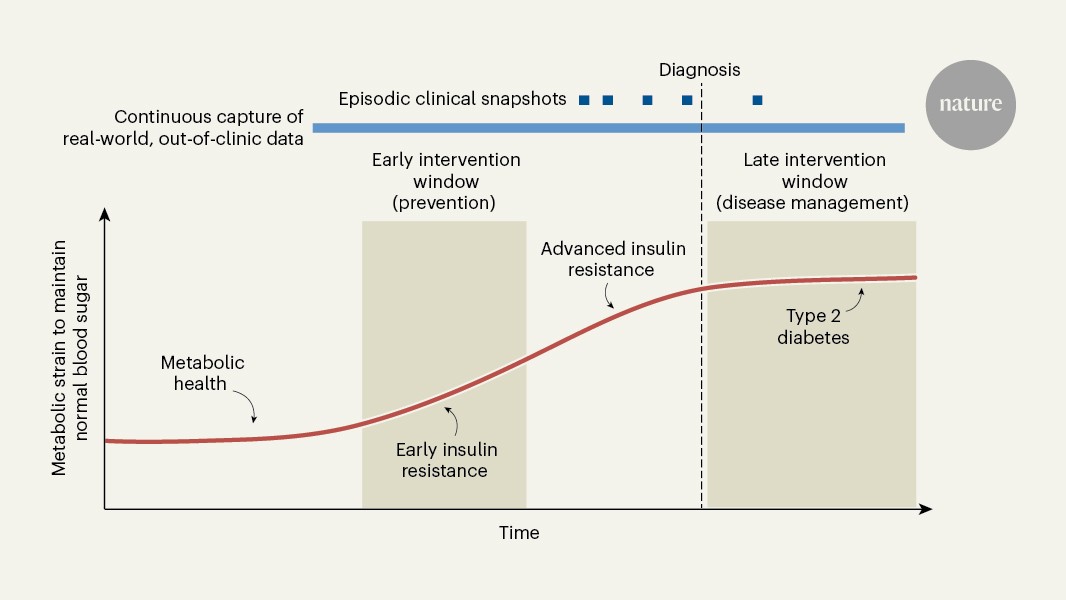
Many chronic diseases unfold slowly as continuous biological processes, yet they are typically detected through brief clinical snapshots — at annual visits to a physician or from isolated laboratory tests, for instance. Insulin resistance, a condition in which the body must work harder to regulate blood sugar, can develop for years before it becomes visible in routine diagnostics. Writing in Nature, Metwally et al.1 show that patterns in everyday-lifestyle data, collected outside the clinic from consumer wearable devices, can reveal this hidden phase earlier. Rather than a snapshot, this offers something closer to a ‘movie’ of metabolic health. By drawing on continuous signals from daily life, the authors’ approach highlights physiological strain that is invisible to episodic testing. The work raises the possibility that identifying insulin resistance — a key early feature of type 2 diabetes — earlier could enable simpler interventions and, ultimately, reduce the downstream burden of metabolic disease.
Competing Interests
The author declares no competing interests.

