


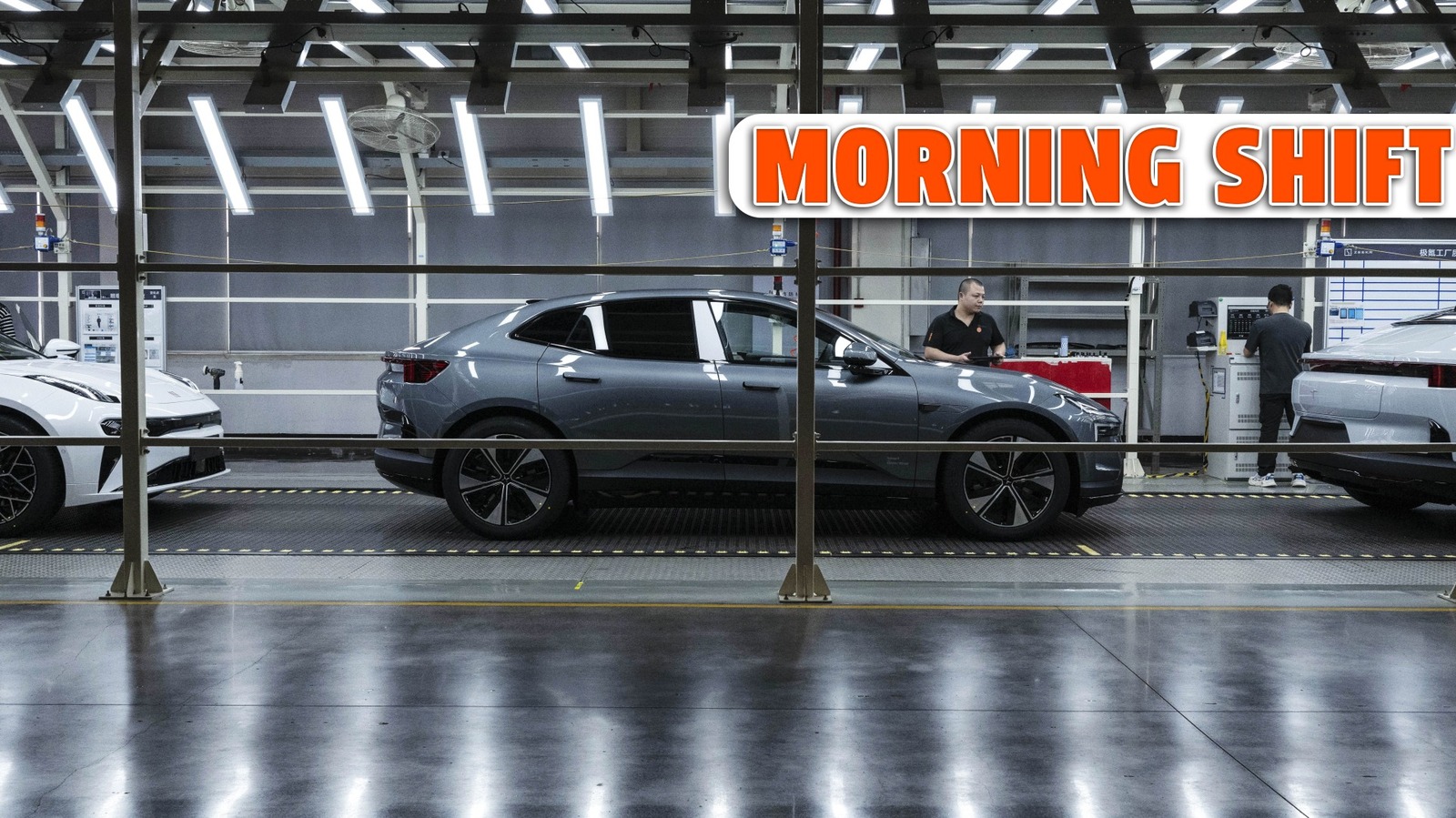
Good morning! It’s Friday, January 16, 2025, and this is The Morning Shift, your daily roundup of the top automotive headlines from around the world, in one place. This is where you’ll find the most important stories that are shaping the way Americans drive and get around.
In this morning’s edition, a new trade deal between will bring Chinese EVs back to Canada, global Porsche sales drop by the biggest margin in 16 years, Ford is in talks to use BYD batteries abroad and Germany is about to spin up its own EV incentive program to boost demand.
1st Gear: Canada is getting Chinese EVs again
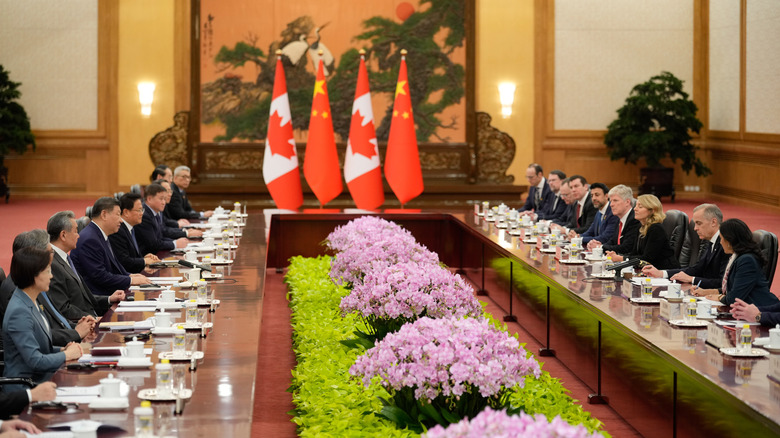
Chinese EVs will once again flank the U.S. to the north and south, thanks to a new trade deal between the Asian country and Canada that’ll slash tariffs on EVs… and canola, but we’re not really concerned about that at Jalopnik. Both countries promised to tear down trade barriers between them and forge new strategic ties, according to Prime Minister Mark Carney, who became the first Canadian PM to visit China since 2017. It has been a priority for him to strengthen his country’s relationship with China, as the U.S. continues to undermine the relationship.
Initially, Canada will allow up to 49,000 Chinese EVs into the country at a 6.1% tariff, Carney said after speaking with Chinese leaders, including President Xi Jinping. However, there’s no exact timetable for when that would happen, but in any case, it’s a huge relief from the 100% tariff Chinese EVs currently face in Canada. That was imposed by former Prime Minister Justin Trudeau in 2024, following a similar move by the U.S. If you look back at 2023, China exported 41,678 EVs to Canada. From Reuters:
“This is a return to levels prior to recent trade frictions, but under an agreement that promises much more for Canadians,” Carney told reporters in Beijing.
Trudeau had justified his tariff on the grounds that there was an unfair global market edge for Chinese manufacturers benefiting from state subsidies, a scenario that was threatening to Canada’s domestic industry.
“For Canada to build its own competitive EV sector, we will need to learn from innovative partners, access their supply chains, and increase local demand,” Carney said.
He pointed to a stronger partnership with China in clean energy storage and production, driving new investments.
Carney added that he expects the new EV deal would end up driving “considerable Chinese investment into Canada’s auto sector, creating jobs and helping it toward a carbon-neutral future.” I’m sure that’s a relief as Trump puts the pressure on automakers to bring manufacturing Stateside.
2nd Gear: Porsche had a brutal 2025
Porsche’s deliveries fell 10% in 2025, which represents the steepest drop since 2009 (which is, of course, right during the Great Recession). It has weak demand for electric vehicles and a huge slump in China to thank. The German automaker moved just 279,449 vehicles last year, with China and Germany leading the way in terms of decline.
Sales were down a whopping 26% in China, 16% in Germany and 13% in the rest of Europe. However, there was one bright-ish spot: North America. Sales were almost identical to last year, and the automaker managed to sell 52 more cars than it did in 2024. That’s an impressively thin margin. From Automotive News:
Porsche has struggled with a range of challenges, including correcting an overly ambitious battery-electric vehicle rollout that upended model plans and weighed on margins. Tariffs in the U.S., which has surpassed China as Porsche’s most important market, have also weighed on profit.
The automaker stopped selling combustion engine versions of the Macan and the 718 Boxster and Cayman in Europe because their older digital architectures did not meet new EU cybersecurity regulations.
Porsche had planned to sell electric-only versions of those models but the automaker reversed the strategy in September because of the weak BEV market. The automaker will continue with its plan to introduce battery-electric versions of the Boxster and Cayman but top versions will be available with combustion engines.
Porsche plans to launch a replacement for the gasoline Macan no later than 2028.
Porsche said 22 percent of worldwide deliveries in 2025 were BEVs, while 12 percent were plug-in hybrids.
“This puts the global share of fully electric vehicles at the upper end of the stated target range of 20 to 22 percent for 2025,” the automaker said.
All in all, Macan sales were up 2% compared to 2024 (84,328), Cayenne was down 21% (80,886), 991 sales were up 1% (51,583), Panamera sales were down 6% (27,701), 718 sales were down 21% (18,612) and Taycan sales were down 22% (16,339). Perhaps 2026 will be better. I’m sure Porsche hopes so.
3rd Gear: Ford could use BYD batteries abroad
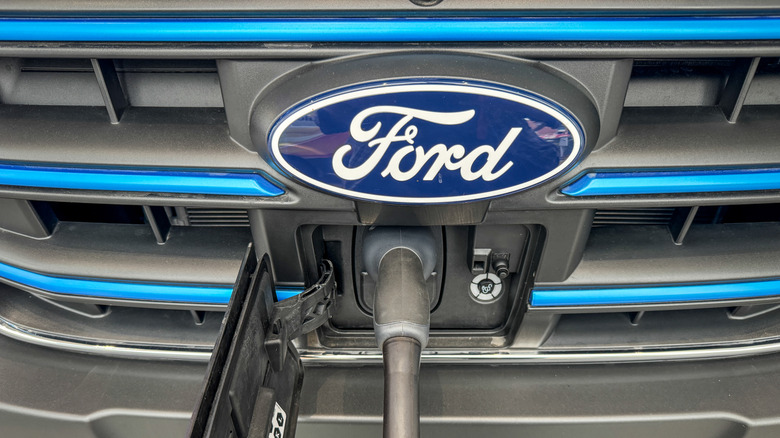
Ford has entered talks with BYD about potentially supplying batteries for hybrid vehicles built at the U.S. automaker’s overseas factories. This, as you may have imagined, isn’t sitting terribly well with some politicians in the U.S. China’s BYD is apparently among several battery suppliers talking to Ford, and the discussions are aimed at supplying the Blue Oval’s international factories with batteries for its expanding lineup of hybrids. From Bloomberg:
The hybrids built in Ford’s overseas factories would be exported worldwide, including to the US, the people said. But most hybrids Ford sells in the US would continue to come from factories in North America.
The hybrids built in Ford’s overseas factories would be exported worldwide, including to the US, the people said. But most hybrids Ford sells in the US would continue to come from factories in North America.
Ford has sourced batteries from BYD since 2020 for its joint-venture Chinese factories with state-owned Changan Automobile Co. It also has a battery deal with China’s Contemporary Amperex Technology Co. Ltd.
The potential pact with BYD also drew immediate political blowback, with White House trade adviser Peter Navarro questioning the deal.
House China Panel Chair John Moolenaar said Ford “should work with our allies, not our adversaries.”
“If reports that Ford is in discussions to potentially partner with a second Chinese battery company were to come true, it would diminish Ford’s status as an iconic American company,” Moolenaar said in an emailed statement.
Ford has been ramping up hybrid production and plans to roll out more of them in the future. At the Detroit Auto Show earlier this week, the automaker said it plans to introduce an extended-range EV version of the Bronco in China, but there are no plans to bring it tothe U.S. right now. However, CEO Jim Farley told reporters that “you should expect a lot of exciting powertrains for Bronco.” I suppose we shall see.
4th Gear: Germany kicks off €6,000 EV incentive program to boost demand
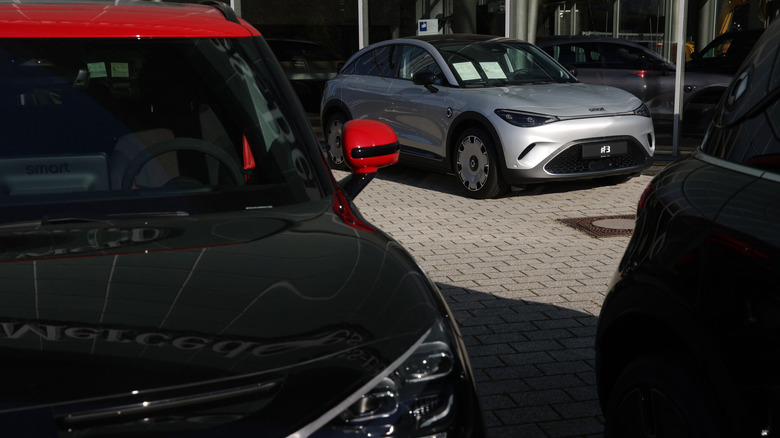
Germany is gearing up to start a major electric vehicle subsidy program that could be worth up to €3 billion ($3.5 billion) in an effort to jumpstart sales in a crucial industry. The new round of funding should be enough for about 800,000 vehicles, and it targets low- to middle-income households.
The German government will provide subsidies between €1,500 and €6,000 ( about $1,750 and $7,000) through 2029, depending on the vehicle and a family’s size and earnings. That doesn’t sound like a bad deal to me, and for once, I’m jealous of the Germans. From Bloomberg:
Electric-car sales have fluctuated wildly in Germany, recovering last year after a steep decline in 2024 when sales slumped by 27% in Europe’s biggest single market for electric vehicles. The reversal, following the removal of subsidies by the previous government to plug budget holes, revealed the dependency on handouts for EV sales.
Germany has missed several times on government targets for putting EVs on the nation’s roads, though prospects for broader uptake are improving.
Manufacturers have started deliveries of a range of budget-friendly vehicles to boost sales this year. They incluce Renault SA’s R5 E-Tech and VW’s compact ID. Polo, priced at around €25,000. Europe’s carmakers are facing increasing pressure from imports of affordable EVs made in China by the likes of BYD Co.
In the UK, the biggest European market for Chinese-made EVs, grants introduced last year effectively exclude battery vehicles from China, mandating environmental standards including low carbon emissions from the battery and assembly process. France’s so-called social leasing program includes similar stipulations.
For Germany, exact details on exemptions to the subsidy aren’t clear yet. Applications can be submitted retroactively to Jan. 1, 2026 and an online portal to handle them is expected to be launched in May, Bild said. “It’s a boost for our domestic auto industry,” Schneider said.
Chancellor Friedrich Merz’s ruling coalition of his conservatives and Schneider’s Social Democrats unveiled the program in October, part of a broader effort to support the nation’s carmakers.
Merz was, of course, one of the driving forces behind the campaign to get the EU to drop its internal combustion engine ban and give automakers more flexibility in the transition to less-polluting vehicles. His government extended an auto-tax exemption for EVs through the end of 2035, which the finance ministry says is expected to cost about €600 million in lost revenue through 2029. A small price to pay, if you ask me.
Reverse: In the end, every fascist is a scared little pissbaby
 History.com
Hey man, history doesn’t exactly repeat, but it has certainly been known to rhyme, so we shall see what happens. If you want to learn more about Hitler’s cowardice, head over to History.com.
On the radio: David Bowie – Heroes
Who knew “Twin Peaks: Fire Walk With Me” and “Zoolander” actor, David Bowie, made music too? What a world!

